

Aenictus paradentatus
- Scientific Name
- Aenictus paradentatus
- Subfamily
- Dorylinae
- Author
- Jaitrong <i>et al.</i>, 2012
- Distribution
- Found in 2 countries
Aenictus paradentatus Overview
Aenictus paradentatus is an ant species of the genus Aenictus. It is primarily documented in 2 countries , including China, Viet Nam. Detailed taxonomic data and occurrence records can be further explored via authoritative databases such as AntWeb or the Global Biodiversity Information Facility (GBIF).
Aenictus paradentatus
Aenictus paradentatus is a Southeast Asian army ant with dark reddish-brown workers measuring around 4.6 mm in length [1]. They inhabit primary and disturbed forests from lowlands up to 1,300 meters elevation across Thailand, Laos, Vietnam, and southern China [1][2]. Unlike typical garden ants, these are specialist predators that hunt in organized raids, preying on other ant species including weaver ants (Oecophylla), Pheidole, Leptogenys, and Pachycondyla, as well as termites (Macrotermes) [1]. As members of the army ant genus Aenictus, they maintain a nomadic lifestyle with frequent nest relocations and reproduce through colony fission rather than single-queen founding [3].
Quick Summary
- Difficulty: Expert
- Origin & Habitat: Primary and disturbed forests of Thailand, Laos, Vietnam, and Yunnan Province, China, from lowlands to 1,300m elevation [1][2]. Strict primary forest specialist, absent from rubber plantations and secondary growth [4].
- Colony Type: Army ant, colonies contain multiple reproductive queens (dichthadiiform) and reproduce by colony fission. Based on typical Aenictus patterns, they do not found from single queens [3].
- Colony: Polygyne
- Size & Growth:
- Queen: Unknown, dichthadiiform queens rarely collected. Workers are 4.55-4.65 mm [1].
- Worker: 4.55-4.65 mm total length [1].
- Colony: Unknown, likely thousands based on army ant biology [3].
- Growth: Rapid (army ant style), but colonies cannot be started from zero.
- Development: Unknown. (Development data is unconfirmed for this species. Army ants typically have rapid development but require established colony fragments to reproduce.)
- Antkeeping:
- Temperature: Warm tropical conditions, roughly 24-28°C inferred from habitat range in Thailand, Laos, and Vietnam [1].
- Humidity: High humidity, primary forest floor conditions with consistently moist substrate [1][4].
- Diapause: No, tropical species that remains active year-round [3].
- Nesting: Unsuitable for standard formicaria. Requires massive space for nomadic behavior and raiding columns [3].
- Behavior: Highly aggressive specialist predators that hunt other ants and termites in organized raids [1]. Nomadic lifestyle requires frequent nest moves and large hunting territories. Workers are small (under 5mm) with 10-segmented antennae and distinctive rough sculpture on the head and body [1].
- Common Issues: cannot be kept in standard test tubes or formicaria due to nomadic army ant biology., require live ant colonies and termites as food, cannot survive on honey or standard feeder insects., reproduce by colony fission, making it impossible to start a colony from a single queen., primary forest habitat requirements are difficult to replicate in captivity., small size and raiding behavior make escape prevention nearly impossible in home setups.
Army Ant Biology and Why Standard Ant Keeping Won't Work
Aenictus paradentatus is an army ant, and that means everything you know about ant keeping changes. These ants do not start colonies from a single queen in a test tube. Instead, colonies reproduce by splitting, a large colony divides into two halves, with each half containing workers and multiple reproductive queens [3]. This makes traditional founding impossible for keepers. You cannot buy a queen and wait for workers, you would need to obtain an entire colony fragment from the wild, which is impractical and ethically questionable.
Their nomadic lifestyle creates another problem. Army ants do not settle into a permanent nest. They stay in one place only a few days before the entire colony packs up and moves to new hunting grounds [3]. In captivity, this means they would constantly try to escape their enclosure searching for new territory. They require massive spaces to form their characteristic raiding columns, lines of workers that can stretch for meters as they hunt across the forest floor [1]. A standard formicarium cannot accommodate this behavior.
Diet and Feeding Requirements
In the forests of Southeast Asia, Aenictus paradentatus hunts specific prey. Research documented them attacking weaver ants (Oecophylla), Pheidole, Leptogenys, and Pachycondyla, as well as termites in the genus Macrotermes [1]. This specialized diet makes them impossible to feed in standard ant keeping setups. They need live ant colonies and termite colonies to raid, not the honey water and mealworms that satisfy most captive ants.
If you somehow obtained a colony fragment, you would need to provide constant access to live prey. The colony would require entire ant colonies to raid and consume, not individual insects. This feeding requirement alone makes them unsuitable for home ant keeping.
Habitat and Environmental Conditions
These ants are primary forest specialists. Studies found them in hill evergreen forest, dry evergreen forest, and mixed deciduous forest, but notably absent from rubber plantations and secondary growth [4][1]. They range from lowlands up to 1,300 meters in northern Thailand [1]. This means they need stable, warm temperatures and high humidity, conditions that replicate the shaded, moist floor of an old-growth forest.
The species shows habitat specificity that is difficult to replicate. While they occasionally appear in disturbed forests, they are primarily found in primary forest habitats [4]. This specialization suggests they require specific microclimates, soil conditions, and prey availability that are hard to maintain in captivity.
Morphology and Identification
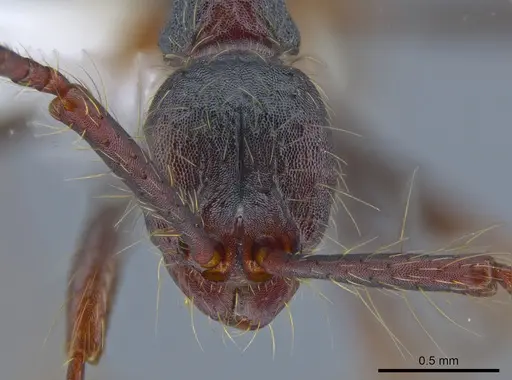
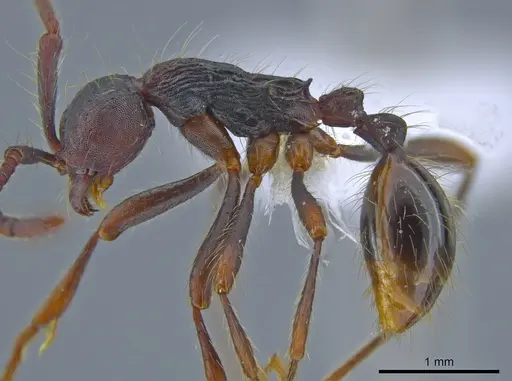
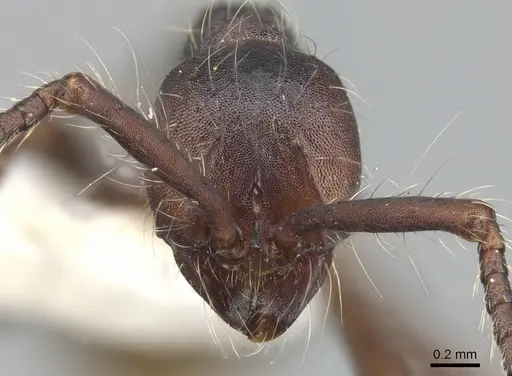
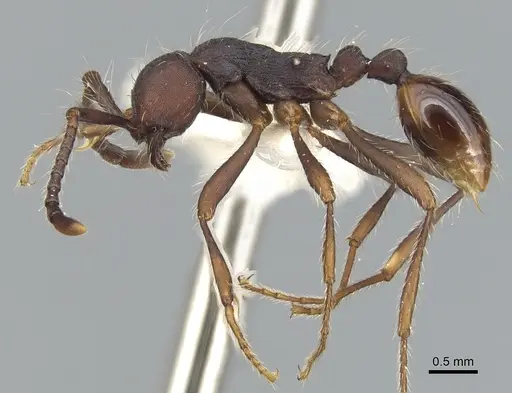
Workers are small but distinctive. They measure 4.55-4.65 mm in length with a dark reddish-brown to dark brown coloration [1]. The head is slightly longer than broad with a round profile, and the antennae have 10 segments with long scapes that extend beyond the back of the head [1]. The body has a rough, micropunctate texture with distinct longitudinal ridges on the promesonotum [1].
You can distinguish them from similar species like A. dentatus by their shorter scape index (117-124 versus 143-152 in A. dentatus) and the rough, shagreened texture on the first segment of the gaster rather than a smooth, shiny surface [1][5]. The mandibles have 11-12 small teeth along the chewing edge [1].
Frequently Asked Questions
Can I keep Aenictus paradentatus in a test tube?
No. Army ants do not found colonies from single queens in small spaces. They require large colony fragments and massive enclosures to accommodate their nomadic behavior and raiding columns [3].
How do I start an Aenictus paradentatus colony from a queen?
You cannot start one from a single queen. These ants reproduce by colony fission, where a mature colony splits into two groups. Obtaining a viable colony fragment from the wild is extremely difficult and not recommended [3].
What do Aenictus paradentatus eat?
They are specialist predators of other ants and termites. Documented prey includes weaver ants (Oecophylla), Pheidole, Leptogenys, Pachycondyla, and Macrotermes termites [1]. They cannot survive on standard ant foods like honey or mealworms.
How big do Aenictus paradentatus colonies get?
Specific colony size is unstudied, but army ants typically maintain colonies with thousands of workers and multiple queens [3].
Do Aenictus paradentatus need a formicarium?
Standard formicaria are unsuitable. They need specialized large enclosures that allow for nomadic behavior and raiding columns, which is not practical for home ant keeping [3].
Are Aenictus paradentatus good for beginners?
No. They are unsuitable for ant keeping altogether due to their specialized diet, nomadic behavior, and colony reproduction method [3].
What temperature do Aenictus paradentatus need?
Warm tropical conditions around 24-28°C based on their habitat in Thailand, Laos, and Vietnam [1].
Do Aenictus paradentatus need to hibernate?
No, they are tropical and remain active year-round [3].
Can I keep Aenictus paradentatus with other ants?
No. They are specialist predators that hunt and kill other ant species [1].
Where do Aenictus paradentatus live in the wild?
Primary and disturbed forests in Thailand, Laos, Vietnam, and southern China, from lowlands up to 1,300m elevation [1][2].
How can I tell Aenictus paradentatus apart from similar species?
They have shorter antennal scapes (scape index 117-124) compared to A. dentatus (scape index 143-152), and the first gaster segment has a rough, shagreened texture rather than being smooth and shiny [1][5].
References

This caresheet is licensed under CC BY-SA 4.0 .
CASENT0651422
View on AntWeb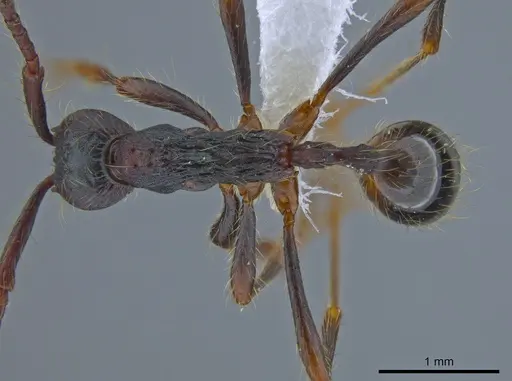
CASENT0903682
View on AntWeb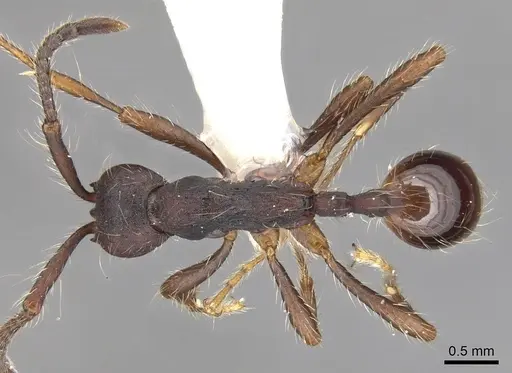
Literature
Loading...Loading products...