

Aenictus mariae
- Scientific Name
- Aenictus mariae
- Subfamily
- Dorylinae
- Author
- Emery, 1895
- Distribution
- Found in 3 countries
Aenictus mariae Overview
Aenictus mariae is an ant species of the genus Aenictus. It is primarily documented in 3 countries , including Eswatini, South Africa, Zimbabwe. Detailed taxonomic data and occurrence records can be further explored via authoritative databases such as AntWeb or the Global Biodiversity Information Facility (GBIF).
Aenictus mariae
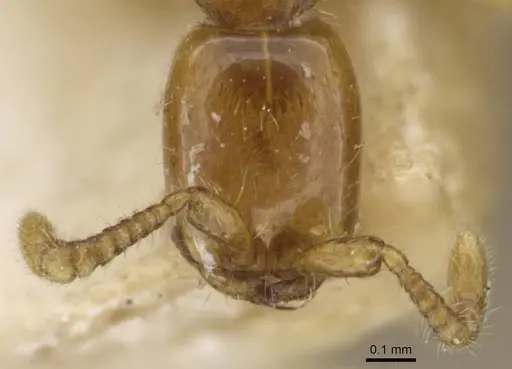
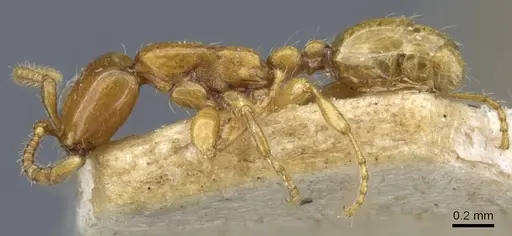
Aenictus mariae is a tiny army ant from southern Africa, with workers measuring just 2-3mm in length [1]. They show light yellow to light brown coloring with smooth, shiny bodies and short antennae that barely reach the middle of the head when laid back [1]. Found in South Africa and Zimbabwe, they have been collected from bushveld and riparian vegetation [2].
What makes this species unusual is how little we know about it. Despite being described in 1895,scientists have only ever found workers, no queens, males, or colony founding records exist [2]. One collection note simply states they were hand-collected from vegetation, leaving their biology almost entirely undocumented [2]. This makes them one of the many army ant species that exist in museums but remain mysteries to science.
Quick Summary
- Difficulty: Expert
- Origin & Habitat: South Africa and Zimbabwe, collected from bushveld and riparian vegetation [2][1]
- Colony Type: Unknown, likely large army ant colonies with specialized structure
- Size & Growth:
- Queen: Unknown
- Worker: Approximately 2-3mm total length (head length 0.42-0.55mm) [1]
- Colony: Unknown (likely thousands to tens of thousands based on army ant patterns)
- Growth: Unknown (likely fast)
- Development: Unknown, likely 4-8 weeks based on tropical army ant patterns (No development data exists for this species. Timeline estimated from related Afrotropical army ants.)
- Antkeeping:
- Temperature: Unknown, start around 24-28°C based on African tropical distribution and adjust based on activity levels
- Humidity: Unknown, maintain damp nest material based on riparian habitat collections [2]
- Diapause: Unknown (likely not required in tropical species)
- Nesting: Unsuitable for standard captive keeping, army ants are nomadic and require massive foraging ranges
- Behavior: Army ant, likely highly mobile and predatory with massive colony raids. Workers are extremely small and can escape through tiny gaps [1].
- Common Issues: colony size requirements likely exceed any practical captive setup, army ants typically need thousands of workers minimum., nomadic lifestyle incompatible with static nests, they require space to migrate and raid., unknown founding biology means establishing a captive colony is currently impossible., extremely small worker size (2-3mm) means escape prevention must be exceptional., no queens have ever been collected, founding a colony cannot be attempted.
Why Aenictus mariae Cannot Be Kept in Standard Setups
Aenictus mariae belongs to the army ant group, and army ants follow a lifestyle that makes captive keeping practically impossible with current antkeeping technology. These ants are nomadic, meaning the entire colony moves regularly to new nesting sites rather than staying in one place. They require massive foraging territories to support their predatory lifestyle, often raiding areas the size of football fields or larger.
Standard formicaria, even large ones, cannot accommodate the colony sizes army ants need. While we do not know the exact population of Aenictus mariae colonies, related Aenictus species maintain thousands to tens of thousands of workers. The nest would need to include not just living space but also extensive foraging areas for their raids. Additionally, army ants often reproduce by colony fission (splitting) rather than single queens founding new nests, meaning you cannot simply catch a queen and start a colony. [2]
Natural History and Habitat
Aenictus mariae inhabits the Afrotropical region, specifically South Africa and Zimbabwe [1][2]. The only habitat data comes from a single collection record noting they were hand-collected from bushveld and riparian vegetation [2]. Bushveld refers to open savanna with scattered trees and shrubs, while riparian areas are the zones alongside rivers and streams.
This suggests they may prefer areas with access to moisture and cover, though the single record provides limited insight. The species was first described from Makapan in South Africa (now Limpopo province) and later collected in Natal [3][4]. Despite over 125 years since description, no nest series or colony observations have been published, leaving their natural history largely unknown [2].
Identification and Morphology
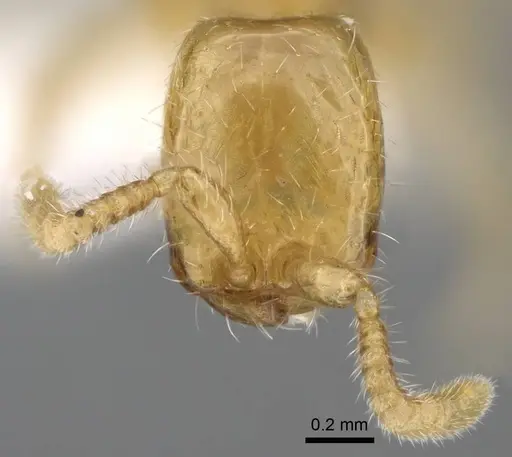
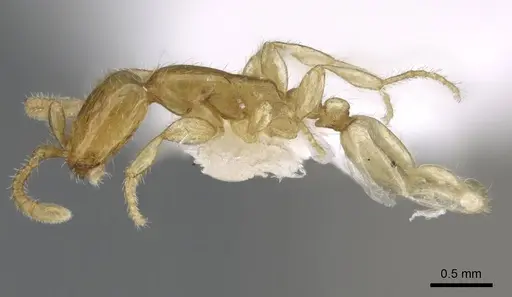
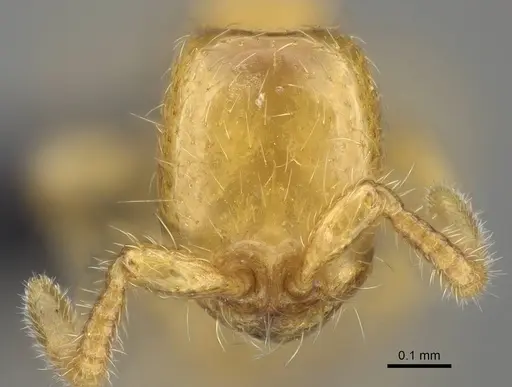
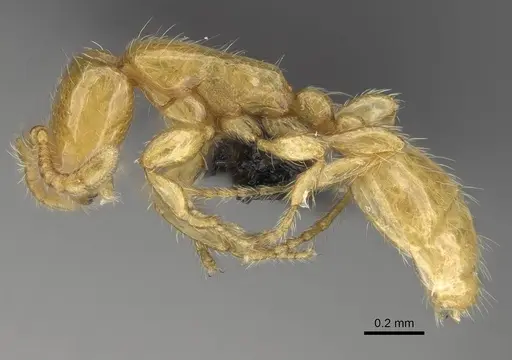
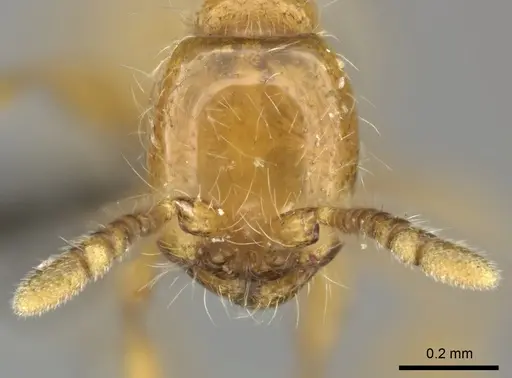
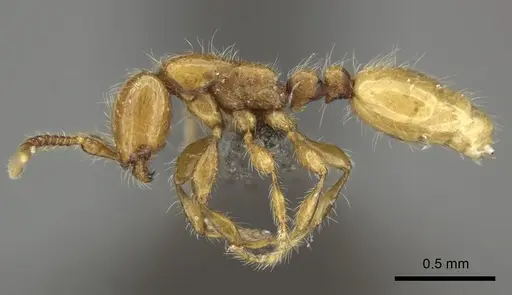
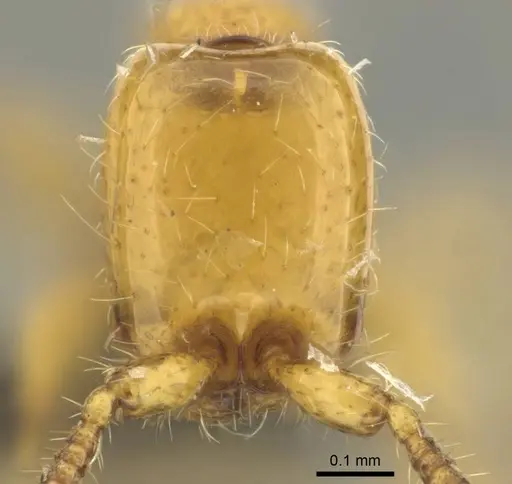
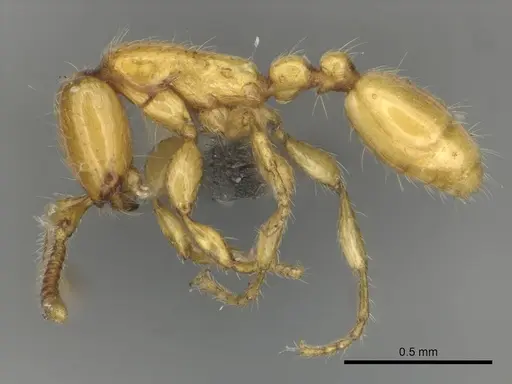
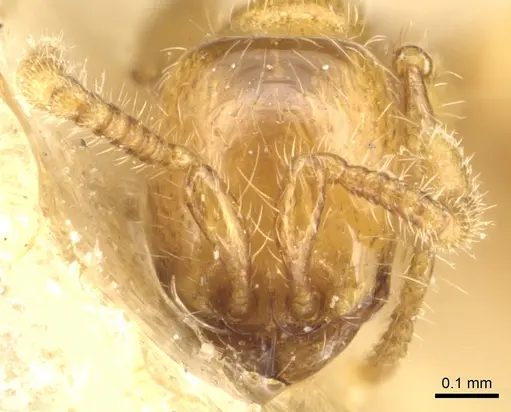
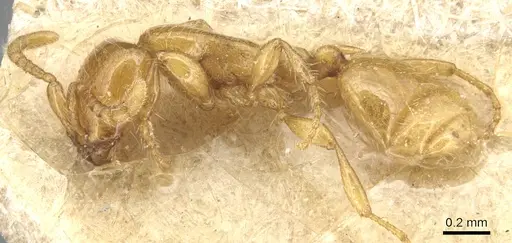
Workers of Aenictus mariae are among the smaller army ants, with head lengths of just 0.42-0.55mm [1]. They are light yellow to light brown with smooth, shiny bodies covered in short white hairs [1]. The antennae are short, reaching only to the middle of the head when laid back, and the final segments are wider than they are long [1].
You can separate them from similar species by looking at the postpetiole (the second waist segment). In A. mariae, it is high and subquadrate with straight parallel front and back sides [1]. This differs from A. boltoni, which has a lower, more rounded postpetiole [1]. The groove between the middle and rear body sections is almost invisible in A. mariae workers but clearly visible in A. boltoni [1]. The upper surface of the rear body section (propodeum) is mostly smooth, unlike the reticulated texture seen in A. hitai [1].
Colony Structure and Reproduction
The colony structure of Aenictus mariae is completely unknown. No queens or males have ever been collected, and no observations of colony founding exist [2]. This makes it impossible to determine whether they have single or multiple queens, how new colonies start, or how large their colonies grow.
Based on patterns seen in other Aenictus species, they likely form large colonies with specialized worker castes and reproduce through colony fission rather than nuptial flights. In this system, daughter colonies split off from parent colonies with groups of workers and brood, with new queens developing from within the colony rather than flying out to mate. However, this remains speculation for A. mariae specifically until actual colonies are studied in the wild.
Frequently Asked Questions
Can I keep Aenictus mariae in a test tube?
No. Army ants like Aenictus mariae cannot be kept in test tubes or standard formicaria. They require massive space for nomadic movement and colony sizes likely in the thousands, far exceeding what any test tube setup can provide.
How do I found a colony of Aenictus mariae?
You cannot. No queens have ever been collected for this species, and their founding biology is unknown. Army ants typically reproduce by colony splitting rather than single queens founding new nests, making traditional founding impossible.
What do Aenictus mariae eat?
Their specific diet is unknown, but army ants are typically specialized predators of other ants and small arthropods. They likely require large amounts of live prey brought to them through massive raids.
How long until first workers for Aenictus mariae?
Unknown. No founding observations exist for this species. Based on tropical army ant patterns, development from egg to worker likely takes 4-8 weeks at warm temperatures, but this is an estimate.
How big do Aenictus mariae colonies get?
Unknown. No colony size data exists. Related Aenictus species maintain colonies of thousands to tens of thousands of workers, suggesting this species likely follows a similar pattern.
Are Aenictus mariae dangerous?
They are very small (2-3mm) and unlikely to cause significant harm to humans, but like all army ants, they can bite. Their danger lies in their potential as escapees rather than personal injury [1].
Where can I buy Aenictus mariae queens?
You cannot. Queens have never been collected for this species, and they are not available in the antkeeping trade. Even if found, army ants cannot be kept using standard methods [2].
Can I keep multiple Aenictus mariae queens together?
Unknown. Since no queens have been found and colony structure is undocumented, we do not know if this species accepts multiple queens. Combining unrelated queens is not recommended without evidence of natural polygyny [2].
Do Aenictus mariae need hibernation?
Unknown, but unlikely. As a tropical African species, they probably do not require winter rest periods like temperate ants. However, specific seasonal cycles have not been documented.
References

This caresheet is licensed under CC BY-SA 4.0 .
ANTWEB1025177
View on AntWeb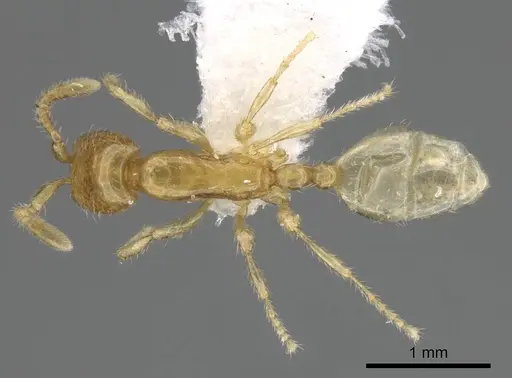
CASENT0009121
View on AntWeb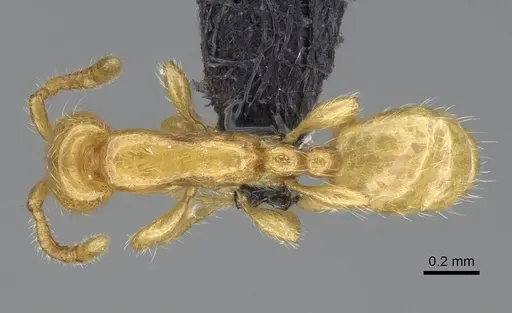
CASENT0235824
View on AntWeb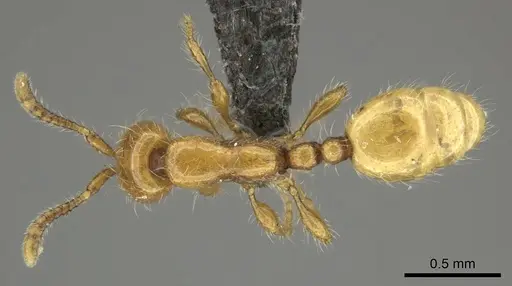
CASENT0256570
View on AntWeb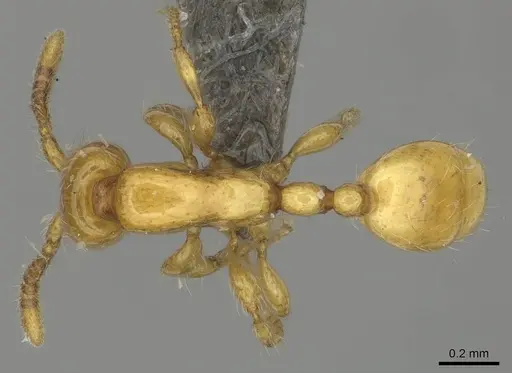
CASENT0903760
View on AntWeb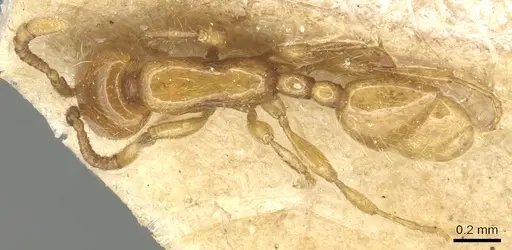
CASENT0907029
View on AntWeb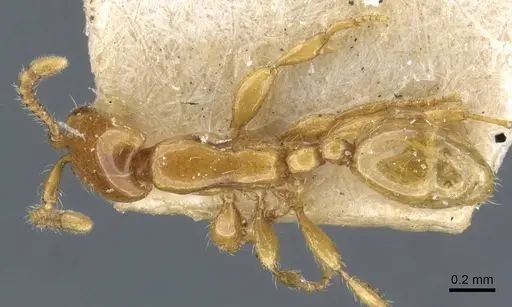
Literature
Loading...Loading products...