

Aenictus jacki
- Scientific Name
- Aenictus jacki
- Subfamily
- Dorylinae
- Author
- Gómez, 2022
- Distribution
- Found in 1 countries
Aenictus jacki Overview
Aenictus jacki is an ant species of the genus Aenictus. It is primarily documented in 1 countries , including Mozambique. Detailed taxonomic data and occurrence records can be further explored via authoritative databases such as AntWeb or the Global Biodiversity Information Facility (GBIF).
Aenictus jacki
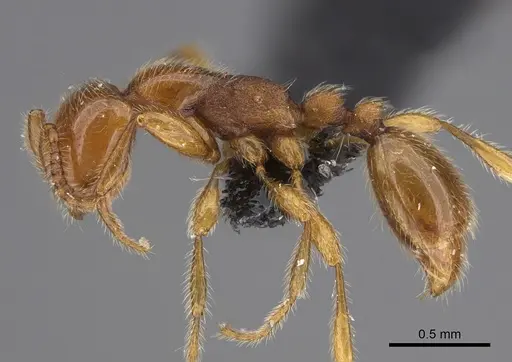
Aenictus jacki are minute light brown army ants from Mozambique. Workers have rectangular heads barely half a millimeter long and sport distinctive white hairs across their backs [1]. Discovered in 2022,they are only known from workers collected in the soil of a moist forest near rivers in Gorongosa National Park [2].
These ants present a unique challenge to ant keepers. As army ants, they likely live in massive colonies with specialized predatory habits, but only the worker caste has ever been found [2]. This means you cannot start a colony, and their biology makes them unsuitable for standard ant keeping equipment regardless.
Quick Summary
- Difficulty: Expert
- Origin & Habitat: Gorongosa National Park, Mozambique, riparian moist forest soil [2][1]
- Colony Type: Unknown, only worker caste documented [2]
- Size & Growth:
- Queen: Unknown, no queens collected [2]
- Worker: Head length 0.52-0.62mm, total length approximately 2mm [1]
- Colony: Unknown, based on typical Aenictus patterns, likely hundreds to thousands of workers
- Growth: Unknown
- Development: Unknown, estimated 4-8 weeks based on tropical army ant patterns (No developmental data exists for this species. Timeline is a rough estimate for tropical ants.)
- Antkeeping:
- Behavior: Army ant behavior likely includes nomadic raiding and group foraging, workers are minute and require excellent escape prevention [1]
- Common Issues: queens are unavailable to hobbyists, only workers have been collected and described., army ant biology requires massive space and specialized predatory diets incompatible with standard setups., minute worker size means escapes are inevitable without extreme barriers., colony founding methods are unconfirmed, you cannot start a colony without a queen.
Identification and Appearance
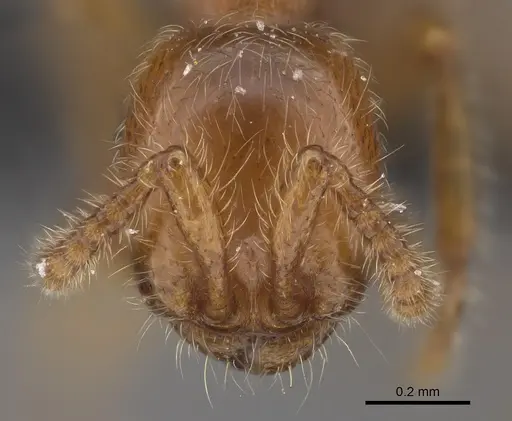
Aenictus jacki workers are minute light brown ants measuring approximately 2mm in total length. Their heads are rectangular and longer than wide, measuring 0.52-0.62mm in length [1]. You can recognize them by their abundant reclined white hairs covering the back of the thorax and abdomen [1]. Their antennae are short, barely passing the middle of the head when laid back [1]. The overall color is light brown with darker punctured areas and sutures [1].
Why These Ants Are Not Currently Keepable
You cannot currently keep Aenictus jacki in a standard ant setup. First, only workers have been described, no queens exist in collections available to hobbyists [2]. Without a queen, a colony cannot reproduce or survive long-term. Second, these are army ants (Dorylinae), which have specialized biology that does not fit test tubes or formicaria. Army ants typically maintain huge colonies with thousands of workers and require massive foraging areas to hunt prey. They are nomadic, meaning they do not stay in one nest location but move regularly to find food. This lifestyle is impossible to replicate in a home setup.
Natural History and Habitat
The only known specimens come from soil in riparian moist forest at Gorongosa National Park, Mozambique [2]. This habitat suggests they prefer warm, humid conditions with damp soil. As members of the rotundatus species group, they likely prey on other ants or termites, though specific prey preferences remain unconfirmed.
Housing Challenges
Standard ant keeping equipment fails for army ants. Their minute size, with heads less than a millimeter wide, means they escape through gaps in lids, tubing, and mesh that larger ants cannot penetrate [1]. You would need specialized barriers and sealed containers. Additionally, their nomadic lifestyle means they do not accept permanent nest chambers. They require extensive open space to raid and forage, far exceeding what home setups provide.
Feeding Requirements
Aenictus jacki likely requires live prey, specifically other ants or termites, based on typical army ant behavior. They probably do not accept sugar water or standard feeder insects like mealworms. Providing adequate quantities of appropriate prey would require maintaining colonies of food ants, making husbandry extremely complex.
Temperature and Humidity
Based on their tropical Mozambican origin, keep temperatures around 24-28°C. They do not require hibernation. Maintain high humidity with damp nest material similar to their riparian forest habitat [2].
Frequently Asked Questions
Can I keep Aenictus jacki in a test tube setup?
No. Army ants do not fit test tube setups. They require massive space to forage and likely need specialized live prey. Additionally, only workers are known, so you cannot start a colony.
Where can I buy Aenictus jacki queens?
You cannot. Queens have never been collected or described for this species. Only workers are known from the type series in Mozambique [2].
How big do Aenictus jacki colonies get?
Unknown. Based on related Aenictus species, colonies likely reach hundreds or thousands of workers, but this is unconfirmed for A. jacki specifically.
What do Aenictus jacki eat?
Likely other ants or termites based on army ant behavior, but specific diet is unconfirmed. They probably require live prey and do not accept sugar water.
Are Aenictus jacki good for beginners?
No. They are unsuitable for any keeper currently because queens are unavailable and their army ant biology requires specialized care impossible in standard setups.
Do Aenictus jacki need hibernation?
No. They come from tropical Mozambique and do not require winter rest.
How long until Aenictus jacki eggs become workers?
Unknown. No developmental data exists. Based on tropical army ants, estimate 4-8 weeks at 25-28°C, but this is speculative.
Why are my Aenictus jacki workers dying?
If you have these workers, they are likely old collection specimens or dying because they lack a queen to replace them. Workers alone cannot sustain a colony. Additionally, army ants often die in captivity due to inadequate space or incorrect diet.
References

This caresheet is licensed under CC BY-SA 4.0 .
CASENT0840036
View on AntWeb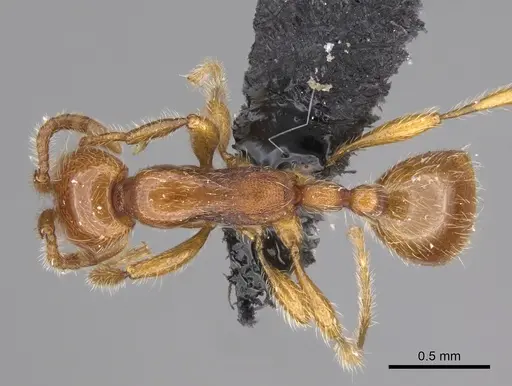
Literature
Loading...Loading products...