

Aenictus inflatus
- Scientific Name
- Aenictus inflatus
- Subfamily
- Dorylinae
- Author
- Yamane & Hashimoto, 1999
- Distribution
- Found in 1 countries
Aenictus inflatus Overview
Aenictus inflatus is an ant species of the genus Aenictus. It is primarily documented in 1 countries , including Malaysia. Detailed taxonomic data and occurrence records can be further explored via authoritative databases such as AntWeb or the Global Biodiversity Information Facility (GBIF).
Aenictus inflatus
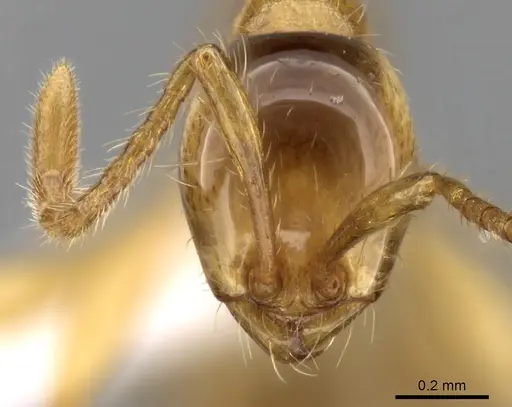
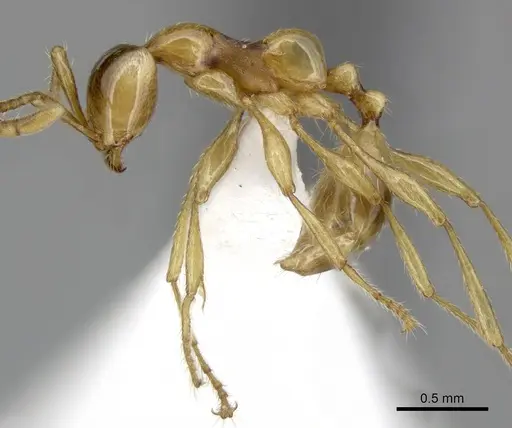
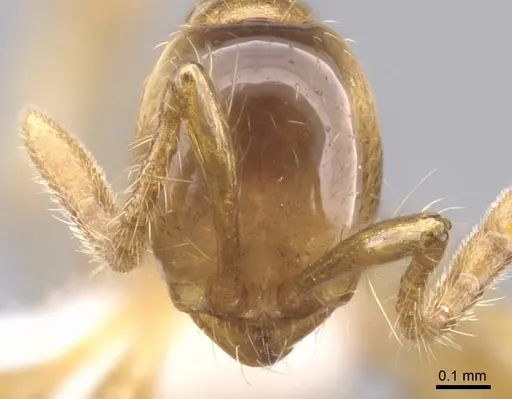
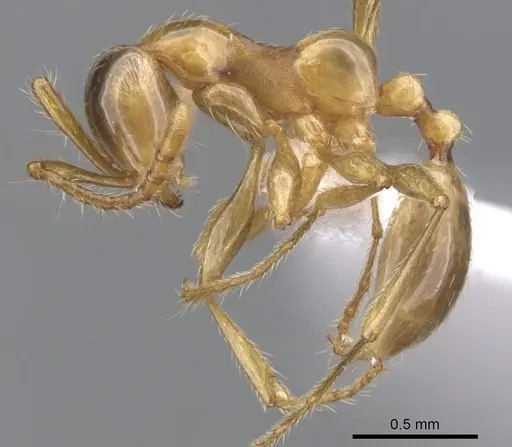
Aenictus inflatus is a tiny yellowish army ant found only in the lowland rainforests of Borneo, specifically in Sarawak and Brunei [1][2]. Workers measure just 1.75 to 2.2 mm and come in two distinct sizes, smaller workers look like typical army ants, while larger workers have a bizarre inflated back section (propodeum) filled with mysterious red liquid [1][3]. They hunt through the canopy and lower vegetation in raiding columns, preying almost exclusively on other ant species [1].
This species is remarkable for being one of the few army ants in the genus Aenictus with truly different worker sizes [1][4]. The small workers make up only about 3% of the colony and have shorter legs and antennae compared to their larger sisters [3]. When hunting, they target specific prey like the crazy ant (Paratrechina longicornis) and various Monomorium species, often taking both adults and brood [1].
Quick Summary
- Difficulty: Expert, currently impossible to maintain in captivity
- Origin & Habitat: Borneo (Sarawak, Brunei), lowland dipterocarp rainforest canopy [1][2]
- Colony Type: Unknown, only worker caste described, queen biology undocumented [3]
- Size & Growth:
- Antkeeping:
- Temperature: Unconfirmed, start around 24-28°C based on lowland tropical habitat [1][2]
- Humidity: High, keep nest material damp like a wrung-out sponge to match rainforest canopy conditions [1]
- Diapause: Unknown, likely unnecessary given tropical Bornean origin, but no seasonal studies confirm this
- Nesting: Unsuitable for standard captivity, nomadic army ant that does not build permanent nests
- Behavior: Aggressive ant predators that hunt in raiding columns through vegetation [1]. Highly polymorphic workers may divide labor between size classes [1]. Extremely small size combined with nomadic column-raiding behavior makes containment virtually impossible.
- Common Issues: cannot be kept in standard formicarium due to nomadic lifestyle and massive foraging range requirements., require constant supply of live ant colonies as prey, will not accept honey, seeds, or standard hobby foods., unknown founding biology means captive colony founding is impossible with current knowledge., canopy-dwelling species requires vertical arboreal space, not standard horizontal nest setups., endemic to specific Bornean rainforests, wild collection damages vulnerable populations [2][5].
Polymorphic Workers and the Red Liquid
Aenictus inflatus stands out because most army ants in this genus have workers that are all the same size, but this species shows clear differences between large and small workers [1][4]. Large workers reach 2.2 mm in length and have a dramatically inflated back section of the middle body (propodeum) that appears transparent and contains red liquid [1][3]. Small workers measure only 1.75 mm and look completely different, they have normal proportions, shorter antennae, and shorter legs [3].
The small workers are quite rare, making up only about 3.3% of workers in collected samples [3]. Researchers have found intermediate sizes between these extremes, suggesting the size differences develop gradually as workers grow [3]. The function of the red liquid remains a mystery, it might serve for defense, food storage, or some other purpose specific to the larger workers' role in the colony [3].
Raiding Behavior and Diet
These ants are specialist predators of other ants. They hunt in columns through the lower vegetation and occasionally on the ground surface, searching for prey nests [1]. When they find a target, they attack both adult ants and their brood [1].
Their preferred prey includes the crazy ant (Paratrechina longicornis) and various Monomorium species, together these make up 100% of observed prey items [1]. Nearly half their prey comes from tree-dwelling ant species, confirming their arboreal hunting strategy [1]. They target very small ants, the average prey head width is just 0.44 mm [1]. This specialized diet of live ant colonies makes them impossible to feed in standard ant keeping setups.
Why This Species Cannot Currently Be Kept
Aenictus inflatus represents the extreme end of difficult-to-keep ants. First, no queen caste has ever been described, science only knows this species from worker specimens [3]. Without knowing how queens found colonies or even what they look like, captive propagation is impossible.
Second, as army ants, they likely maintain large colonies with massive space requirements and nomadic behavior, constantly moving to new hunting grounds rather than staying in one nest. Standard formicariums cannot accommodate this lifestyle.
Third, their diet consists exclusively of other live ant colonies [1]. You would need a constant supply of Paratrechina or Monomorium colonies to feed them. Combined with their tiny size (under 2.5 mm) and column-raiding behavior, escape prevention would be nearly impossible even if you could meet their other needs.
Habitat and Conservation
This species lives in the canopy of lowland dipterocarp forests in Borneo, specifically recorded from Lambir Hills National Park in Sarawak and Brunei [1][2]. They appear to be endemic to Borneo, meaning they live nowhere else in the world [2].
The specific habitat requirements make them vulnerable to rainforest destruction. Studies show that conversion of these forests to rubber or oil palm plantations causes major shifts in ant communities [5]. Because they may be restricted to specific old-growth forest areas, removing colonies for the pet trade would damage wild populations while almost certainly failing in captivity.
Frequently Asked Questions
Can I keep Aenictus inflatus in a test tube?
No. This is an army ant species with unknown founding biology, and they require massive space for their nomadic raiding behavior. They cannot survive in test tubes or standard formicariums.
What do Aenictus inflatus eat?
They are specialist ant predators that feed almost exclusively on other ant species, particularly Paratrechina longicornis (crazy ants) and various Monomorium ants. They will not accept honey, sugar water, seeds, or insects like crickets.
How long until Aenictus inflatus gets their first workers?
Unknown. The queen caste has never been described for this species, so founding behavior and development timelines are completely undocumented.
Are Aenictus inflatus good for beginners?
Absolutely not. This is an expert-level species that is currently impossible to maintain in captivity due to unknown founding biology, specialized diet requirements, and nomadic behavior.
How big do Aenictus inflatus colonies get?
Unknown. While army ants typically maintain large colonies with thousands of workers, specific colony size data for this species has not been documented.
Do Aenictus inflatus need hibernation?
Unknown, but likely no. They come from tropical Borneo where temperatures remain warm year-round. However, no seasonal studies have confirmed their activity patterns.
Can I keep multiple Aenictus inflatus queens together?
Unknown. Queens have never been described for this species, so colony structure and queen compatibility remain mysteries.
Why do some workers have red liquid in their backs?
The large workers have an inflated propodeum (the back section of the middle body) filled with red liquid. The function is unknown, it might be for defense, food storage, or some other purpose specific to their role in the colony.
Where can I buy Aenictus inflatus?
You cannot legally or practically obtain this species. They are endemic to specific Bornean rainforests, have never been kept in captivity successfully, and removing them from the wild would harm vulnerable populations while failing to establish a colony.
References

This caresheet is licensed under CC BY-SA 4.0 .
CASENT0249279
View on AntWeb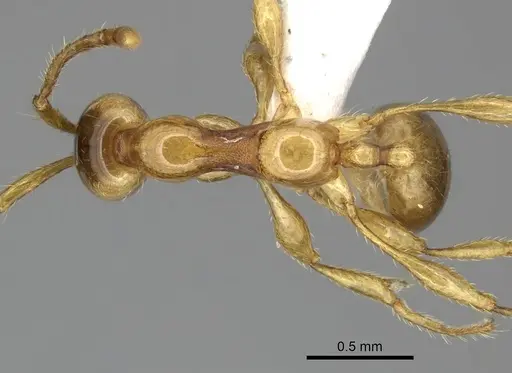
CASENT0902671
View on AntWeb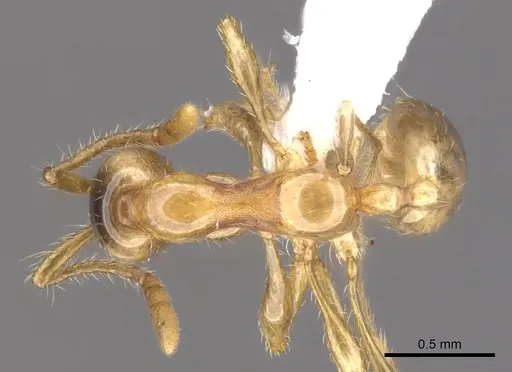
Literature
Loading...Loading products...