

Aenictus gutianshanensis
- Scientific Name
- Aenictus gutianshanensis
- Subfamily
- Dorylinae
- Author
- Staab, 2014
- Distribution
- Found in 1 countries
Aenictus gutianshanensis Overview
Aenictus gutianshanensis is an ant species of the genus Aenictus. It is primarily documented in 1 countries , including China. Detailed taxonomic data and occurrence records can be further explored via authoritative databases such as AntWeb or the Global Biodiversity Information Facility (GBIF).
Aenictus gutianshanensis
Aenictus gutianshanensis is a tiny army ant from South-East China known only from six worker specimens collected in a single pitfall trap. Workers measure just 3.1-3.3 mm and have distinctive yellowish-brown heads and gasters with reddish-brown thoraxes and waists [1]. They were discovered in 2009 in the Gutianshan National Nature Reserve of Zhejiang Province, living in the leaf litter of a secondary mixed evergreen broad-leaved forest at roughly 250 meters elevation [1]. Like other members of the A. wroughtonii group, they probably specialize in hunting small ants of the subfamily Formicinae, such as Prenolepis and Nylanderia species that share their habitat [1]. No queens or males have ever been found, only workers are known to science [1]. This makes them impossible to keep in captivity using current methods, as ant colonies require a queen to establish and grow.
Quick Summary
- Difficulty: Expert
- Origin & Habitat: South-East China (Zhejiang Province), secondary mixed evergreen broad-leaved forest [1]
- Colony Type: Unknown, only worker caste described [1]
- Size & Growth:
- Antkeeping:
- Behavior: Specialist predator of other ants (Formicinae) based on related species in the A. wroughtonii group [1]. Army ant lifestyle likely involves nomadic behavior, but specific activity patterns are unobserved. Workers are extremely small at 3.1-3.3 mm, requiring exceptional escape prevention with fine mesh barriers if handling specimens [1].
- Common Issues: no queens known to science, colonies cannot be founded or maintained [1], only six specimens exist in museum collections, not available in pet trade [1], specialized diet of live ants required based on related species ecology [1], tiny worker size (3.1-3.3 mm) means escapes are likely without microscopic barriers [1]
Discovery and Type Series
Scientists know Aenictus gutianshanensis from exactly six worker ants collected on June 28,2009,in a single pitfall trap [1]. The trap was set in the Gutianshan National Nature Reserve in Zhejiang Province, South-East China, approximately 30 km northwest of Kaihua at coordinates 29°12'54"N,118°7'18"E [1]. The collection site sat at roughly 250 meters above sea level in a secondary mixed evergreen broad-leaved forest [1]. Andreas Schuldt collected the specimens, which now reside in museums: the holotype lives in IZAS (Institute of Zoology, Chinese Academy of Sciences), while paratypes are split between IZAS, ZMBH (Museum für Naturkunde Berlin), and CASC (California Academy of Sciences) [1]. No additional collections have been reported since the original description in 2014 [2].
Physical Appearance
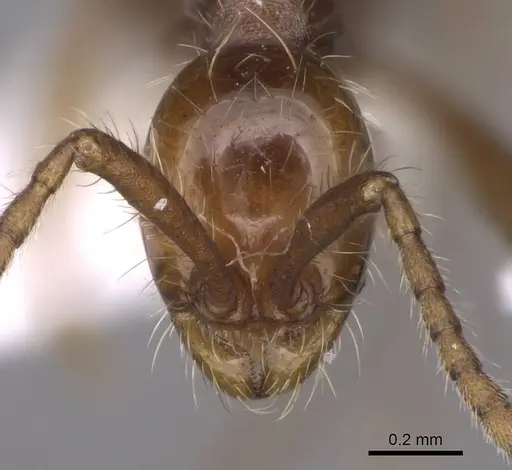
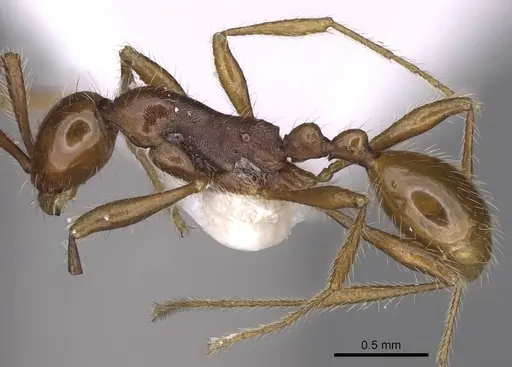
Workers are small army ants measuring 3.1-3.3 mm in total length [1]. Their heads, mandibles, gasters, and legs are yellowish brown, while their mesosomas (middle body sections), antennal scapes, petioles, and postpetioles are reddish brown [1]. You can distinguish them from similar species by their completely finely reticulate pronotum, petiole, and sides of the postpetiole, a texture like fine netting covering these areas [1][2]. Their subpetiolar process has an almost straight ventral margin with a thin rim below, and their femora are densely punctate rather than smooth [1]. Long standing hairs on the pronotum dorsum measure 0.20-0.30 mm, longer than similar species like A. vieti [1].
Natural History and Diet
These ants probably live and forage in the leaf litter of their forest habitat [1]. Based on their placement in the Aenictus wroughtonii species group, they likely function as specialist predators of small ants in the subfamily Formicinae [1]. Researchers noted that possible prey species of the genera Prenolepis and Nylanderia are common at the type locality, suggesting these may be their primary targets [1]. As army ants, they likely maintain a nomadic lifestyle, but specific foraging behaviors, colony size, and social structure remain completely unknown because scientists have never located a nest or observed a living colony [1].
Captive Keeping Reality
You cannot currently keep Aenictus gutianshanensis in captivity. The species is not available in the pet trade, and no queens are known to science, only six worker specimens exist in museum collections worldwide [1]. Without a queen, any collected workers would simply live out their natural lifespan without reproducing. Even if a queen were discovered in the future, army ants require specialized care including massive foraging areas, constant supplies of live ant prey, and specific humidity gradients that make them unsuitable for standard ant-keeping setups. The species remains a scientific curiosity rather than a candidate for captivity.
Frequently Asked Questions
Can I keep Aenictus gutianshanensis in a test tube setup?
No. This species is not available in the pet trade, and no queens are known to science. Only six worker specimens exist in museum collections [1]. Without a queen, you cannot establish a colony.
What do Aenictus gutianshanensis eat?
They likely prey on small ants of the subfamily Formicinae, such as Prenolepis and Nylanderia species, based on their classification in the A. wroughtonii group and prey availability at their collection site [1].
How big do Aenictus gutianshanensis colonies get?
Colony size is unknown. As an army ant species, wild colonies likely contain thousands of workers, but this has not been documented [1].
Where do Aenictus gutianshanensis live?
They inhabit the leaf litter of secondary mixed evergreen broad-leaved forests in South-East China, specifically the Gutianshan National Nature Reserve in Zhejiang Province [1].
How long does Aenictus gutianshanensis take to develop from egg to worker?
Development time is unknown. No eggs, larvae, or queens have been observed [1].
What temperature do Aenictus gutianshanensis need?
Specific temperature requirements are unknown. They were collected in June at approximately 250 meters elevation in a subtropical forest [1].
Can I collect Aenictus gutianshanensis in the wild?
This is not recommended. The species is only known from six specimens collected at a single location. Removing additional specimens could harm the population, and without a queen, any collected workers would simply live out their natural lifespan without reproducing [1].
Are Aenictus gutianshanensis dangerous?
They pose no threat to humans due to their extremely small size (3.1-3.3 mm) [1].
Why is there no care information for this species?
Only worker ants have been discovered, no queens, males, or colony founding behavior has been observed. The species was described in 2014 and remains known only from the original six specimens [1].
References

This caresheet is licensed under CC BY-SA 4.0 .
CASENT0914332
View on AntWeb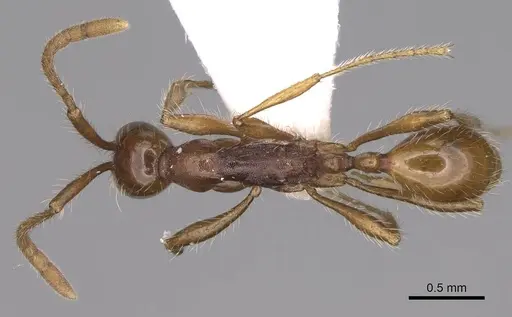
Literature
Loading...Loading products...