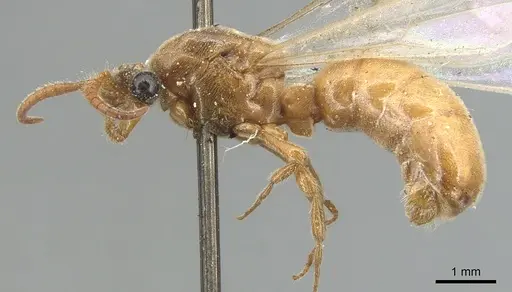
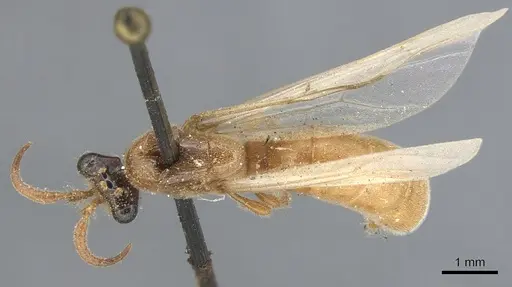
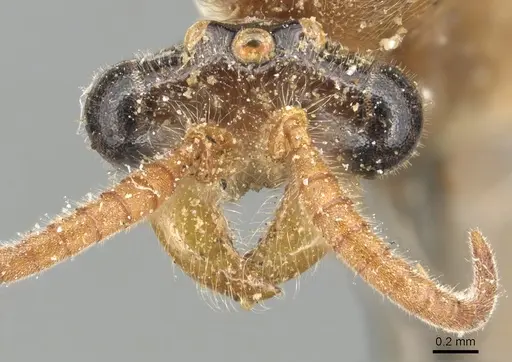
Aenictus fuscovarius - "African Army Ant"
Aenictus fuscovarius is a species of army ant found in the Old World tropics and subtropics. Like other Aenictus species, they are known for their nomadic lifestyle and impressive coordinated foraging raids. These ants are generally small, monomorphic (meaning workers are all roughly the same size), and range in color from yellow to dark brown. They are specialized predators, primarily preying on other ants, especially their immature stages (brood). Observing their intricate foraging columns and temporary bivouacs is a key characteristic of keeping this fascinating species. They do not build permanent nests like many other ant species.
- Difficulty: Expert
- Origin & Habitat: Africa (Eritrea, Ethiopia, Kenya, Mauritania, Mozambique, Senegal, Somalia, Sudan, Democratic Republic of Congo, Egypt) in Tropical and subtropical regions, often found foraging in soil, leaf litter, and occasionally in trees..
- Colony Type: Monogyne, colony fission (new colonies formed by division of existing ones, rather than individual queens founding alone) founding.
- Size & Growth:
- Queen: Not specified
- Worker: 2.1-3.36mm
- Colony: Large (tens of thousands). Fast, characterized by cyclical nomadic and stationary phases tied to brood development. growth.
- Antkeeping:
- Temperature: Due to their tropical origin, a stable temperature range is important. Optimal temperatures are likely in the 24-28°C range. Fluctuations outside this could stress the colony..
- Humidity: High humidity, typically 70-90%, is crucial, especially given their nomadic bivouac style nesting which offers less inherent moisture retention than a traditional underground nest. Misting the enclosure regularly will be necessary..
- Diapause: Not required. Not specified at Not specified.
- Nesting: Aenictus species do not build permanent nests. They form temporary bivouacs from their own bodies, often in sheltered places above ground or in burrows. Therefore, a specialized vivarium setup that allows for their nomadic behavior and provides ample foraging space with varying substrates and hiding spots is essential..
- Behavior: High (towards food or other ants) aggressiveness.
- Common Issues: Inadequate prey supply, Failure to accommodate nomadic behavior, Insufficient humidity, Colony stalling due to stress, Escape attempts (due to nomadic nature).
Keeping Aenictus fuscovarius is a truly advanced endeavor, a journey reserved for the most dedicated antkeepers. Unlike typical ant species that establish permanent nests, these are true army ants that form temporary living bivouacs, constantly on the move. This nomadic behavior means they require a dynamic and spacious setup, often a large vivarium, that allows them to roam freely and relocate their entire colony. Providing ample foraging territory is paramount, as their large numbers necessitate continuous hunting.
A crucial aspect of Aenictus care involves their highly specialized diet. These predatory ants primarily feed on other ants and their brood. This can be a significant challenge, as it means consistently sourcing appropriate live prey. Simply offering common feeder insects might not suffice, and a varied diet mimicking their natural prey items will be vital for the colony's long-term health and growth. Researching and preparing for a consistent supply of small ant colonies or other specific invertebrates is highly recommended.
Understanding their cyclical nomadic and stationary phases is key to their successful husbandry. During the nomadic phase, the colony will be actively moving and foraging, requiring more frequent feeding and observation of their migration patterns. The stationary phase, often tied to a pupal stage, will see them less active but still needing appropriate environmental conditions. Maintaining stable tropical temperatures and high humidity is non-negotiable for these delicate and specialized ants.
Furthermore, Aenictus fuscovarius can be quite aggressive, as is characteristic of army ants. While their sting potency isn't typically severe for humans, caution should always be exercised during maintenance and feeding. Direct handling is strongly discouraged. Given their tendency for large colony sizes and specialized behaviors, this species is definitively not for beginners. Extensive prior experience with challenging ant species and a deep commitment to providing a complex, naturalistic environment are essential.
Frequently Asked Questions
What makes Aenictus fuscovarius different from other ants I might keep?
Aenictus fuscovarius are 'army ants,' meaning they don't build permanent nests. Instead, they form temporary living bivouacs and are constantly on the move, raiding for food. This nomadic behavior and specialized predatory diet sets them apart from typical formicariums.
Can I keep Aenictus fuscovarius in a standard ant farm?
No, a standard ant farm or formicarium is completely unsuitable for Aenictus fuscovarius. Their nomadic nature requires a large, complex vivarium setup that allows for constant movement, raiding, and the formation of temporary bivouacs.
What do Aenictus fuscovarius army ants eat?
These ants are highly specialized predators, primarily feeding on other ants and their brood. While they might occasionally take other small invertebrates, their main diet in the wild consists of other ant species, making consistent feeding a unique challenge for antkeepers.
How large do Aenictus fuscovarius colonies get?
Aenictus colonies can grow quite large, often reaching tens of thousands of individuals. Some Aenictus species are known to form colonies of up to 80,000 workers.
Do Aenictus fuscovarius queens look like typical ant queens?
Aenictus queens are highly specialized and look quite different from typical ant queens. They are often described as 'dichthadiform,' meaning they have greatly enlarged gasters and are wingless. They don't participate in nuptial flights, and new colonies form through colony fission.
Are Aenictus fuscovarius dangerous? Do they sting?
Yes, Aenictus fuscovarius workers can sting. While their sting is not typically considered dangerous to humans, they are aggressive predators, especially towards their prey and other ants. Caution is always advised when handling or maintaining their setup.
What kind of environment do they need in captivity?
They require a consistently warm and humid environment, mimicking their tropical origins. Think temperatures between 24-28°C and high humidity levels, ideally 70-90%. A complex vivarium with varied substrates like sand, loam, and leaf litter, plus plenty of hiding spots, is essential for their well-being.
How do new Aenictus fuscovarius colonies start?
Unlike most ants where a single queen founds a new colony, Aenictus fuscovarius colonies reproduce through a process called colony fission. This means an existing large colony will split, with a portion of the workers and a new queen (or queens) departing to form a new colony.
Is Aenictus fuscovarius a good species for a beginner antkeeper?
Absolutely not. Aenictus fuscovarius is an expert-level species due to their complex nomadic behavior, specialized predatory diet, need for a highly controlled environment, and potential for large, aggressive colonies. They require extensive research and experience to keep successfully.
How do Aenictus fuscovarius forage?
They forage in large, coordinated columns, often both day and night, primarily over the ground surface but occasionally arboreally. They'll attack and overwhelm other ant nests, carrying their prey back to the bivouac.
What are the nomadic and stationary phases?
These are the two main activity cycles for army ants. The nomadic phase involves constant movement and active foraging to feed developing larvae. The stationary phase occurs when the larvae are pupating and don't require feeding, allowing the colony to remain in one bivouac for a longer period.
Are there any common issues when keeping Aenictus fuscovarius?
The most common issues include providing a consistent and appropriate food source (other ants/brood), failure to accommodate their nomadic movements, maintaining stable high humidity, and managing their large colony size. Escape attempts can also be a concern given their constant desire to move.