

Aenictus chapmani
- Scientific Name
- Aenictus chapmani
- Subfamily
- Dorylinae
- Author
- Wilson, 1964
- Distribution
- Found in 1 countries
Aenictus chapmani Overview
Aenictus chapmani is an ant species of the genus Aenictus. It is primarily documented in 1 countries , including Papua New Guinea. Detailed taxonomic data and occurrence records can be further explored via authoritative databases such as AntWeb or the Global Biodiversity Information Facility (GBIF).
Aenictus chapmani
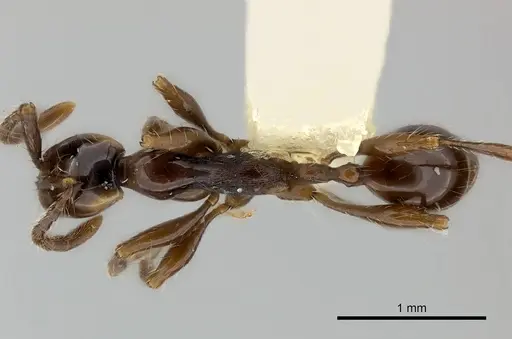
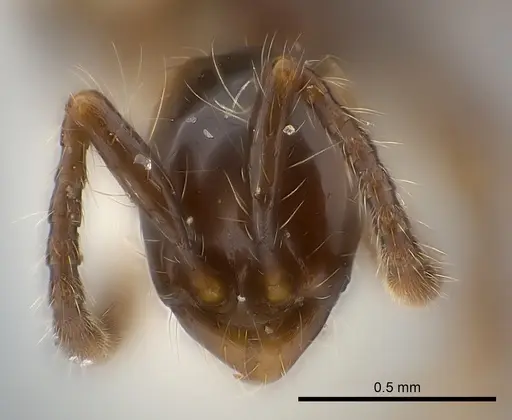
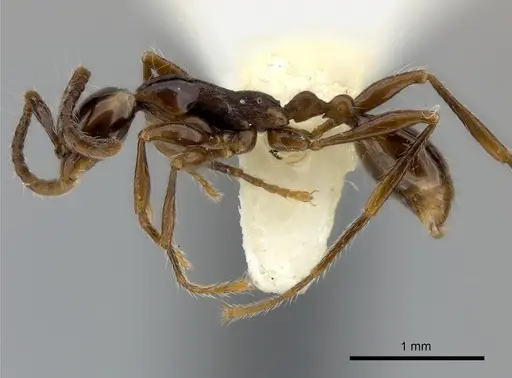
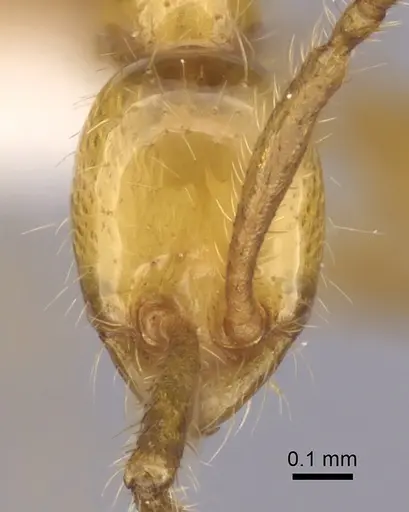
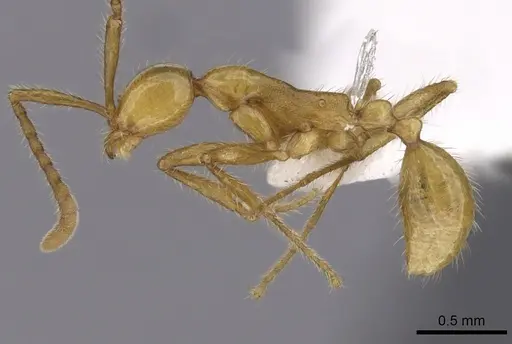
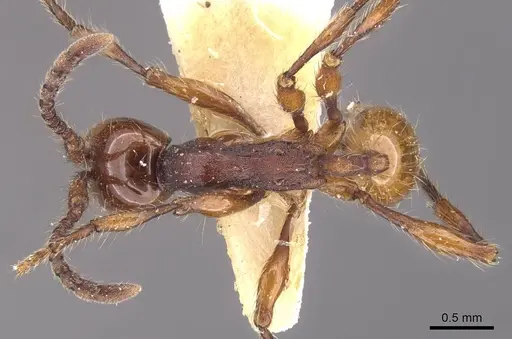
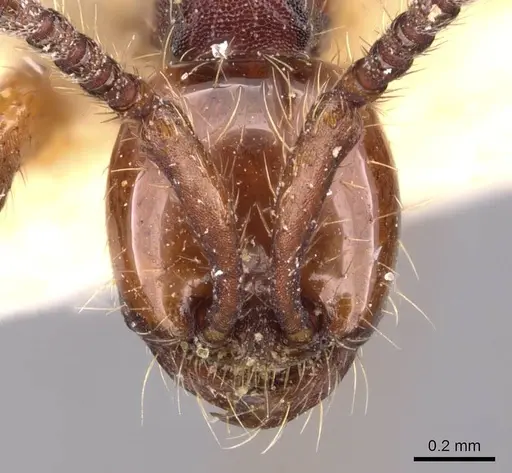
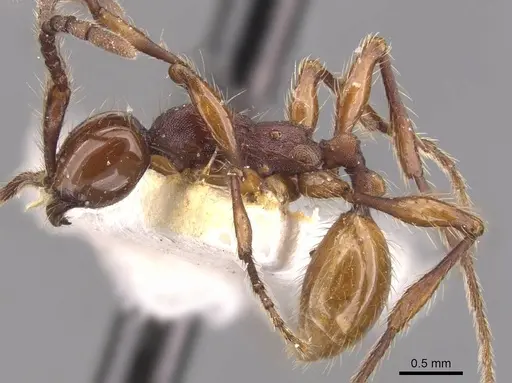
Aenictus chapmani is a tiny army ant found in the mountains of New Guinea and the Philippines. Workers have heads just 0.70-0.77 mm wide and show distinctive reddish-brown coloring, their heads and middle bodies are a rich medium reddish brown while their gasters and legs are lighter [1]. Unlike most ants you might consider keeping, this species has only been observed from worker specimens, no queens or males have ever been described [2]. They were originally discovered as several scattered lines of workers crossing a native trail in second-growth forest during the early part of the night at 1200 meters elevation on the Huon Peninsula [1]. This nocturnal foraging behavior and their army ant biology make them effectively impossible to maintain in captivity.
Quick Summary
- Difficulty: Expert
- Origin & Habitat: Huon Peninsula, New Guinea (1200m elevation) and Duamagete, Philippines, second-growth mountain forest [1][2]
- Colony Type: Unknown, only the worker caste has ever been collected [2]
- Size & Growth:
- Queen: Unknown, queen undescribed [2]
- Worker: Head width 0.70-0.77 mm, estimated total length under 3 mm [1]
- Colony: Unknown, related Aenictus species maintain colonies of hundreds to thousands of workers [2]
- Growth: Unknown
- Development: Unknown, founding behavior never observed [2] (No queen caste described, development timeline cannot be estimated.)
- Antkeeping:
- Temperature: Start around 20-24°C based on 1200m montane habitat, adjust if colony activity is observed.
- Humidity: High humidity required, keep nest substrate damp but not waterlogged to mimic forest floor conditions.
- Diapause: No, tropical species that remains active year-round [2]
- Nesting: Nomadic, army ants do not build permanent nests and require constant movement [2]
- Behavior: Nocturnal foragers that travel in scattered files across forest trails [1]. As army ants, they likely hunt in groups and prey on other social insects, though specific prey is unconfirmed. Their extremely small size presents extreme escape risks requiring fine mesh barriers.
- Common Issues: only workers known, impossible to establish colony without queen., nomadic army ant biology requires constant movement impossible to replicate in captivity., extremely small size means workers escape through the tiniest gaps., specialized predatory diet likely requires live termites or ant brood difficult to provide.
Natural History and Discovery
Edward O. Wilson first described Aenictus chapmani in 1964 from workers collected at Zingzingu in the Mongi Watershed of New Guinea's Huon Peninsula [1]. The type series came from several scattered files of workers crossing a native trail in second-growth forest during the early part of the night at 1200 meters elevation [1]. This nocturnal activity pattern and the scattered formation suggest typical army ant foraging behavior. Workers show distinctive morphology with 10-segmented antennae and mandibles bearing 3-4 teeth [1]. The head and middle body section show a rich medium reddish brown color, while the gaster and legs are noticeably lighter [1]. The species belongs to the pachycerus group within the genus, characterized by specific mandible and body sculpturing patterns [3][4].
Why This Species Cannot Be Kept in Captivity
You cannot keep Aenictus chapmani because no reproductive caste has ever been described [2]. Every ant colony requires a queen to produce new workers, and since scientists have only ever collected workers from this species, there is no way to start a captive colony. Even if a queen were discovered, army ants present insurmountable challenges for captive care. They are nomadic, meaning the entire colony moves constantly and does not build a permanent nest [2]. They require massive colony sizes to survive, likely hundreds or thousands of individuals, and specialized diets consisting primarily of other social insects like termites or ant brood. These factors combine to make captive keeping impossible for private antkeepers.
Housing and Space Requirements
If you were to attempt keeping these ants, you would face the problem that army ants cannot be housed in standard test tubes or formicaria. They require enormous spaces that allow for constant movement and nomadic behavior. In nature, they travel in foraging trails across forest floors [1]. Captive housing would need to replicate this constant movement capability, requiring multiple interconnected containers or a very large naturalistic setup. Their tiny size, with workers under 3 mm long, means escape prevention must be extreme. You would need fine mesh barriers of 0.5 mm or smaller and perfect sealing on all containers.
Diet and Feeding
While specific feeding habits remain unstudied for this species, Aenictus army ants are specialized predators of other social insects [2]. They likely prey on termites, other ant brood, and soft-bodied insects found in the leaf litter. Unlike generalist ants that accept honey or sugar water, Aenictus species typically require live prey. This means you would need to provide a constant supply of live termites or ant colonies to feed them, making maintenance extremely difficult compared to standard captive ants.
Frequently Asked Questions
Can I keep Aenictus chapmani in a test tube?
No. This species is only known from worker specimens, meaning no queen has ever been described. Without a queen, you cannot establish a colony. Additionally, army ants require specialized housing due to their nomadic lifestyle and need for constant movement [2].
How do I start an Aenictus chapmani colony?
You cannot start a colony. Founding behavior has never been observed, and the queen caste remains undescribed. Scientists have only ever collected workers, making captive propagation impossible [2].
What do Aenictus chapmani eat?
Their specific diet is unconfirmed, but as army ants they likely prey on termites, other ant brood, and soft-bodied insects. They probably require live prey rather than sugar sources [2].
Do Aenictus chapmani need a queen?
Yes, like all ants they require a queen to produce workers. However, queens have never been observed or described for this species, which is why captive keeping is impossible [2].
What temperature do Aenictus chapmani need?
Based on their collection at 1200 meters elevation in New Guinea, start with moderate temperatures around 20-24°C. However, this species is not suitable for captive keeping regardless of temperature [1].
Do Aenictus chapmani need hibernation?
No. As a tropical species from New Guinea and the Philippines, they do not require a winter rest period or diapause [2].
How big do Aenictus chapmani colonies get?
The colony size is unknown for this specific species, but related Aenictus army ants maintain colonies ranging from hundreds to thousands of workers [2].
Are Aenictus chapmani dangerous?
While they are army ants, their small size, workers under 3 mm, means they cannot sting humans effectively. However, they are predatory and should not be handled [1].
Can I keep multiple Aenictus chapmani queens together?
This is unknown and irrelevant for captive keeping since queens have never been collected or described for this species [2].
Why are my Aenictus chapmani workers dying?
If you have obtained workers, they are dying because army ant workers cannot survive long without their queen and colony structure. Workers require the colony's social environment and specialized care impossible to provide in captivity [2].
References

This caresheet is licensed under CC BY-SA 4.0 .
Literature
Loading...Loading products...