

Aenictus biroi
- Scientific Name
- Aenictus biroi
- Subfamily
- Dorylinae
- Author
- Forel, 1907
- Distribution
- Found in 1 countries
Aenictus biroi Overview
Aenictus biroi is an ant species of the genus Aenictus. It is primarily documented in 1 countries , including Sri Lanka. Detailed taxonomic data and occurrence records can be further explored via authoritative databases such as AntWeb or the Global Biodiversity Information Facility (GBIF).
Aenictus biroi
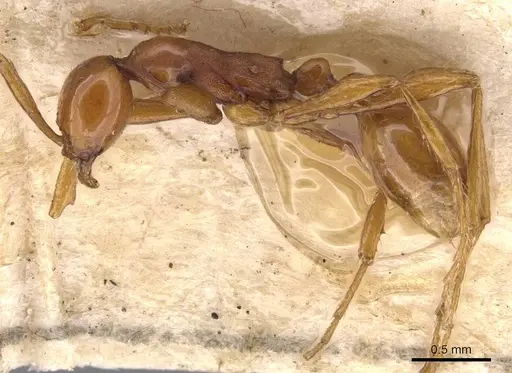
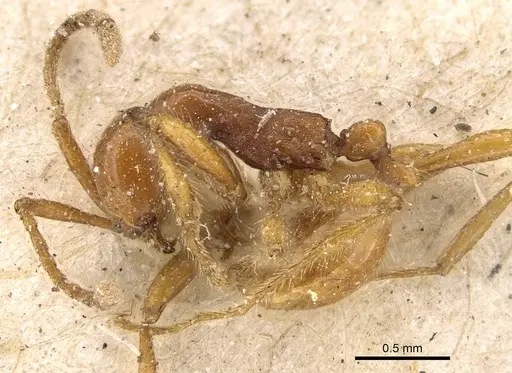
Aenictus biroi is a tiny army ant from the highlands of Sri Lanka. Workers measure just 3.1-3.2 mm and show a striking color pattern: bright yellow heads, legs, antennae, and gasters contrast sharply with a pale brown middle body section [1]. The species was described from a single colony found at 2,000 meters elevation in hard clay soil at Pattipola, living in a bare area with no vegetation cover [2][1][3]. Like other members of the Aenictus wroughtonii group, they likely prey on other ants, but virtually nothing is known about their specific biology beyond the original type specimens collected over a century ago [1][3].
What makes this species notable is how little we know about it. While most army ants are famous for their massive nomadic colonies and dramatic raiding behavior, Aenictus biroi remains a mystery known only from four worker specimens. The type colony was described as "very populous, " suggesting thousands of workers, but no one has observed this species alive since its original discovery [3]. For antkeepers, this represents the ultimate challenge: a species where even basic questions about colony founding, queen appearance, and care requirements remain completely unanswered.
Quick Summary
- Difficulty: Expert
- Origin & Habitat: Sri Lanka (Pattipola,2000m elevation), excavated in hard clay soil in bare areas [1][3]
- Colony Type: Unknown, army ants typically reproduce by colony fission (splitting existing colonies) rather than single-queen founding
- Size & Growth:
- Queen: Unknown, queens have not been described for this species [1]
- Worker: 3.1-3.2 mm [1][4]
- Colony: Very populous in type colony, likely thousands of workers based on army ant biology [3]
- Growth: Unknown
- Development: Unknown, no development data exists for this species (Army ants typically have rapid development, but specific timelines for Aenictus biroi are unconfirmed)
- Antkeeping:
- Temperature: Unknown, highland Sri Lankan location (2000m) suggests moderate temperatures around 18-22°C, but this is speculative [1]
- Humidity: Unknown, likely requires consistently moist conditions given tropical highland origin, but specific needs unconfirmed
- Diapause: Unknown, tropical highland species may slow activity in cooler months, but hibernation requirements are unconfirmed
- Nesting: Hard clay soil in nature [1], captive nesting requirements unknown. Army ants typically form temporary bivouacs rather than permanent nests
- Behavior: Army ants are active predators that raid other ant colonies. They are nomadic and require massive space. Workers are small (3mm) and would require exceptional escape prevention if keeping were attempted [1].
- Common Issues: virtually no biological data exists for this species, making captive keeping impossible to plan., army ant lifestyle requires massive space and frequent nest moves incompatible with standard formicaria., diet likely consists primarily of other ants, requiring constant access to prey colonies., extremely small worker size (3.1-3.2mm) makes escape prevention nearly impossible without specialized barriers., no successful captive keeping records exist for this species.
Natural History and Distribution
Aenictus biroi is known only from the type locality at Pattipola, Sri Lanka, at an elevation of 2,000 meters [1][2]. This highland location experiences cooler temperatures than lowland Sri Lanka, with potential nighttime drops that could affect their biology. The type colony was excavated from hard clay soil in a completely bare area without vegetation cover [3]. This nesting preference differs from many tropical army ants that form temporary bivouacs in leaf litter or under rocks. The species belongs to the Aenictus wroughtonii species group, characterized by specific mandible and body proportions [1][4]. Since its description in 1907,no additional collections have been published, making this one of the least known army ants in the world.
Morphology and Identification
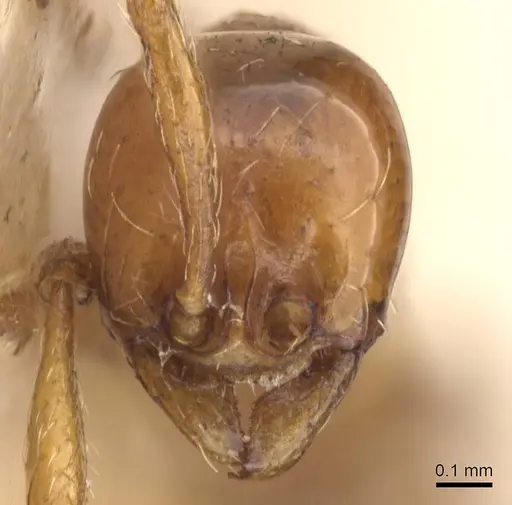
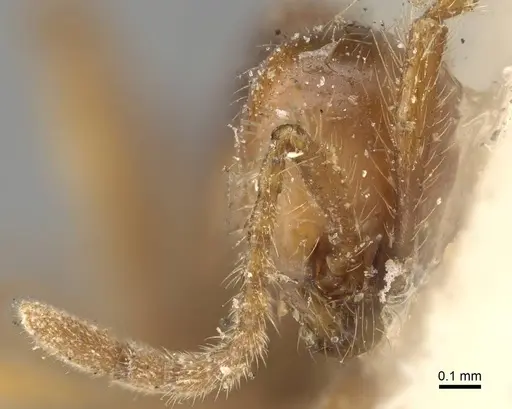
Workers of Aenictus biroi are immediately recognizable by their coloration: yellow heads, waists, gasters, antennae, and legs contrast with a pale brown mesosoma (middle body section) [1]. They measure 3.1-3.2 mm in total length, with heads that are slightly longer than broad [1][4]. The antennae are 10-segmented with long scapes that almost reach the length of the head [1]. The mandibles feature a large curved apical tooth followed by 8-10 minute teeth [1]. The propodeal junction is angulate with a broadly rounded declivity, and the petiole is slightly longer than high [1][4]. These features distinguish them from similar species like Aenictus camposi, which has a more elongated head and narrower propodeal declivity [1].
The Reality of Keeping Army Ants
Aenictus biroi presents insurmountable challenges for captive keeping. As a true army ant (subfamily Dorylinae), this species likely exhibits the nomadic lifestyle characteristic of the group: colonies frequently relocate their entire nest, maintain massive worker populations, and require huge territories to support their raiding behavior. Standard ant keeping equipment like test tubes, Y-tong nests, or acrylic formicaria cannot accommodate these needs. Additionally, army ants require specialized diets consisting primarily of other ant species, meaning keepers would need constant access to healthy prey colonies. The small size of Aenictus biroi workers (3.1-3.2 mm) creates additional escape risks that would be difficult to manage even if other care requirements were met [1]. Currently, no successful captive maintenance of this species has been documented.
Colony Structure and Reproduction
The reproductive biology of Aenictus biroi remains completely unknown. Queens have never been described for this species, and the original type series consisted only of workers [1]. Most army ants reproduce through colony fission (splitting) rather than single queens founding new colonies alone. In this process, a mature colony divides, with one portion keeping the old queen and the other raising a new queen from existing brood. This means you cannot start a colony from a single queen in a test tube as you would with many other ant species. Without knowing how Aenictus biroi specifically reproduces, or even what their queens look like, establishing a captive colony is impossible. The type colony was described as "very populous, " suggesting mature colonies contain thousands of workers [3].
Frequently Asked Questions
Can I keep Aenictus biroi in a test tube?
No. Army ants like Aenictus biroi do not found colonies in the traditional way where a single queen raises first workers in a small chamber. They likely reproduce by colony fission, requiring an existing mature colony to split. Additionally, their nomadic lifestyle and massive space requirements make test tubes completely unsuitable [1].
What do Aenictus biroi eat?
While specific dietary data is unavailable, as an army ant in the Aenictus wroughtonii group, they likely prey primarily on other ant species. Army ants are specialized predators that raid other ant colonies. This dietary requirement makes them impossible to feed with standard ant keeping foods like honey water and mealworms alone [1].
How long is the egg to worker timeline for Aenictus biroi?
Unknown. No development data exists for this species. While related army ants may develop quickly, specific timelines for Aenictus biroi have never been documented [1].
Do Aenictus biroi need a queen?
Yes, but the queens of this species have never been described. Army ants typically cannot start colonies from single queens, they reproduce by splitting existing colonies. This means you would need an entire established colony, not just a queen, to maintain them [1].
What temperature do Aenictus biroi need?
Unknown. They were collected at 2,000 meters elevation in Sri Lanka, suggesting they tolerate cooler conditions than lowland tropical ants, possibly around 18-22°C. However, specific temperature requirements have never been studied [1].
Are Aenictus biroi dangerous?
They are army ants with mandibles capable of biting, but at only 3.1-3.2 mm in size, they pose minimal threat to humans. However, their small size makes them expert escape artists, and any attempt to keep them would require exceptional barrier systems [1].
Can I keep multiple Aenictus biroi queens together?
This question does not apply in the traditional sense. Army ants likely do not accept unrelated queens. If this species follows typical army ant patterns, colonies may contain multiple queens related through fission, but you cannot simply place unrelated queens together [1].
Why are my Aenictus biroi dying?
If you have obtained these ants, they are likely dying because this species cannot be maintained with standard ant keeping methods. They require specialized diets of other ants, massive space for their nomadic lifestyle, and specific humidity conditions that are unknown but likely difficult to replicate. No successful captive keeping methods exist for this species [1].
References

This caresheet is licensed under CC BY-SA 4.0 .
CASENT0905989
View on AntWeb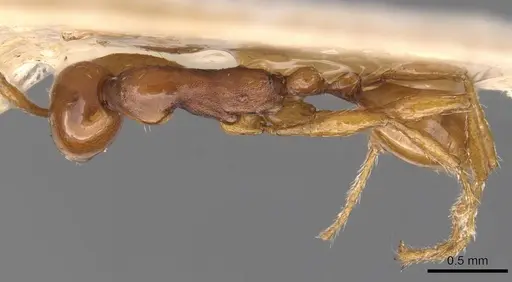
CASENT0922454
View on AntWeb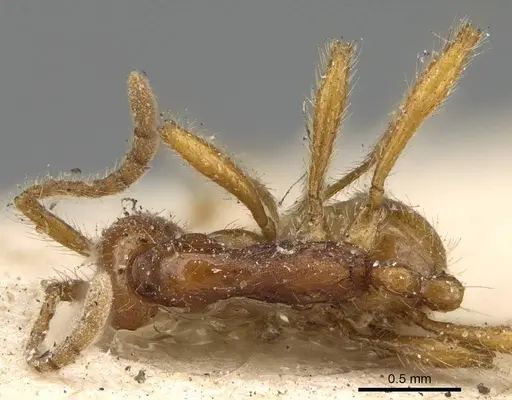
Literature
Loading...Loading products...