

Adetomyrma bressleri
- Scientific Name
- Adetomyrma bressleri
- Tribe
- Amblyoponini
- Subfamily
- Amblyoponinae
- Author
- Yoshimura & Fisher, 2012
- Distribution
- Found in 1 countries
Adetomyrma bressleri Overview
Adetomyrma bressleri is an ant species of the genus Adetomyrma. It is primarily documented in 1 countries , including Madagascar. Detailed taxonomic data and occurrence records can be further explored via authoritative databases such as AntWeb or the Global Biodiversity Information Facility (GBIF).
Adetomyrma bressleri
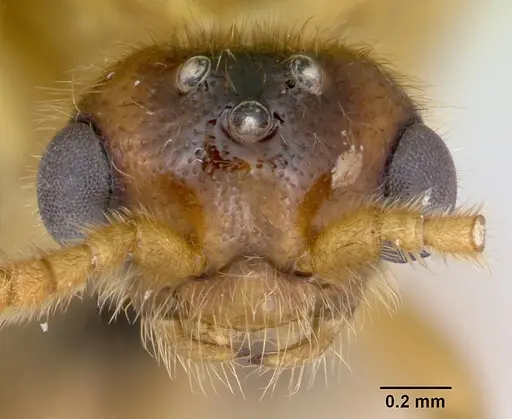
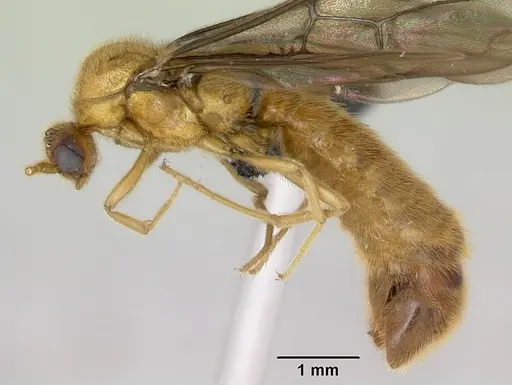
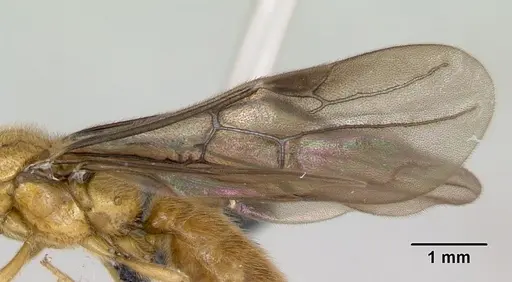
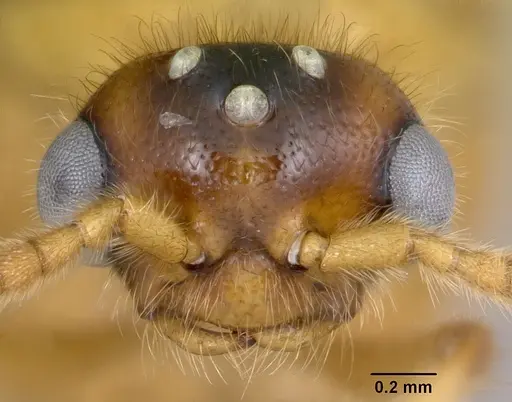
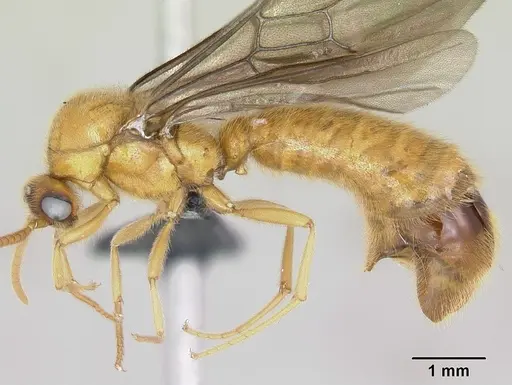
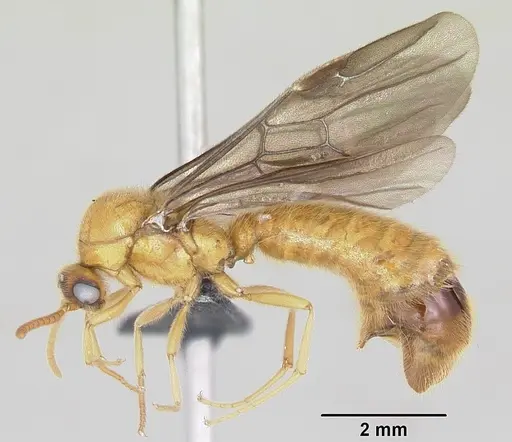
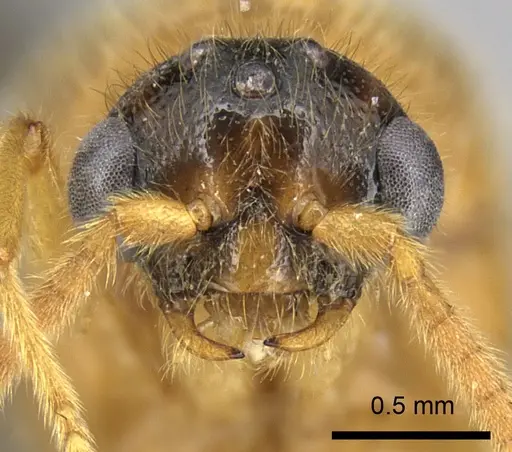
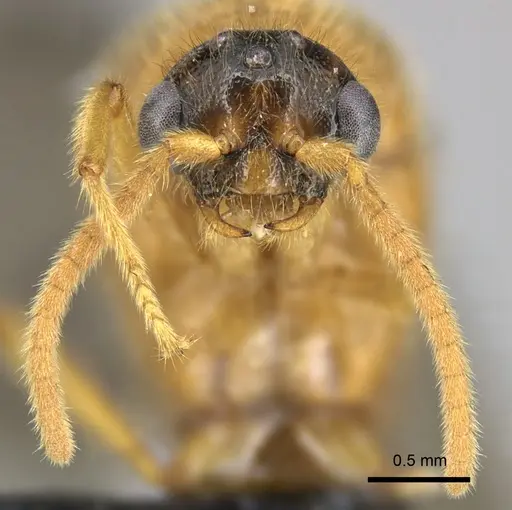
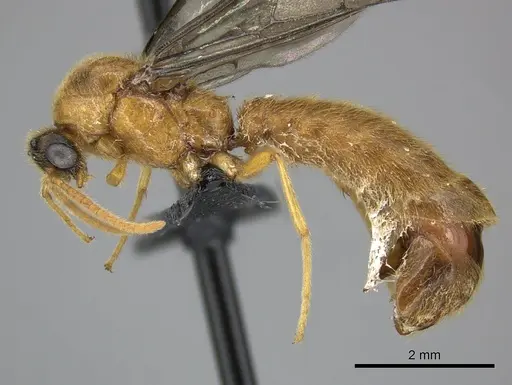
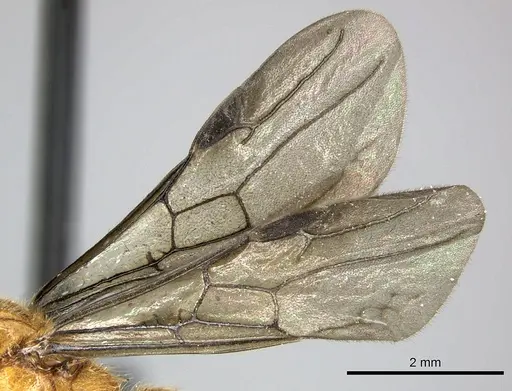
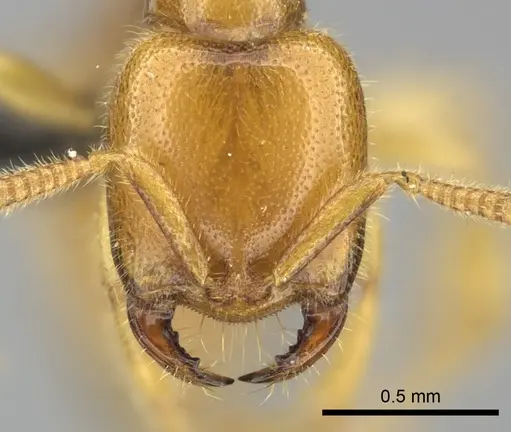
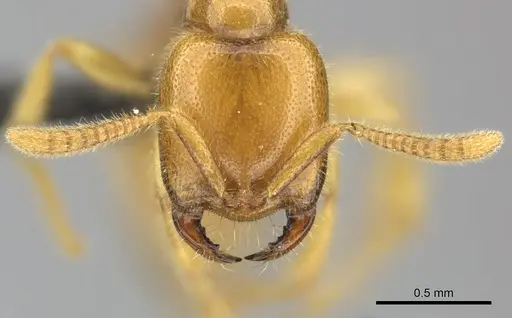
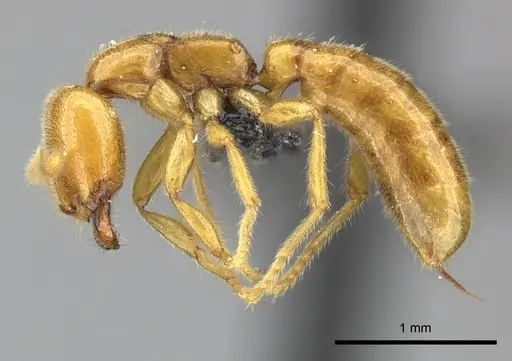
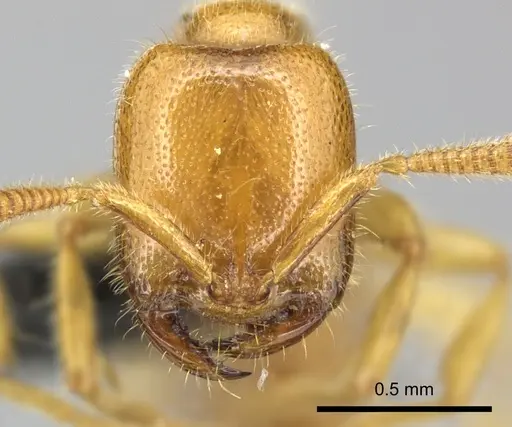
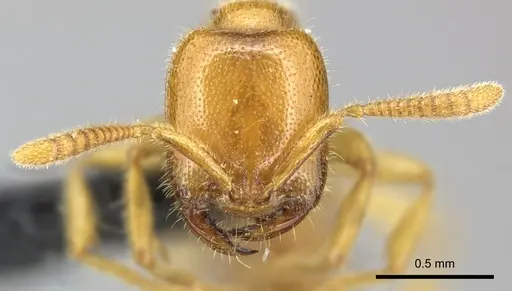
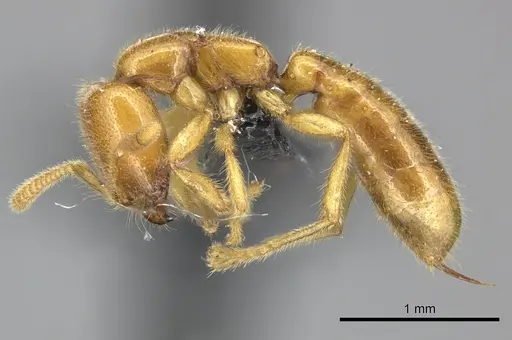
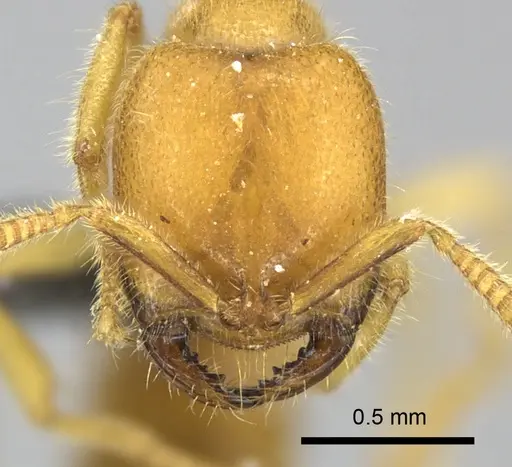
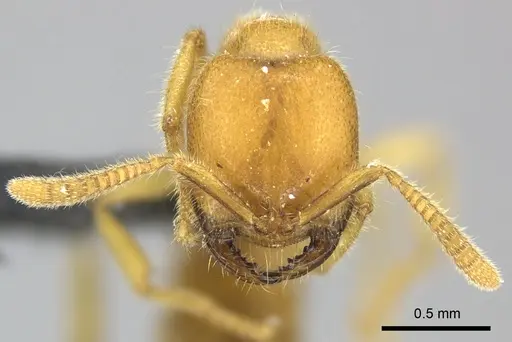
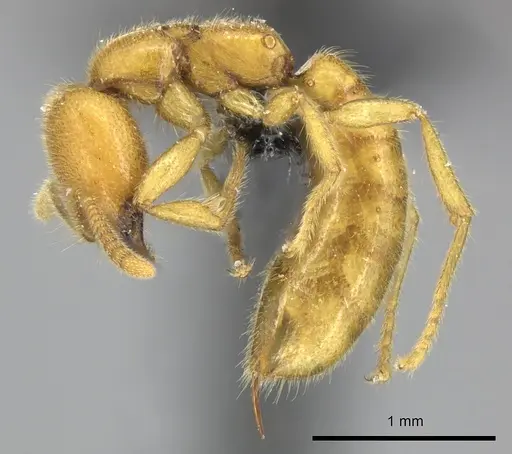
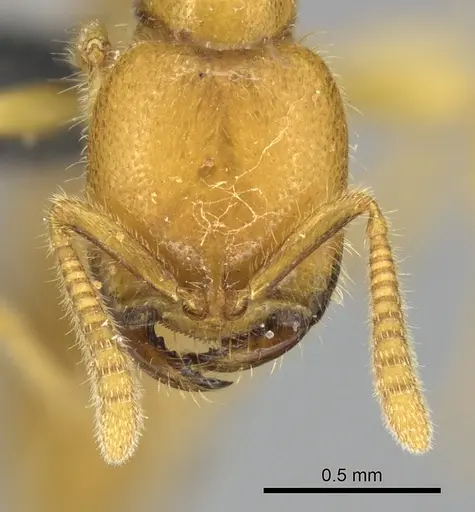
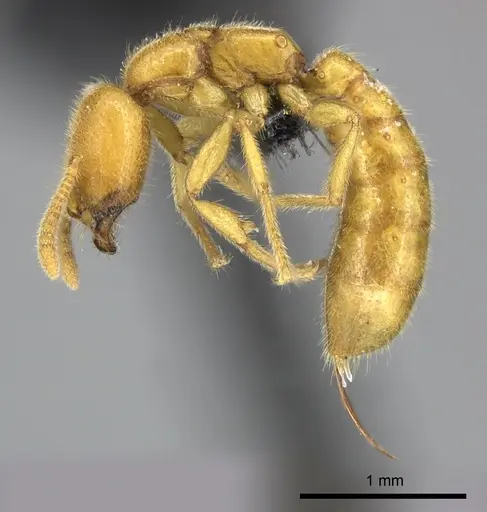
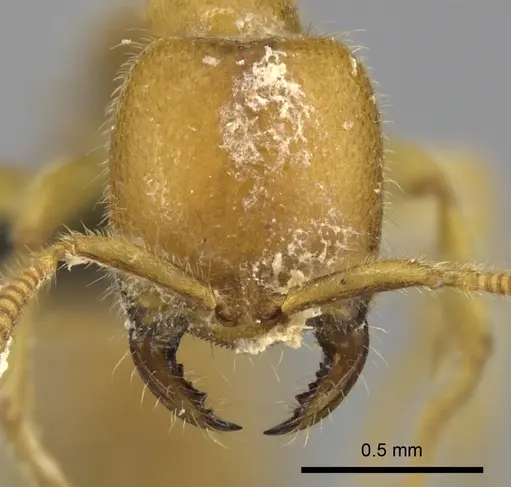
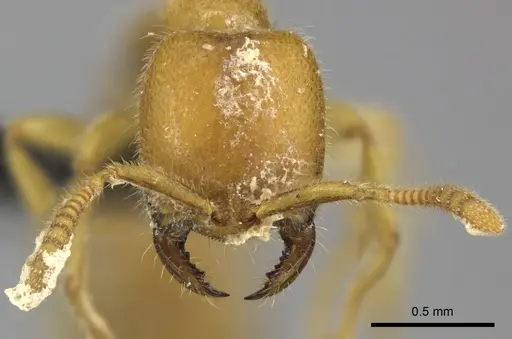
Adetomyrma bressleri is a tiny species of dracula ant found only in the montane rainforests of northern Madagascar. Workers measure just 3-4mm long with distinctive sickle-shaped mandibles and a unique abdominal stalk projection shaped like an irregular axe blade [1]. First described in 2012,this species remained one of the most mysterious ants in the world for over a decade, males were collected by Malaise traps starting in 2001,but the worker caste wasn't discovered until 2011 when researchers finally pulled apart a rotting log near a male trap [2]. That single nest contained 291 workers and 814 larvae, yet remarkably no queen was found [1]. Males are noticeably larger than workers with bright yellow bodies and brown markings on the top of their heads [1].
As a member of the Amblyoponinae subfamily, these ants likely display the "dracula ant" behavior of feeding on the blood-like hemolymph of their own larvae without killing them [3]. They nest in rotting wood on the forest floor at elevations around 900-1000 meters, where the climate is cool and constantly humid [1]. The complete absence of any observed queen means their colony founding method and social structure remain complete mysteries to science.
Quick Summary
- Difficulty: Expert
- Origin & Habitat: Madagascar (Montagne d'Ambre National Park), montane rainforest at 900-1300m elevation, nesting in rotting logs and branches on the ground [1][2].
- Colony Type: Unknown, no queen has ever been observed or collected [1].
- Size & Growth:
- Queen: Unknown, no queens found [1].
- Worker: Approximately 3-4mm (head width 0.73-0.8mm) [1].
- Colony: At least 291 workers documented in one nest [1].
- Growth: Unknown.
- Development: Unknown, no development data published. Based on typical Amblyoponinae patterns, possibly 8-12 weeks at 20-22°C, but entirely unconfirmed. (No reproductive data available. Colony contained 814 larvae at time of collection [1].)
- Antkeeping:
- Temperature: Likely cool and stable, roughly 18-22°C based on montane rainforest habitat at 984m elevation [1]. Start at 20°C and observe colony response.
- Humidity: High humidity required, keep nest substrate damp but not waterlogged, mimicking rotting wood conditions [1].
- Diapause: Unknown.
- Nesting: Natural nests in rotting logs and branches on forest floor [2]. In captivity, a naturalistic setup with rotting wood or a plaster nest with tight chambers might work, though keeping this species is currently not feasible.
- Behavior: Likely specialized predators with non-aggressive toward humans due to minute size. Escape risk is moderate due to tiny worker size requiring fine mesh barriers [1].
- Common Issues: no queens have ever been found, making captive founding currently impossible., legal restrictions apply to Madagascar endemics, export and keeping may violate international agreements., tiny worker size means standard escape prevention may be inadequate., specialized diet likely required based on Amblyoponinae patterns, but specific needs unconfirmed.
Discovery and the Missing Queen
The story of Adetomyrma bressleri highlights how much we still don't know about ants. Researchers first collected males from Malaise traps at Montagne d'Ambre in 2001,but despite three separate expeditions to find the female castes, workers remained elusive for ten years [2]. Finally, in 2011,the breakthrough came when workers were found inside a rotting log near a trap that had been catching males. As researchers pulled the log apart, they collected 291 workers and an astonishing 814 larvae, but no queen was visible [1]. This raises the possibility that queens are extremely cryptic, possibly ergatoid (wingless and worker-like), or that they were simply missed in the excavation. Until a queen is found, the reproductive biology of this species remains a complete mystery.
Habitat and Microclimate
In the wild, Adetomyrma bressleri inhabits montane rainforest at approximately 984 meters elevation, where temperatures are cooler and more stable than the lowlands [1]. The single documented nest was in a rotting log on the ground, suggesting they prefer decaying wood in shaded, damp forest floors. Males were collected at elevations between 900-1300 meters, indicating the species is restricted to this montane band [2]. For captive keeping, this suggests you would need to replicate cool, humid conditions with plenty of rotting wood substrate, though currently no captive colonies exist.
Morphology and Identification
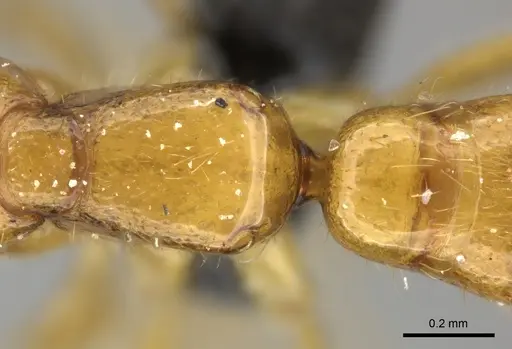
Workers of Adetomyrma bressleri are immediately recognizable by their minute size and distinctive mandibles, each worker has sickle-shaped mandibles with two main teeth and five smaller basal teeth, including a small denticle on the base of the second tooth from the tip [1]. Their head is slightly longer than wide with a concave back margin, and they possess a large breathing hole on the thorax that is fully visible from above [1]. The subpetiolar process, a projection on the bottom of the waist segment, is shaped like an irregular axe blade [1]. Males are dramatically different: much larger with big eyes, yellow bodies, and brown coloring on the top of the head [1].
Why You Cannot Keep This Species (Yet)
Despite being described over a decade ago, Adetomyrma bressleri remains unavailable to antkeepers for several reasons. First, no queen has ever been collected, meaning founding a colony is impossible [1]. Second, as a Madagascar endemic, this species is likely protected by strict export laws and international agreements regarding biodiversity from the island. Third, as a member of the Amblyoponinae subfamily, they likely require specialized care involving live prey and possibly the "dracula ant" feeding behavior where adults consume hemolymph from their own larvae [3]. Until queens are discovered and basic captive rearing protocols are established, this species remains strictly in the realm of scientific research.
Frequently Asked Questions
Can I keep Adetomyrma bressleri in captivity?
No. This species is not available to antkeepers because no queen has ever been collected, making it impossible to start a colony. Additionally, as a Madagascar endemic, legal restrictions likely prohibit export and keeping.
Where do Adetomyrma bressleri live in the wild?
They live only in Madagascar, specifically in Montagne d'Ambre National Park in the north. They inhabit montane rainforest at elevations between 900-1300 meters, nesting in rotting logs and branches on the forest floor.
How big are Adetomyrma bressleri workers?
Workers are very small, approximately 3-4mm in total body length with a head width of just 0.73-0.8mm. Males are noticeably larger.
Why has no queen been found for Adetomyrma bressleri?
Scientists don't know. When researchers found a colony with 291 workers and 814 larvae, no queen was visible. She may be extremely cryptic, possibly wingless and similar to workers (ergatoid), or was simply missed during collection.
Do Adetomyrma bressleri ants sting?
Like other members of their subfamily, they likely possess a functional sting, but their extremely small size means they cannot penetrate human skin and pose no danger to keepers.
What do Adetomyrma bressleri eat?
Their specific diet is unknown, but as Amblyoponinae (dracula ants), they likely feed on live prey and practice non-lethal cannibalism where adults consume hemolymph from their own larvae.
Are Adetomyrma bressleri good for beginners?
No. This is an expert-level species that is not available in the hobby, has never been kept in captivity, and requires specialized care that hasn't been developed yet.
Can I buy Adetomyrma bressleri colonies?
No. This species is not sold by any ant dealers. It is extremely rare in scientific collections, found only in Madagascar, and no queens have ever been collected.
How many workers are in an Adetomyrma bressleri colony?
The only documented nest contained 291 workers, but this may not represent the maximum colony size. That colony also contained 814 larvae.
Do Adetomyrma bressleri need hibernation?
Their diapause requirements are unknown. As a tropical montane species, they may experience cooler dry seasons, but no data confirms whether they require winter rest in captivity.
References

This caresheet is licensed under CC BY-SA 4.0 .
CASENT0007350
View on AntWeb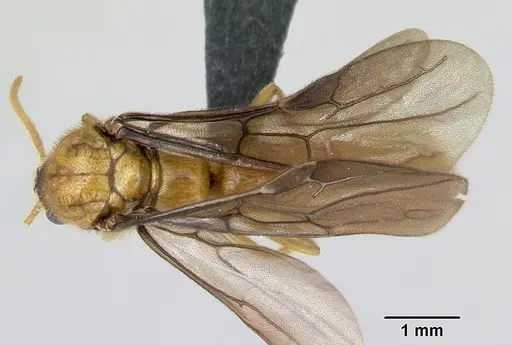
CASENT0008693
View on AntWeb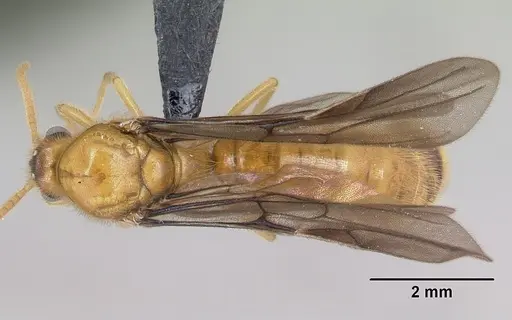
CASENT0205990
View on AntWeb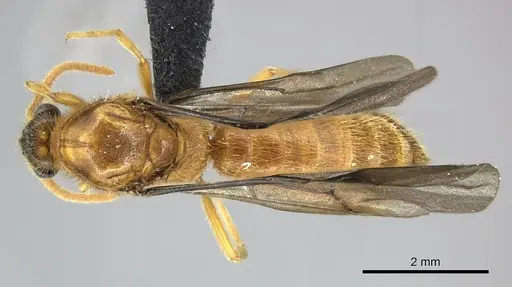
CASENT0205995
View on AntWeb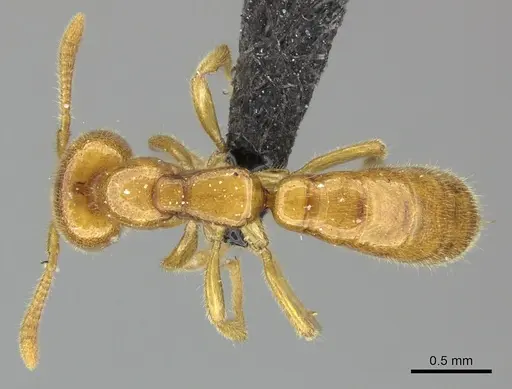
CASENT0205996
View on AntWeb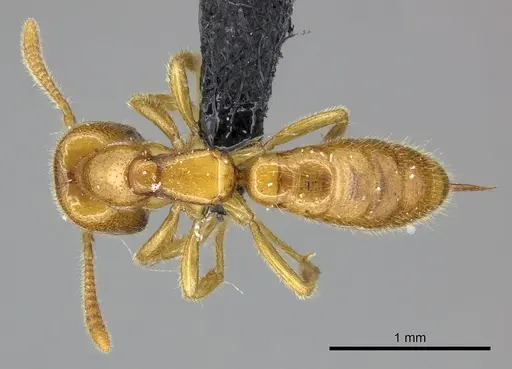
CASENT0205997
View on AntWeb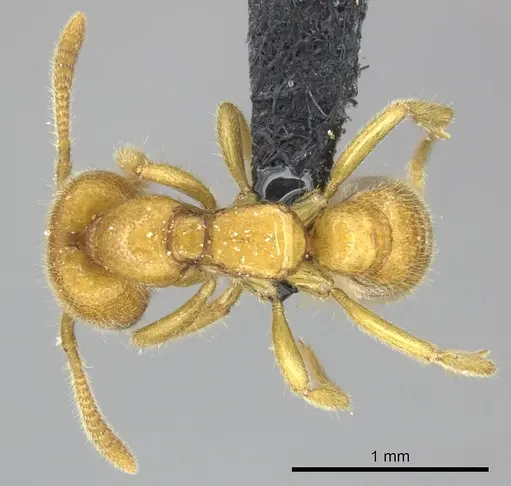
CASENT0205998
View on AntWeb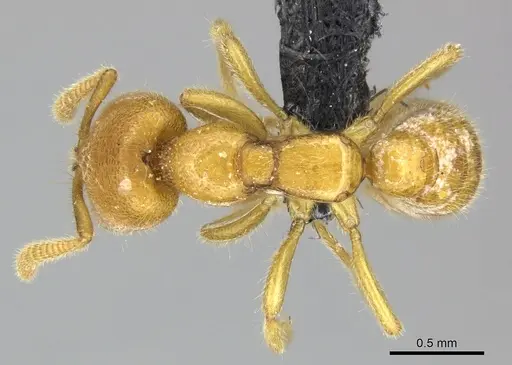
CASENT0205999
View on AntWeb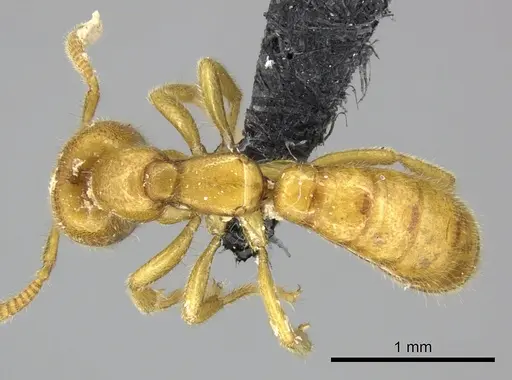
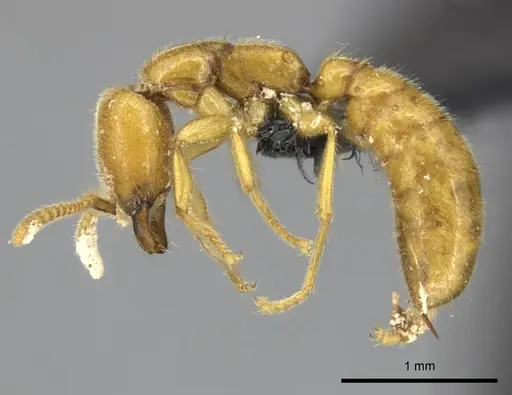
CASENT0218012
View on AntWeb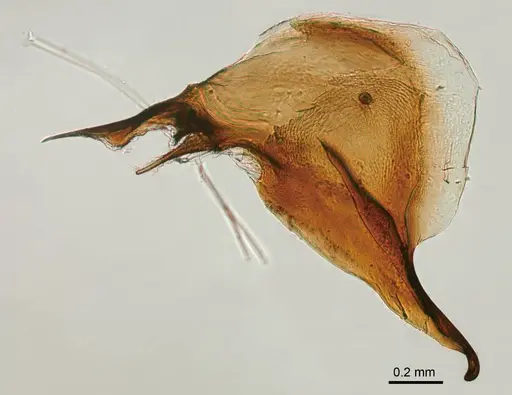
Literature
Loading...Loading products...