

Adelomyrmex striatus
- Scientific Name
- Adelomyrmex striatus
- Tribe
- Solenopsidini
- Subfamily
- Myrmicinae
- Author
- Fernández, 2003
- Distribution
- Found in 3 countries
Adelomyrmex striatus Overview
Adelomyrmex striatus is an ant species of the genus Adelomyrmex. It is primarily documented in 3 countries , including Colombia, Ecuador, Peru. Detailed taxonomic data and occurrence records can be further explored via authoritative databases such as AntWeb or the Global Biodiversity Information Facility (GBIF).
Adelomyrmex striatus
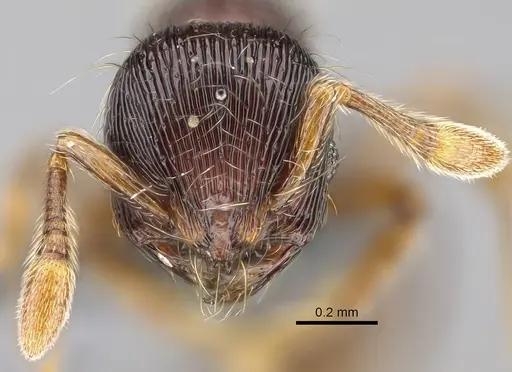
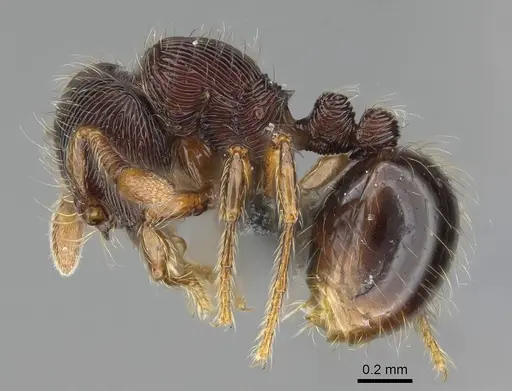
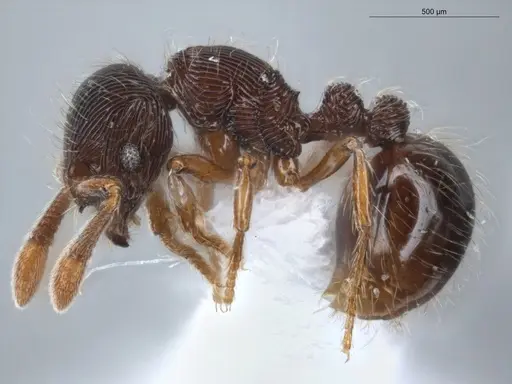
Adelomyrmex striatus is a tiny ant from the Amazon rainforest, first described in 2003. Workers measure just over 2mm long and show distinctive longitudinal striations, fine parallel lines running along the head and body that give them a striped appearance [1]. They live in the leaf litter and rotten wood of the Amazon basin across Brazil, Colombia, Ecuador and Peru [2][3]. Longino (2012) noted interesting variation in specimens from Peru, where some workers and queens had smoother, shinier bodies compared to the striated type specimens from Brazil [4]. These are cryptic ants that prefer humid microhabitats under logs and in decaying wood.
Quick Summary
- Difficulty: Expert
- Origin & Habitat: Amazon basin of Brazil, Colombia, Ecuador and Peru, found in rainforest leaf litter and rotten wood at elevations of 88-400m [1][2][4].
- Colony Type: Unknown, single queens have been observed in samples but colony structure is unconfirmed [4].
- Size & Growth:
- Queen: Unknown, queens observed but not measured [4].
- Worker: Approximately 2.1mm total length (TL 2.13mm, head width 0.51mm) [1][5].
- Colony: Unknown, likely small given cryptic lifestyle.
- Growth: Unknown, likely slow.
- Development: Estimated 8-12 weeks at 25°C based on similar small myrmicines, but unconfirmed. (This is an estimate only. Actual development time may vary significantly based on temperature and diet.)
- Antkeeping:
- Temperature: Keep stable around 24-26°C year-round. As Amazonian rainforest ants, they need tropical conditions without seasonal cooling.
- Humidity: High humidity required, keep nest substrate damp but not waterlogged, similar to their rotten wood habitat [2].
- Diapause: No, tropical species that remains active year-round.
- Nesting: Small cavities mimicking rotten wood or tight spaces in leaf litter. Mini naturalistic setups with decaying wood pieces or very small test tubes work best [2].
- Behavior: Cryptic and slow-moving based on habitat and morphology. They are extremely small (2mm) which makes escape prevention critical, they can squeeze through the tiniest gaps [1].
- Common Issues: tiny size means escapes are likely without fine mesh barriers under 0.5mm and perfectly sealed connections., founding behavior is completely unconfirmed, success rates for raising colonies from queens are unknown., high humidity requirements can lead to mold issues if ventilation is inadequate., prey items must be extremely small, standard fruit flies may be too large for these 2mm workers.
Natural History and Distribution
Adelomyrmex striatus inhabits the Amazon rainforest floor across the basin. Specimens have been collected in Brazil (Amazonas state), Colombia (Amazonas department), Ecuador (Napo province), and Peru (Loreto region) [1][2][4]. They live in rotten wood and leaf litter, typically extracted using Winkler samples from forest floor material [2]. Collection sites range from 88m to 400m elevation, indicating they prefer lowland tropical rainforest habitats [2][4]. This suggests they require consistently warm, humid conditions similar to the forest understory where they nest in decaying wood and soil.
Identification and Appearance
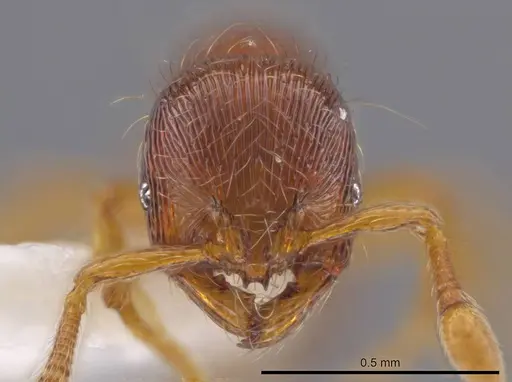
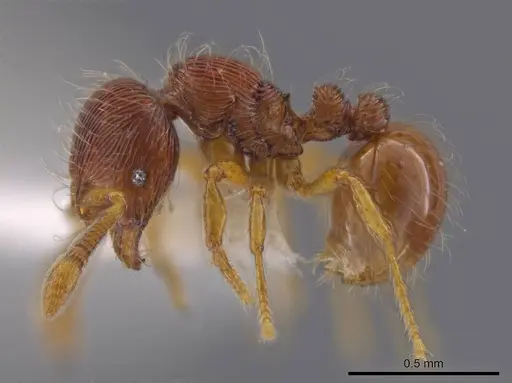
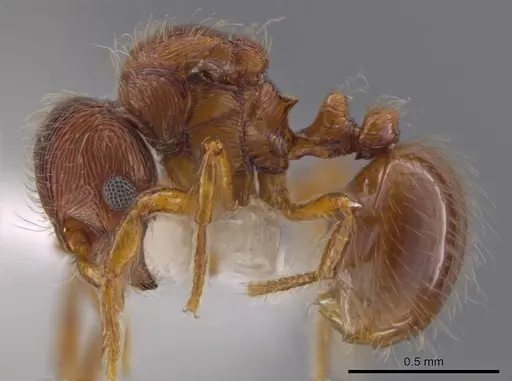
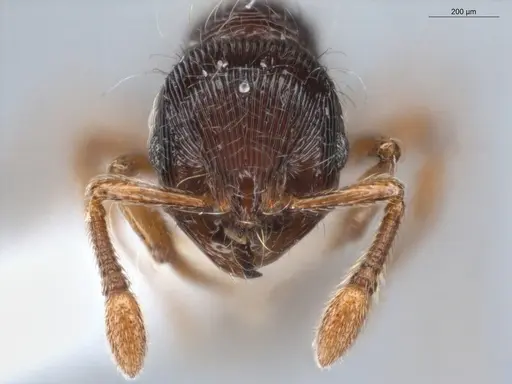
Workers are immediately recognizable by the conspicuous longitudinal striation, fine parallel ridges running along the head, pronotum, and mesonotum that create a striped texture [1][2]. They have very short propodeal spines (small spines on the rear of the thorax) reduced to small triangles, and a subquadrate petiole node [1]. The body is brown with a lighter brown gaster (abdomen), and antennae and legs are yellowish [1]. Eyes are tiny with only about 14 facets, indicating poor vision typical of cryptic litter-dwelling ants [1]. Longino (2012) documented variation in Peruvian specimens where some workers and queens had smoother, shinier petiole nodes compared to the striated Brazilian type specimens [4].
Housing and Nest Setup
Given their tiny size (just over 2mm), escape prevention is your biggest challenge. You will need fine mesh under 0.5mm and perfect seals on all connections. A test tube setup with very small diameter (5-10mm) works for founding, or a mini naturalistic setup with rotten wood pieces and leaf litter. Keep the nest area humid but not waterlogged, maintain damp substrate conditions similar to their rotten wood habitat [2]. Avoid large open spaces, these ants prefer tight cavities and small chambers.
Temperature and Environment
As Amazonian rainforest ants, they need stable warmth year-round. Keep them around 24-26°C with minimal fluctuation. They do not need hibernation or cooling periods. High humidity is essential, maintain damp substrate conditions. You can achieve this by using a water tower or moistening the substrate directly, but ensure some ventilation to prevent mold while keeping the air humid. [2][3]
Feeding
Their specific diet is unconfirmed in research. Based on related Solenopsidini ants and their cryptic lifestyle in leaf litter, they likely accept small live prey like springtails, soil mites, and tiny insects. Offer sugar water or honey water for carbohydrates, but protein will be crucial for brood development. Prey items must be appropriately small for 2mm workers, standard fruit flies may be too large.
Colony Founding
Founding behavior is completely unconfirmed for this species. Whether queens seal themselves in and live off stored fat (claustral founding) or need to leave the nest to hunt (semi-claustral founding) has not been documented. If you obtain a queen, provide a small, humid chamber and offer both sugary liquids and tiny prey items to cover both possibilities. Success rates for captive founding are unknown.
Growth and Development
The egg-to-worker timeline is unknown for Adelomyrmex striatus. Based on similar small tropical myrmicines, you might expect roughly 8-12 weeks at 25°C, but this is purely an estimate. Colonies likely grow slowly given their cryptic nature and small worker size. Patience is essential as development may take longer than more commonly kept species.
Frequently Asked Questions
Can I keep Adelomyrmex striatus in a test tube?
Yes, but use a very small diameter test tube (5-10mm) rather than standard sizes. These ants are only 2mm long, so large tubes give them too much space and make monitoring difficult. Ensure the cotton plug is tight-fitting to prevent escapes.
How long until first workers for Adelomyrmex striatus?
Unknown. Based on similar small myrmicine ants, estimate 8-12 weeks at 25°C, but this is unconfirmed. Development may be faster or slower depending on temperature and whether the queen needs to forage during founding.
Can I keep multiple Adelomyrmex striatus queens together?
Not recommended. The colony structure is unknown, and combining unrelated queens has not been documented. Single queens have been found in samples, but whether colonies accept multiple queens is unconfirmed [4].
Do Adelomyrmex striatus ants sting?
They are too small to penetrate human skin effectively at only 2mm long [1]. However, all ants can bite, and some people may react to formic acid. Handle with care using standard soft forceps or by containing them.
Are Adelomyrmex striatus good for beginners?
No, these are expert-level ants only. Their tiny size makes escape prevention extremely difficult, their founding behavior is unconfirmed, and there is virtually no captive breeding information available. Beginners should start with larger, well-documented species.
Do Adelomyrmex striatus need hibernation?
No. They are tropical Amazonian ants that remain active year-round. Keep them at stable warm temperatures (24-26°C) without seasonal cooling periods [2][3].
What do Adelomyrmex striatus eat?
Their diet is unconfirmed, but they likely accept small live prey like springtails and mites, plus sugar water. Prey must be tiny to suit their 2mm size [1].
Why are my Adelomyrmex striatus workers dying?
Common causes include escapes (they are only 2mm and easily lost), desiccation from humidity that is too low, or prey that is too large to handle. Ensure your enclosure is perfectly sealed and maintains damp conditions similar to rotten wood [2].
How big do Adelomyrmex striatus colonies get?
Unknown. Based on their cryptic lifestyle and small size, they likely remain small, possibly under 100 workers, but this is speculation.
References

This caresheet is licensed under CC BY-SA 4.0 .
CASENT0375143
View on AntWeb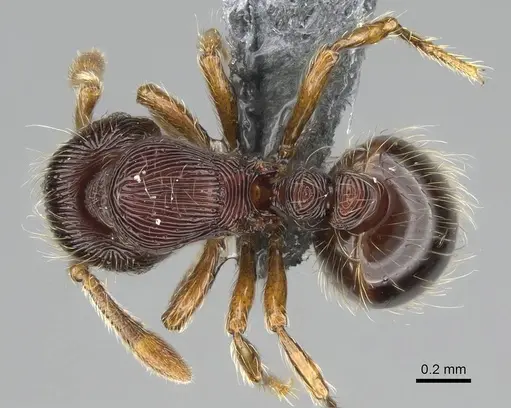
CASENT0629013
View on AntWeb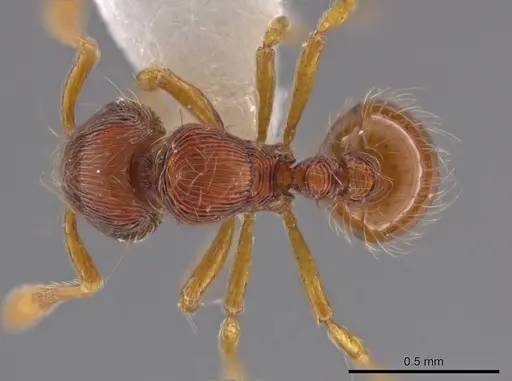
CASENT0629018
View on AntWeb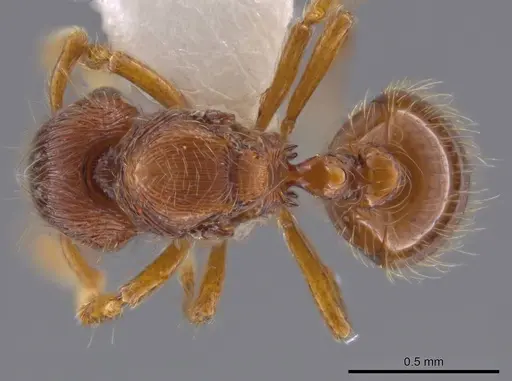
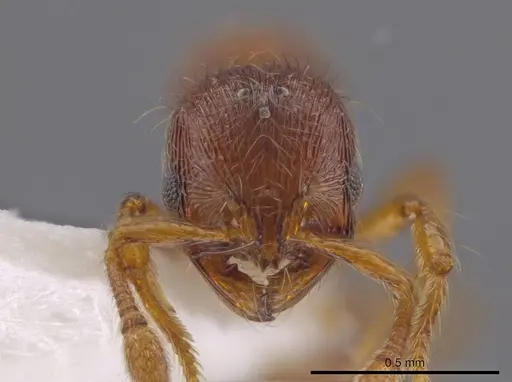
CASENT0631971
View on AntWeb
ECOFOG-GAL18-0189-25
View on AntWeb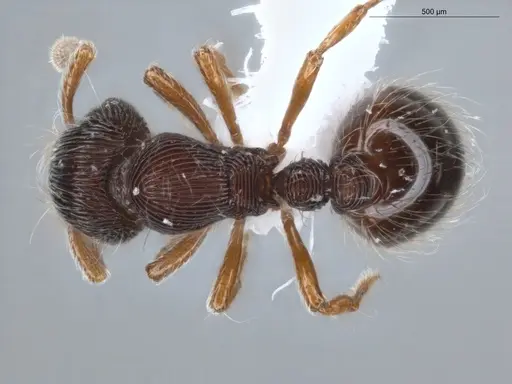
Literature
Loading...Loading products...