

Adelomyrmex mackayi
- Scientific Name
- Adelomyrmex mackayi
- Tribe
- Solenopsidini
- Subfamily
- Myrmicinae
- Author
- Fernández, 2003
- Distribution
- Found in 2 countries
Adelomyrmex mackayi Overview
Adelomyrmex mackayi is an ant species of the genus Adelomyrmex. It is primarily documented in 2 countries , including Guatemala, Mexico. Detailed taxonomic data and occurrence records can be further explored via authoritative databases such as AntWeb or the Global Biodiversity Information Facility (GBIF).
Adelomyrmex mackayi
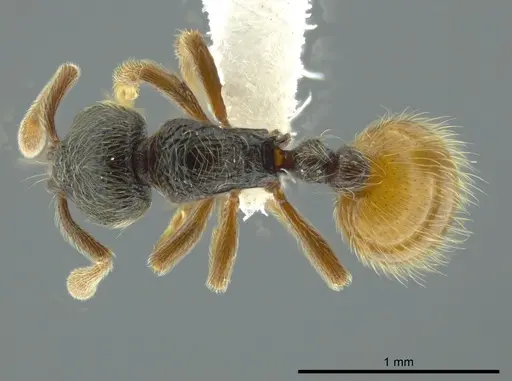
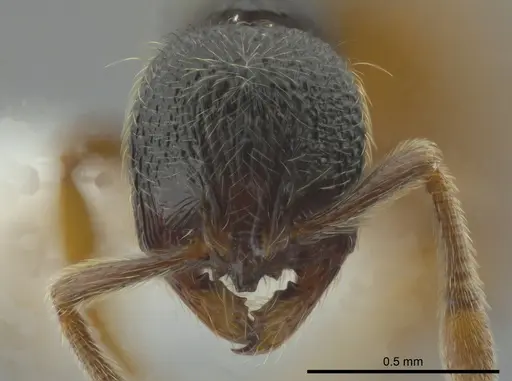
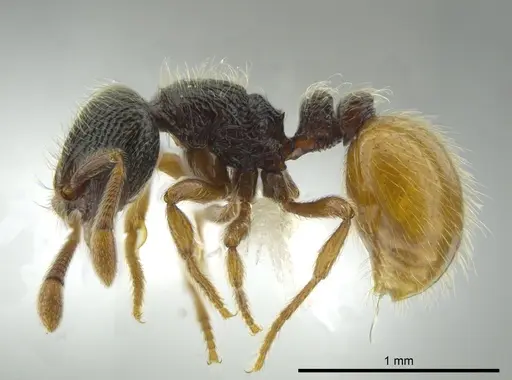
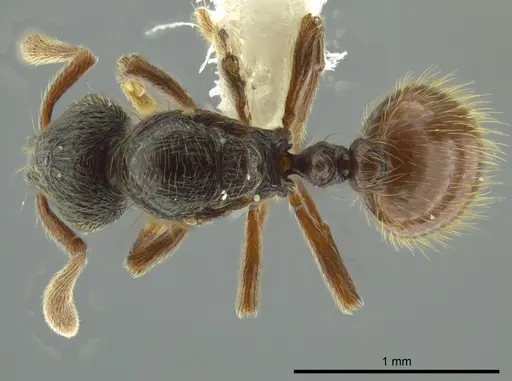
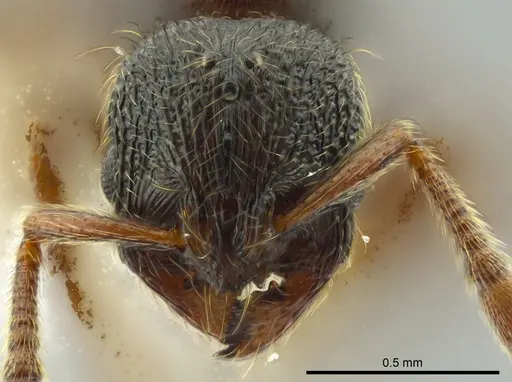
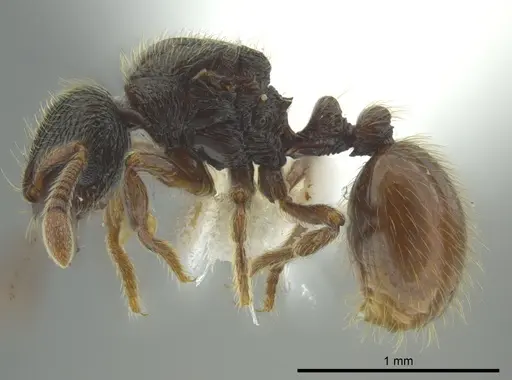
Adelomyrmex mackayi is a tiny myrmicine ant native to the highlands of southern Mexico and Guatemala. Workers measure just 2.78mm total length, making them one of the smaller ant species you'll encounter [1]. The most striking feature is their sharp bicoloration: the head and mesosoma (middle body section) are dark brown, while the gaster (abdomen) is a contrasting light yellow-brown. This color pattern is unique within the genus and makes them instantly recognizable [2]. They belong to the Solenopsidini tribe and have 12-segmented antennae with a 2-segmented club [3].
This species is a high elevation specialist found only in montane cloud forest between 1900 and 2100 meters elevation [2]. Their range is extremely limited, known from only three sites across northern Chiapas and central Guatemala. This makes them particularly vulnerable to climate change, as they are essentially mountain-top specialists with nowhere to go as temperatures warm [2]. Males have never been collected, suggesting their reproductive biology may be unusual or colonies are small and cryptic.
Quick Summary
- Difficulty: Expert
- Origin & Habitat: High montane cloud forest in southern Mexico (Chiapas) and central Guatemala at 1900-2100m elevation [2]. The species is a high elevation specialist found only on ridge crests in cloud forest [2].
- Colony Type: Colony structure is unconfirmed. Males have never been collected, and the queen was only described in 2012 [2]. Likely small colonies based on related Adelomyrmex species.
- Size & Growth:
- Queen: Undescribed in detail, queen was described by Longino (2012) but specific measurements not provided [2]. Likely similar to worker proportions.
- Worker: 2.78mm total length (HL 0.69mm, HW 0.59mm) [1]. Workers are tiny.
- Colony: Unknown, no colony size data available. Related species typically have small colonies.
- Growth: Unknown, no development data available.
- Development: Unknown, no direct measurements. Based on typical Myrmicinae patterns and their small size, estimate 6-10 weeks at optimal temperature, but this is an educated guess. (No specific development data exists for this species. Estimates based on genus-level patterns.)
- Antkeeping:
- Temperature: High elevation cloud forest suggests cool conditions. Start around 18-22°C and monitor colony activity. Avoid overheating, they naturally live in cool mountain environments [2].
- Humidity: Cloud forest environment means high humidity needs. Keep substrate consistently moist but not waterlogged. Aim for 70-85% humidity in the nest area.
- Diapause: Unknown, no specific data on overwintering requirements. However, their high elevation origin suggests they may need a cool period or reduced activity during winter months.
- Nesting: No specific nesting data exists. Based on genus patterns, they likely nest in soil or rotting wood in humid forest floor microhabitats. A naturalistic setup with moist substrate or a Y-tong/plaster nest works well.
- Behavior: Behavior is poorly documented. They are likely cryptic and slow-moving like other Adelomyrmex species. Their tiny size (under 3mm) means escape prevention is critical, they can squeeze through standard test tube barriers. Use fine mesh and tight-fitting lids. Temperament is unknown but likely non-aggressive based on genus patterns.
- Common Issues: tiny size makes escape likely without fine mesh barriers, no available information on founding or colony development makes successful captive breeding very difficult, high elevation requirements mean they may not tolerate standard room temperatures, extremely limited range in the wild means wild-caught colonies are rare and potentially harmful to populations, humidity requirements may conflict with ventilation needs, balance is key
Housing and Nest Setup
Given their tiny size and humid requirements, a Y-tong (acrylic) nest or plaster nest with small chambers works well. The chambers should be appropriately scaled to their minute size, avoid large open spaces. Keep the nest area consistently moist but not flooded. A water reservoir connected to the nest helps maintain humidity. Because they are just 2.78mm long, escape prevention must be excellent. Use fine mesh (at least 0.5mm) on any openings and ensure all connections are tight-fitting. A small outworld for foraging completes the setup. [1][2]
Temperature and Environmental Control
This is the most critical aspect of keeping Adelomyrmex mackayi. As a high elevation species from 1900-2100m in cloud forest, they are adapted to cool, stable conditions. Room temperature alone may be too warm, aim for 18-22°C in the nest area. Use a small heating cable on one side of the nest only if room temperature falls below 18°C, and monitor carefully to avoid overheating. They are likely sensitive to temperature spikes. The cloud forest environment also suggests they need high ambient humidity, consider using a humidifier or moisture reservoir in the enclosure. [2]
Feeding and Diet
Dietary requirements are not documented for this species. Based on typical Adelomyrmex and Solenopsidini biology, they are likely omnivorous with a preference for small prey. Offer tiny insects like fruit flies, springtails, or small mealworm pieces. Sugar sources may be accepted, a small drop of honey water or sugar water can be offered occasionally. However, since their natural diet is poorly known, be prepared to experiment. Remove uneaten food promptly to prevent mold in the humid environment.
Challenges and Conservation Status
Adelomyrmex mackayi faces real threats in the wild. It is considered in danger of mountain-top extinction due to climate change, as temperatures warm, the cloud forest zone moves upslope, and this species has nowhere to go [2]. Their entire known range consists of just three sites at high elevation in Chiapas and Guatemala. For antkeepers, this has two implications: first, wild colonies should not be collected as this could harm already tiny populations. Second, any successful captive breeding is scientifically valuable. This species is not for beginners, the lack of available care information means you are essentially pioneering captive husbandry for a poorly known species.
Frequently Asked Questions
How long does it take for Adelomyrmex mackayi to develop from egg to worker?
This is unknown, no development data exists for this species. Based on typical Myrmicinae patterns and their small size, expect roughly 6-10 weeks at optimal temperature, but this is an educated guess rather than confirmed data.
What temperature do Adelomyrmex mackayi ants need?
They need cool conditions, around 18-22°C. This is a high elevation cloud forest species naturally found at 1900-2100m elevation, so they are adapted to cool, stable temperatures. Avoid overheating.
How big do Adelomyrmex mackayi colonies get?
Colony size is unknown, no colony size data has been documented. Related Adelomyrmex species typically have small colonies, so expect under 100 workers likely.
Are Adelomyrmex mackayi good for beginners?
No. This is an expert-level species due to the complete lack of captive care information, their specialized high elevation requirements, and their conservation concern. They are not recommended for beginners.
Can I keep multiple Adelomyrmex mackayi queens together?
This is unknown, colony structure has not been documented for this species. Do not attempt combining unrelated queens without evidence they will accept each other.
What do Adelomyrmex mackayi ants eat?
Diet is unconfirmed. Based on genus patterns, likely small live prey (springtails, fruit flies) and possibly sugar sources. Offer variety and remove uneaten food promptly.
Do Adelomyrmex mackayi need hibernation?
Unknown, no specific data on overwintering requirements. Their high elevation origin suggests they may need a cool period or reduced activity during winter months. Monitor colony behavior.
Why are my Adelomyrmex mackayi dying?
Without specific data, common causes are likely: temperature too high (they need cool conditions), humidity too low (cloud forest species), or escape through tiny gaps. Their requirements are poorly understood.
Where is Adelomyrmex mackayi found in the wild?
Only in high montane cloud forest in southern Mexico (Chiapas) and central Guatemala, at elevations between 1900-2100 meters. Their range is extremely limited to just three sites.
References

This caresheet is licensed under CC BY-SA 4.0 .
Literature
Loading...Loading products...