

Adelomyrmex foveolatus
- Scientific Name
- Adelomyrmex foveolatus
- Tribe
- Solenopsidini
- Subfamily
- Myrmicinae
- Author
- Fernández, 2003
- Distribution
- Found in 2 countries
Adelomyrmex foveolatus Overview
Adelomyrmex foveolatus is an ant species of the genus Adelomyrmex. It is primarily documented in 2 countries , including Costa Rica, Panama. Detailed taxonomic data and occurrence records can be further explored via authoritative databases such as AntWeb or the Global Biodiversity Information Facility (GBIF).
Adelomyrmex foveolatus
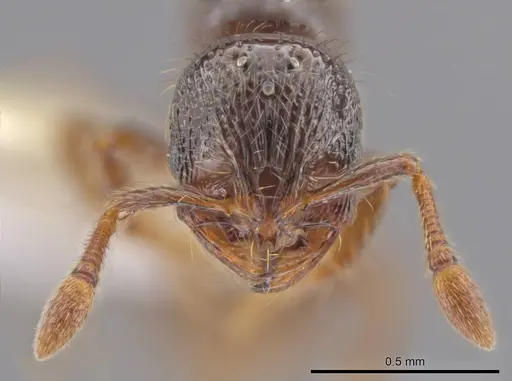
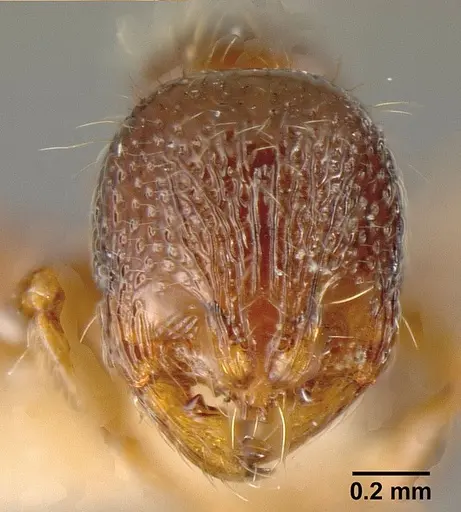
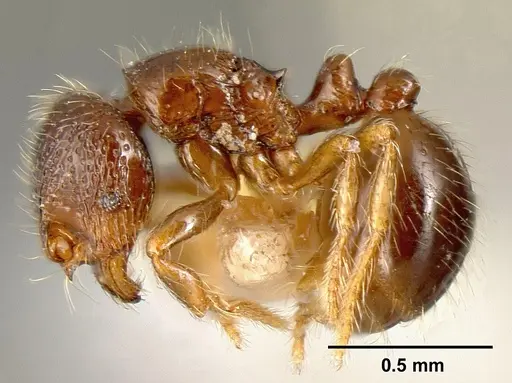
Adelomyrmex foveolatus is an exceptionally tiny myrmicine ant native to the lowland rainforests of Costa Rica. Workers measure just 2.3mm in total length, making them among the smallest ants you can keep [1]. They have a reddish-brown body with a smooth, shiny appearance, and their most distinctive feature is the scattered foveae (small pits) on their head mixed with longitudinal striations [2]. The species was described in 2003 and remains known only from the La Selva Biological Station area in Heredia Province, Costa Rica [1].
This is an extremely rare species, in all the extensive sampling at La Selva, researchers found only 1-3 individuals per sample, and fewer than 1% of Winkler litter samples contained this species [3]. This rarity means captive colonies are essentially unavailable in the antkeeping hobby, and virtually no captive husbandry information exists. They represent a true specialist of the rainforest leaf litter microhabitat.
Quick Summary
- Difficulty: Expert
- Origin & Habitat: Lowland rainforest leaf litter in Costa Rica (Heredia Province, La Selva Biological Station,50-500m elevation) [3][1]. This species lives in the sifted leaf litter layer of wet tropical forest.
- Colony Type: Colony structure is unconfirmed. Only single individuals or very small groups have been found in the wild [3]. No data on queen number or colony size exists.
- Size & Growth:
- Antkeeping:
- Temperature: Inferred: Keep around 22-26°C, typical for lowland tropical rainforest species. Avoid temperature drops below 20°C.
- Humidity: High humidity required, rainforest leaf litter species. Keep substrate consistently moist but not waterlogged. This is a micro-litter ant that needs damp conditions.
- Diapause: Unknown, as a tropical species, they likely do not require hibernation, but seasonal behavior is unstudied.
- Nesting: In nature they live in leaf litter and rotting wood fragments on the forest floor. In captivity, a naturalistic setup with very small chambers or a tight acrylic nest with high humidity would be appropriate. Given their tiny size, standard test tubes may be too large, consider plaster nests or very small formicaria.
- Behavior: These ants are extremely small and likely cryptic. They are probably slow-moving and forage individually in the leaf litter layer. Escape prevention is critical due to their tiny size, they can squeeze through the smallest gaps. No aggression data exists, but given their size, they are likely non-aggressive and may be overlooked by larger ants. They probably feed on small micro-arthropods and honeydew.
- Common Issues: extremely small size means escapes are likely without fine mesh barriers, no captive husbandry data exists, all care is speculative, species is virtually unavailable in the antkeeping hobby, high humidity requirements can lead to mold issues if not managed, slow growth and tiny colony size make them difficult to maintain
Rarity and Availability
Adelomyrmex foveolatus is one of the rarest ants in the entire La Selva Biological Station, one of the most thoroughly sampled tropical forests in the world. In over two decades of intensive sampling, researchers have found only about two dozen individuals total [3]. This means the species is essentially unavailable in the antkeeping hobby and would be extremely difficult to acquire even if legal frameworks permitted collection. The species serves more as an interesting example of specialized leaf-litter ant biology than as a practical keeping target.
Natural History
This species lives exclusively in the leaf litter layer of lowland tropical rainforest. They are collected by sifting leaf litter and using Winkler extractors to separate small arthropods from the substrate [3]. The type locality at La Selva is at 50m elevation, with one additional specimen collected at 500m on the slopes of Volcan Barva. The habitat is 'wet forest', meaning consistently humid tropical conditions with high rainfall year-round. Their tiny size (workers just 2.3mm) allows them to navigate through the complex micro-spaces within decomposing leaves and woody debris on the forest floor.
Identification and Morphology
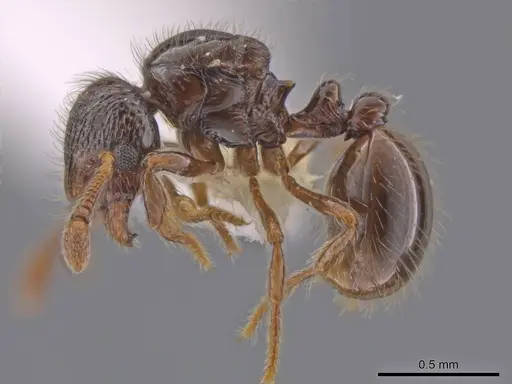
The most distinctive feature of Adelomyrmex foveolatus is the scattered foveae (small pitted impressions) on the head, mixed with longitudinal striations in the central part [2]. Workers have mandibles with 5 teeth, with the apical tooth larger than the subapical. They have very small eyes with only 8 ommatidia, reflecting their cryptic, litter-dwelling lifestyle where large eyes are unnecessary. The body is reddish-brown and mostly smooth and shiny. Propodeal spines are short, about as long as wide. The petiole is rounded above rather than spined or angled [1]. Queens are similar in appearance but slightly larger at 2.38mm total length.
Keeping Considerations
If this species were to be kept, the primary challenges would be scale and humidity. At 2.3mm, these are micro-ants requiring excellent escape prevention, standard mesh may not contain them. They would need a naturalistic setup with very small chambers, perhaps a custom acrylic nest or carefully prepared plaster setup. Humidity would need to be consistently high to replicate rainforest floor conditions. Temperature should be kept in the low-to-mid 20s Celsius. Food would likely consist of small live prey (springtails, micro-arthropods) and sugar sources. However, all of this is speculative since no captive colonies exist and no husbandry research has been conducted.
Frequently Asked Questions
Can I keep Adelomyrmex foveolatus as a pet ant?
No. This species is extremely rare in the wild and has never been found in sufficient numbers to establish a captive breeding program. It is only known from a handful of specimens collected in Costa Rica over decades of sampling.
How big do Adelomyrmex foveolatus colonies get?
Unknown. The largest group ever found in the wild contained only 1-3 individuals per sample. Wild colony size has never been documented.
What do Adelomyrmex foveolatus ants eat?
Unconfirmed. As a leaf-litter myrmicine ant, they likely eat small micro-arthropods and may tend aphids or feed on honeydew, similar to other Adelomyrmex species. No specific diet data exists for this species.
What temperature do Adelomyrmex foveolatus need?
Inferred: Keep around 22-26°C based on their lowland tropical rainforest habitat in Costa Rica. Avoid temperatures below 20°C.
Are Adelomyrmex foveolatus good for beginners?
No. This species is not available in the hobby, and even if it were, its tiny size and specialized habitat requirements would make it extremely challenging. Additionally, no captive husbandry information exists to guide keepers.
Where does Adelomyrmex foveolatus live?
Only in Costa Rica, specifically in Heredia Province at the La Selva Biological Station and the lower slopes of Volcan Barva. They live in leaf litter in lowland rainforest at 50-500m elevation.
How long do Adelomyrmex foveolatus live?
Unknown. No lifespan data exists for this species. Typical Myrmicinae workers live several months to a year, but this is unconfirmed for this species.
Do Adelomyrmex foveolatus need hibernation?
Unknown. As a tropical species from lowland Costa Rica, they likely do not require hibernation. However, seasonal behavior has not been studied.
Can I catch Adelomyrmex foveolatus in the wild?
Not recommended. The species is extremely rare (fewer than 1% of litter samples contain them), and collecting would require permits in Costa Rica. Additionally, their tiny size makes them nearly impossible to locate without expert knowledge and specialized extraction equipment.
References

This caresheet is licensed under CC BY-SA 4.0 .
CASENT0637050
View on AntWeb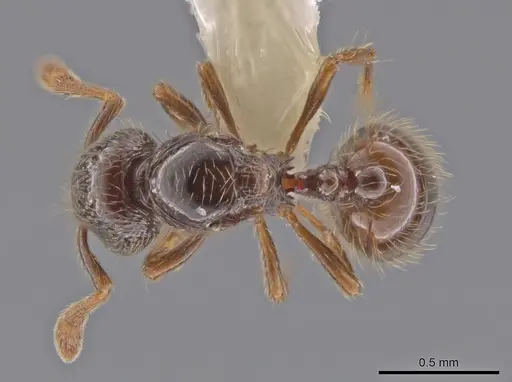
INBIOCRI001237378
View on AntWeb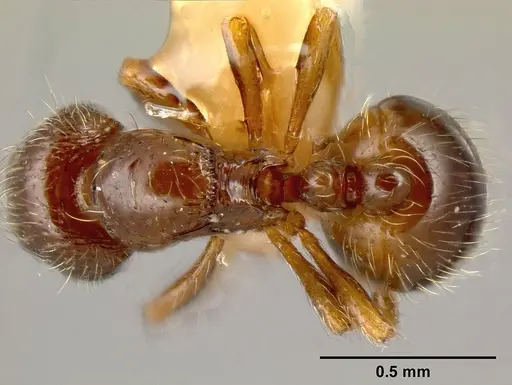
Literature
Loading...Loading products...