

Adelomyrmex dorae
- Scientific Name
- Adelomyrmex dorae
- Tribe
- Solenopsidini
- Subfamily
- Myrmicinae
- Author
- García-Martínez, 2017
- Distribution
- Found in 1 countries
Adelomyrmex dorae Overview
Adelomyrmex dorae is an ant species of the genus Adelomyrmex. It is primarily documented in 1 countries , including Mexico. Detailed taxonomic data and occurrence records can be further explored via authoritative databases such as AntWeb or the Global Biodiversity Information Facility (GBIF).
Adelomyrmex dorae
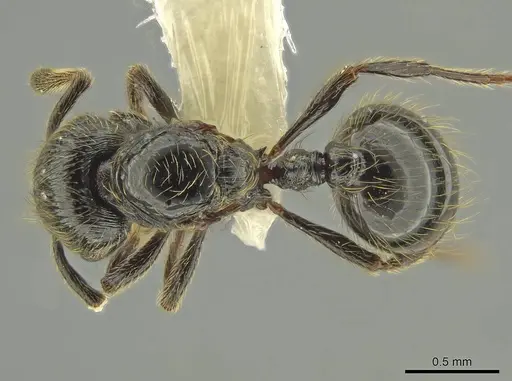
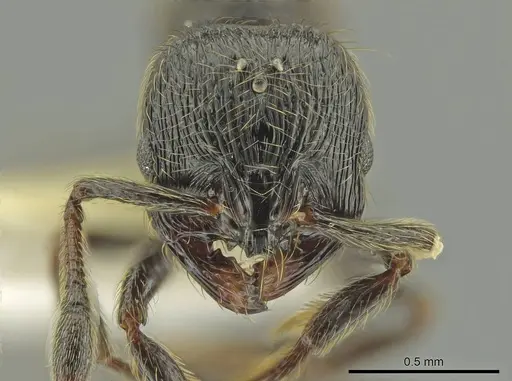
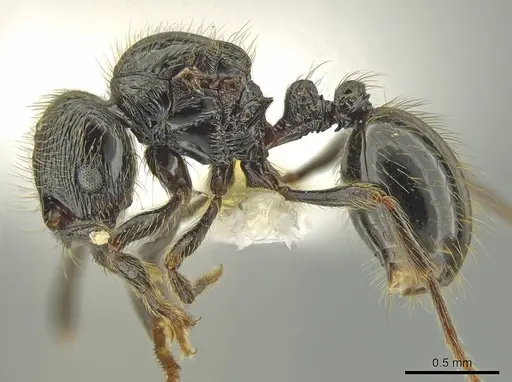
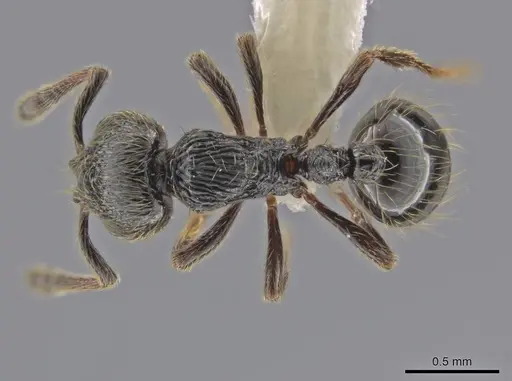
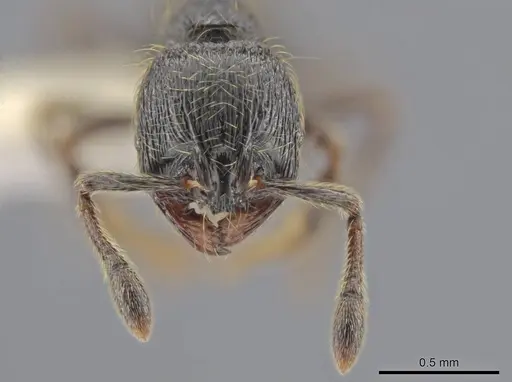
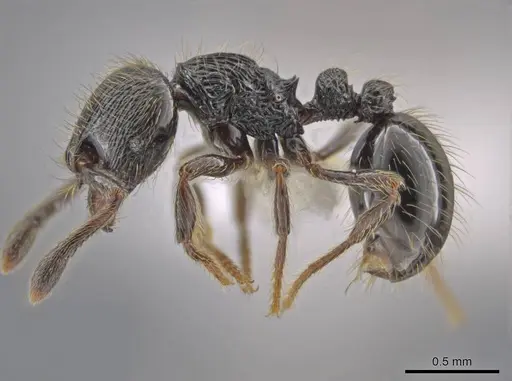
Adelomyrmex dorae are minute ants, with workers reaching just 2-3mm in length [1]. They show a striking appearance: a completely black mesosoma (middle body section), smooth and shiny black gaster (abdomen), and faces marked with longitudinal ridges [1]. You can identify them by the smooth shiny spots on their cheeks and the ridged texture on their pronotum [1]. These ants occur only in the central mountainous region of Veracruz, Mexico, specifically in riparian cloud forest remnants between 1,600-2,000 meters elevation [1].
Unlike many cloud forest ants that live deep in the forest interior, Adelomyrmex dorae prefers disturbed riparian zones, areas along streams with compacted soil, shallow leaf litter (0.2-2cm deep), and relatively open canopy (20-60% cover) [1]. They appear to avoid intact cloud forest, plantations, and agricultural areas, making them specialists of these narrow streamside habitats [1].
Quick Summary
- Difficulty: Expert
- Origin & Habitat: Endemic to Veracruz, Mexico, tropical montane cloud forest riparian zones at 1,600-2,000m elevation [1]
- Colony Type: Unknown, likely single-queen based on genus patterns, but unconfirmed
- Size & Growth:
- Queen: Approximately 3-4mm (estimated from WL 0.79mm) [1]
- Worker: 2-3mm (WL 0.62-0.82mm, HL 0.61-0.82mm) [1]
- Colony: Unknown, likely small (estimated under 100 workers based on leaf litter habitat)
- Growth: Unknown, likely slow
- Development: Unknown, estimated 8-12 weeks at 20-22°C based on similar small Myrmicinae (No direct development studies exist, timeline inferred from related small-bodied ants)
- Antkeeping:
- Temperature: 18-22°C (cool tropical). Start at 20°C and adjust based on activity [1]
- Humidity: High humidity required, keep substrate damp like fresh leaf litter, not waterlogged or dry [1]
- Diapause: Unknown, likely not required for this tropical species, but cooler winter rest may be beneficial
- Nesting: Small chambers with leaf litter substrate, tight spaces similar to their natural leaf litter microhabitat
- Behavior: Cryptic leaf litter dwellers, likely slow-moving and non-aggressive. High escape risk due to extremely small size [1]
- Common Issues: workers can escape through the tiniest gaps due to their minute size., colonies may desiccate quickly if humidity drops below cloud forest levels., standard prey items like fruit flies or mealworms may be too large, need micro-prey., leaf litter substrate can harbor mites or fungus if not managed properly., restricted wild distribution raises ethical concerns about collection.
Natural History and Habitat
8 kg/cm), shallow leaf litter layers just 0.2-2cm deep, and relatively open tree canopy covering only 20-60% of the sky [1]. The tree canopy stays below 16 meters high, with fewer than 10 tree species and less than 20 trees per hectare [1].
This species appears strictly tied to these streamside remnants. Researchers found them in 51% of dry season samples and 49% of rainy season samples, showing year-round activity [1]. However, they seem absent from intact cloud forest interior, coffee plantations, corn fields, sugar cane crops, pastures, and human settlements [1]. This narrow habitat preference suggests they need specific moisture and temperature conditions that these disturbed riparian zones provide.
Nest Preferences
In captivity, recreate their leaf litter microhabitat. Use small containers with tight-fitting lids, these ants are tiny enough to squeeze through minute gaps [1]. Provide a substrate mix of decaying leaf litter, small twigs, and fine soil to mimic their natural 0.2-2cm deep litter layer [1].
Chambers should be small and tight. Based on their morphology and collection method (Winkler and Berlese extractions from leaf litter), they likely nest in small soil cavities under leaf layers or within compacted soil cracks [1]. Avoid tall open spaces, instead offer narrow gaps between flat stones or within plaster nests with small chambers. Keep the substrate consistently damp but not waterlogged, think forest floor after rain, not swamp.
Temperature and Humidity
Maintain cool tropical conditions. Their native elevation of 1,600-2,000 meters in Veracruz produces temperatures cooler than lowland tropics [1]. Aim for 18-22°C with high humidity. You can achieve this by keeping the setup in a cool room with a heating cable on one side set to 22-24°C, creating a gentle gradient [1].
Monitor humidity by checking the leaf litter substrate daily. It should feel damp to the touch but not drip when squeezed. Cloud forest conditions mean high humidity but also good drainage, avoid stagnant water. If condensation forms heavily on container walls, increase ventilation slightly while maintaining substrate moisture.
Feeding and Diet
Feed tiny prey appropriate for 2-3mm ants [1]. Springtails, soil mites, and very small insect larvae likely form their natural diet as leaf litter predators. In captivity, offer fruit flies (Drosophila), small springtails, or tiny pieces of crushed insects. Standard mealworms or crickets are too large unless chopped into minute portions.
Sugar acceptance is unknown for this species. Offer diluted honey or sugar water on small cotton balls occasionally, but do not rely on this as a staple until you confirm acceptance. Remove uneaten protein within 24 hours to prevent mold in the humid leaf litter environment.
Conservation and Collection Ethics
Consider carefully before attempting to collect this species. Adelomyrmex dorae has an extremely restricted range, only known from specific riparian remnants in Veracruz, Mexico [1]. The species was described in 2017 from limited localities, and its conservation status has not been assessed [1].
Removing colonies from such a restricted endemic could impact local populations. Additionally, no captive breeding populations exist, and founding behavior remains completely unknown (males have never been collected) [1]. If you encounter this species, observation in situ may be more valuable to science than collection. Never release captive colonies outside their native range.
Frequently Asked Questions
Can I keep Adelomyrmex dorae in a test tube?
Yes, but modify it for their specific needs. Use a standard test tube setup with water reservoir blocked by cotton, but add a layer of damp leaf litter or fine soil on the dry side to provide substrate for these leaf litter specialists [1]. Ensure the cotton is packed extremely tightly, these tiny workers can squeeze through gaps that larger ants cannot [1].
How long until first workers for Adelomyrmex dorae?
Unknown, no founding studies exist for this species. Based on similar small Myrmicinae ants, expect roughly 8-12 weeks at 20-22°C, but this is an estimate only [1]. Development may take longer at cooler cloud forest temperatures.
What temperature do Adelomyrmex dorae need?
Keep them at 18-22°C to match their cloud forest elevation of 1,600-2,000 meters [1]. Avoid temperatures above 25°C, these are cool-habitat ants from mountain riparian zones, not lowland tropical heat lovers.
Do Adelomyrmex dorae need hibernation?
Probably not, they are tropical cloud forest ants. However, they may slow down during cooler months. You can provide a mild cool period at 15-18°C for 4-6 weeks if the colony seems less active, but true hibernation like temperate species is likely unnecessary [1].
What do Adelomyrmex dorae eat?
Feed tiny live prey such as fruit flies (Drosophila), springtails, or minute insect larvae [1]. Their small size (2-3mm) means standard ant prey is too large [1]. Sugar acceptance is unconfirmed, offer occasionally but focus on protein.
Are Adelomyrmex dorae good for beginners?
No, they are expert-level only. They require specific cloud forest conditions, extremely small prey, excellent escape prevention due to their minute size, and have never been kept in captivity with documented success [1]. Their restricted wild range also makes collection ethically questionable.
How big do Adelomyrmex dorae colonies get?
Unknown. Based on their leaf litter habitat and tiny worker size, they likely remain small, probably under 100 workers [1]. No colony size studies have been published for this species.
Can I collect Adelomyrmex dorae from the wild?
You should not. This species is endemic to a small region in Veracruz, Mexico, with an extremely restricted distribution in specific riparian cloud forest remnants [1]. Collection could impact wild populations of this recently discovered species. Additionally, males have never been collected, meaning we know nothing about their reproduction or nuptial flights [1].
References

This caresheet is licensed under CC BY-SA 4.0 .
Literature
Loading...Loading products...