

Adelomyrmex dentivagans
- Scientific Name
- Adelomyrmex dentivagans
- Tribe
- Solenopsidini
- Subfamily
- Myrmicinae
- Author
- Longino, 2012
- Distribution
- Found in 3 countries
Adelomyrmex dentivagans Overview
Adelomyrmex dentivagans is an ant species of the genus Adelomyrmex. It is primarily documented in 3 countries , including Guatemala, Honduras, Mexico. Detailed taxonomic data and occurrence records can be further explored via authoritative databases such as AntWeb or the Global Biodiversity Information Facility (GBIF).
Adelomyrmex dentivagans
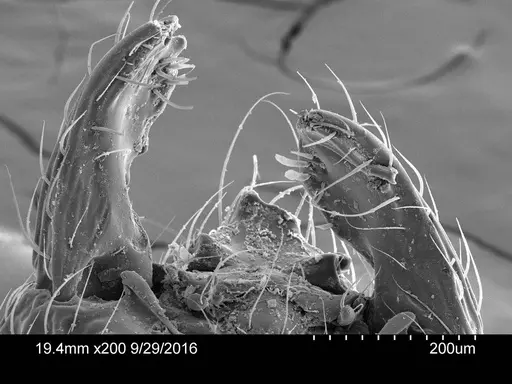
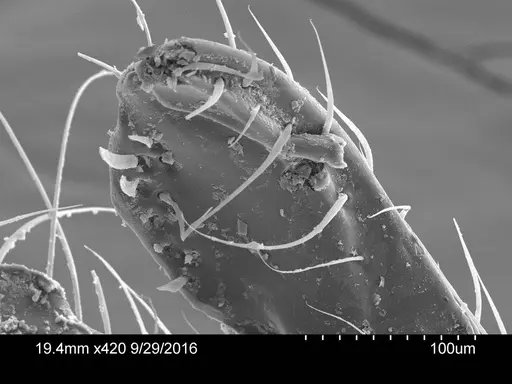
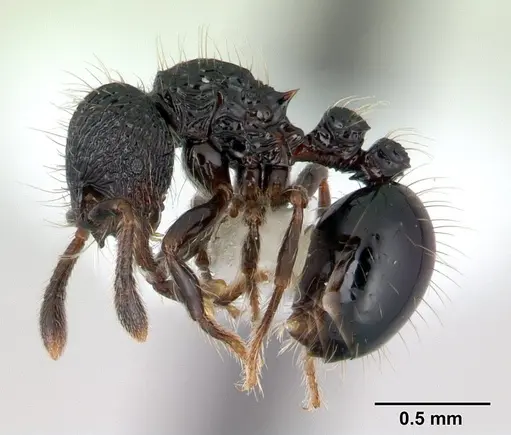
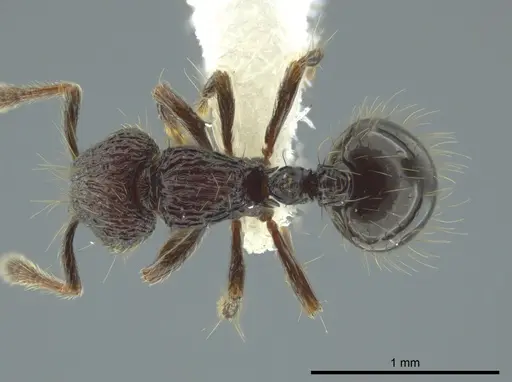
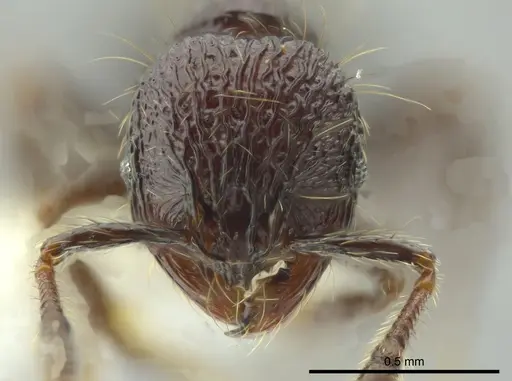
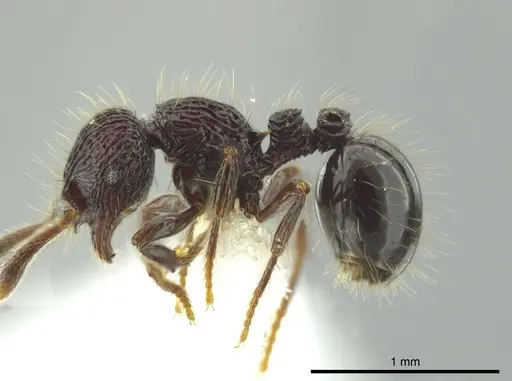
Adelomyrmex dentivagans is a tiny myrmicine ant native to the cloud forests of southern Mexico, Guatemala, and Honduras. Workers measure just 0.61-0.69mm, making them one of the smaller ant species you might encounter [1]. They have a distinctive dark red-brown coloration with a fully sculptured face covered in rugae (wrinkles), pronounced propodeal spines, and a uniquely shaped petiolar node that is somewhat square with clearly defined faces [1]. The species name 'dentivagans' means 'wandering tooth' and refers to their unusual mandibular dentition, their mandibles lack the typical differentiation between basal and masticatory margins, instead having six relatively evenly-spaced teeth [1].
This ant lives in wet cloud forests at elevations between 400-1200 meters, avoiding the hot lowland rainforests below 300m [1]. They are litter-dwelling ants, most commonly collected by sifting through decomposed leaf material in Winkler and Berlese samples, though a few workers have been observed at bait stations [1]. This is a rarely kept species in captivity due to its tiny size and the limited information available about its biology in the wild.
Quick Summary
- Difficulty: Expert
- Origin & Habitat: Cloud forests of southern Mexico (Chiapas), Guatemala, and Honduras at 400-1200m elevation. They live in second growth to mature evergreen wet forest, avoiding hot lowland areas below 300m [1].
- Colony Type: Colony structure is unconfirmed. Only workers have been described, queen caste has not been documented.
- Size & Growth:
- Queen: Unknown, queen caste has not been described [1]
- Worker: 0.61-0.69mm head width [1]
- Colony: Unknown, colony size has not been documented
- Growth: Unknown
- Development: Unknown, development has not been studied. Based on similar tiny Myrmicinae, estimate 4-8 weeks at optimal temperature. (No direct data available, estimate based on genus-level patterns for small litter-dwelling ants.)
- Antkeeping:
- Temperature: Based on their cloud forest habitat at 400-1200m elevation, they likely prefer cool to moderate temperatures. Start around 20-24°C and observe colony behavior. Avoid overheating.
- Humidity: Cloud forest ants require high humidity. Keep the nest substrate consistently moist but not waterlogged. Provide a gradient with a damp area and a slightly drier area for the ants to choose.
- Diapause: Unknown, no data on seasonal requirements. Their high-elevation cloud forest habitat suggests they may experience cooler temperatures seasonally, but specific diapause requirements are unconfirmed.
- Nesting: In the wild they live in sifted leaf litter. In captivity, a small test tube setup or a miniature formicarium with tight chambers scaled to their tiny size works best. They likely nest in small cavities in decaying wood or soil. A Y-tong nest or plaster nest with small chambers maintains the humidity they need.
- Behavior: These ants are very small and appear to be secretive litter-dwellers. They have been collected from sifted leaf litter and occasionally at bait stations, suggesting they forage individually or in small groups through the forest floor debris [1]. Their small size and cryptic habits make them difficult to observe. Escape prevention is critical, their tiny size means they can squeeze through standard barrier setups. Use fine mesh and tight-fitting lids.
- Common Issues: their extremely small size makes escape likely without fine mesh barriers, lack of documented biology means trial-and-error is required for care, high humidity requirements can lead to mold if ventilation is poor, they may be outcompeted by larger ants in shared setups, wild-caught colonies may be difficult to establish in captivity
Appearance and Identification
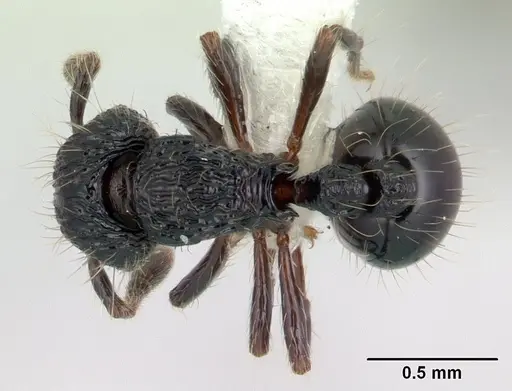
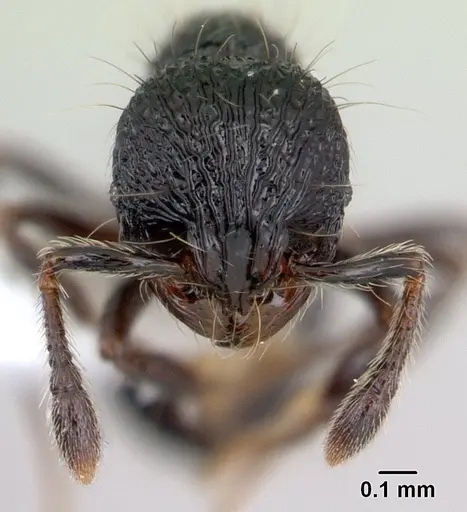
Adelomyrmex dentivagans workers are tiny ants measuring 0.61-0.69mm in head width [1]. They have a distinctive dark red-brown coloration throughout their body [1]. The most notable morphological feature is their mandible, which lacks the typical differentiation between basal and masticatory margins found in most ants, instead, they have six relatively evenly-spaced teeth, with the fifth tooth positioned roughly equidistant between the fourth and sixth teeth [1]. The face is fully sculptured with reticulate rugae (a network of wrinkles), giving them a textured appearance. They have pronounced, acute propodeal spines and a uniquely shaped petiolar node that is somewhat square (subquadrate) with clearly differentiated anterior, dorsal, and posterior faces [1]. The scape (first antenna segment) has one or two long erect setae that project above the underlying pubescence [1]. Overall, they have a rather rugged, heavily sculptured appearance typical of litter-dwelling ants.
Natural Habitat and Distribution
This species is found in the cloud forests of southern Mexico (specifically Chiapas state), Guatemala, and Honduras [1]. They occur at elevations between 400 and 1200 meters, and notably do not occur in hot lowland rainforest below 300m elevation [1]. This preference for cooler, higher-elevation habitats is typical of cloud forest specialists. They inhabit second growth to mature evergreen wet forest, where they live among the decomposed leaf litter on the forest floor [1]. Most specimens have been collected using Winkler and Berlese extraction methods, which involve sifting through leaf litter to extract tiny arthropods, this confirms they are primarily litter-dwelling ants that live in the upper soil layers and decomposed organic material [1]. A few workers have been captured at bait stations, showing they will occasionally come to food sources on the surface.
Housing and Nest Setup
Because this is a tiny litter-dwelling ant, housing requires attention to scale and humidity. A small test tube setup works well for founding colonies, use a test tube with a small water reservoir and fill roughly one-third with cotton. For established colonies, a Y-tong (AAC) nest or a small plaster formicarium with tight chambers scaled to their tiny size maintains the humidity they need. The chambers should be small, these are very small ants that would be overwhelmed in large, open spaces. Provide a humidity gradient by keeping one area damper than the other. Escape prevention is critical, their minute size means they can slip through gaps that would hold back larger ants. Use fine mesh on all openings and consider applying Fluon or another barrier agent to the rim of any test tube or formicarium. A small outworld (foraging area) connected to the nest works for feeding.
Feeding and Diet
The diet of Adelomyrmex dentivagans is not directly documented, but based on their position in the Solenopsidini tribe (which includes predatory ants like Solenopsis), they likely have an omnivorous diet with a preference for small prey. In the wild, they have been collected from bait stations, suggesting they will scavenge for carbohydrate sources [1]. In captivity, you can offer small live prey such as springtails, fruit flies, or other micro-arthropods appropriate to their tiny size. They will likely accept sugar water or honey as a carbohydrate source, given their presence at baits. Feed small amounts of protein (small insects) a few times per week and provide a constant source of sugar water. Remove uneaten prey after 24-48 hours to prevent mold issues in the humid setup they require.
Temperature and Humidity Requirements
Based on their cloud forest habitat at 400-1200m elevation, these ants prefer cooler, stable conditions compared to tropical lowland species. Aim for temperatures in the range of 20-24°C. Avoid temperatures above 28°C, as this could stress them. A slight temperature gradient allows the ants to regulate their own conditions. Humidity is critical, cloud forests are constantly moist environments. Keep the nest substrate consistently damp but not waterlogged. The substrate should feel moist to the touch. You can achieve this by misting the nest area lightly and allowing the moisture to persist, or by using a water reservoir connected to the nest. However, balance humidity with adequate ventilation to prevent mold growth, which can quickly kill small colonies.
Challenges and Considerations
This species is best suited for experienced antkeepers who are comfortable working with very small, delicate species. The biggest challenge is the lack of documented biological information, almost nothing is known about their colony structure, founding behavior, or development timeline, so keepers must be prepared for trial-and-error. Their tiny size creates practical challenges: escape prevention requires fine mesh barriers, feeding requires appropriately sized prey, and they may be easily overlooked or stressed by larger tankmates. They are not aggressive and likely have minimal defensive capabilities due to their small size. Wild-caught colonies may be difficult to establish, as these ants are adapted to very specific microhabitats in cloud forests. If you obtain a colony, be patient and maintain stable, humid conditions. Do not combine with larger ant species.
Frequently Asked Questions
How long does it take for Adelomyrmex dentivagans to produce first workers?
The development timeline is unconfirmed, this species has not been studied in captivity. Based on similar tiny Myrmicinae, estimate 4-8 weeks from egg to worker at optimal temperature (around 20-24°C). However, this is an educated guess rather than documented data.
What do Adelomyrmex dentivagans eat?
Their diet is not directly documented, but they likely eat small insects and scavenge for carbohydrates. In captivity, offer small live prey (springtails, fruit flies) and sugar water or honey. They have been collected at bait stations in the wild, confirming they will scavenge for sweet substances.
Can I keep multiple queens together?
The colony structure is unconfirmed, queen caste has not been documented for this species. Without information on whether they are single-queen or multi-queen colonies, combining unrelated queens is not recommended.
Are Adelomyrmex dentivagans good for beginners?
No. This species is recommended only for expert antkeepers. There is almost no documented biological information available, their tiny size creates practical challenges, and they require specific humidity and temperature conditions that can be difficult to maintain.
What temperature should I keep Adelomyrmex dentivagans at?
Based on their cloud forest habitat, keep them at 20-24°C. Avoid temperatures above 28°C. A slight gradient is beneficial so they can regulate their own temperature.
Do they need hibernation or diapause?
Diapause requirements are unconfirmed. Their high-elevation cloud forest habitat suggests they may experience seasonal temperature changes, but specific overwintering requirements have not been documented.
How big do colonies get?
Colony size is unconfirmed. Based on their small size and litter-dwelling habits, colonies are likely small, probably under a few hundred workers at most.
What is the best nest type for Adelomyrmex dentivagans?
A small test tube for founding colonies, or a Y-tong/plaster nest with small, tight chambers scaled to their tiny size. The nest must maintain high humidity while allowing some ventilation to prevent mold.
Why are my Adelomyrmex dentivagans dying?
Common causes include: temperature too high (above 28°C), humidity too low or too high (leading to desiccation or mold), escape through inadequate barriers, stress from disturbance, or inappropriate prey size. Their specific requirements are not well understood, so maintaining stable, humid, cool conditions is key.
References

This caresheet is licensed under CC BY-SA 4.0 .
Literature
Loading...Loading products...