

Adelomyrmex coco
- Scientific Name
- Adelomyrmex coco
- Tribe
- Solenopsidini
- Subfamily
- Myrmicinae
- Author
- Longino, 2012
- Distribution
- Found in 1 countries
Adelomyrmex coco Overview
Adelomyrmex coco is an ant species of the genus Adelomyrmex. It is primarily documented in 1 countries , including Costa Rica. Detailed taxonomic data and occurrence records can be further explored via authoritative databases such as AntWeb or the Global Biodiversity Information Facility (GBIF).
Adelomyrmex coco
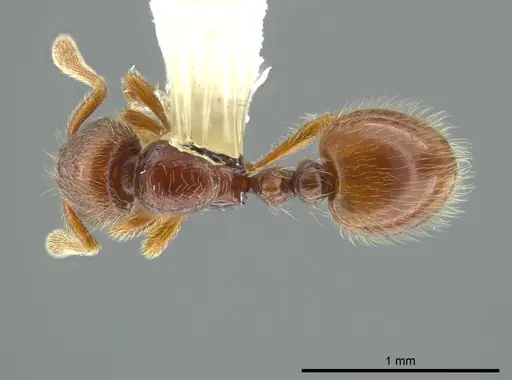
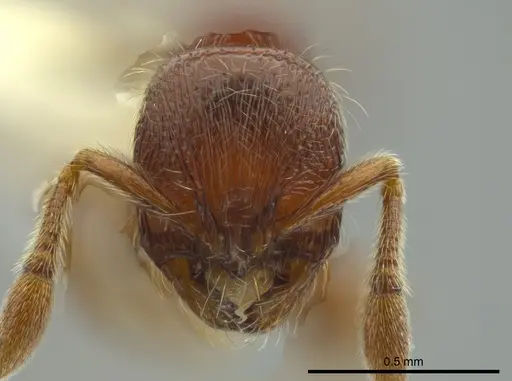
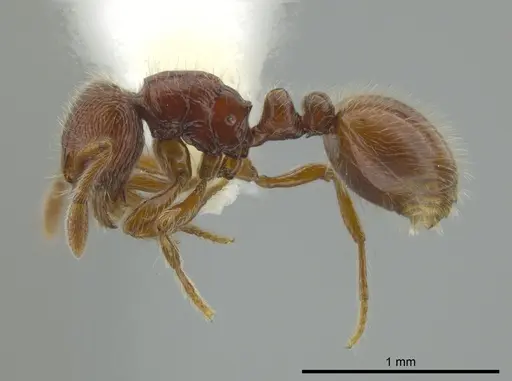
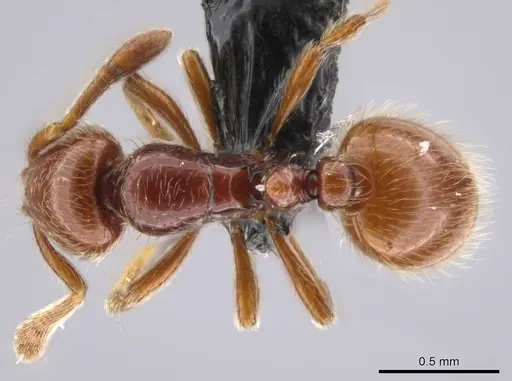
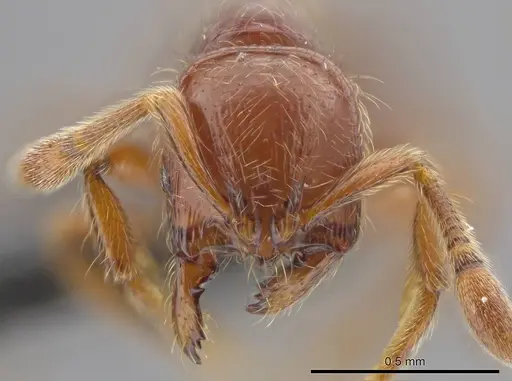
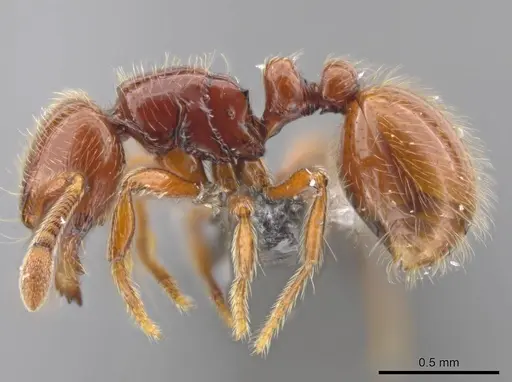
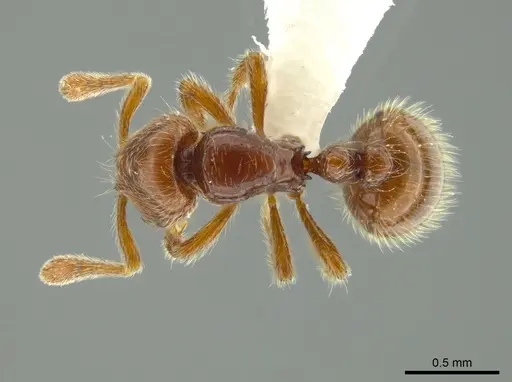
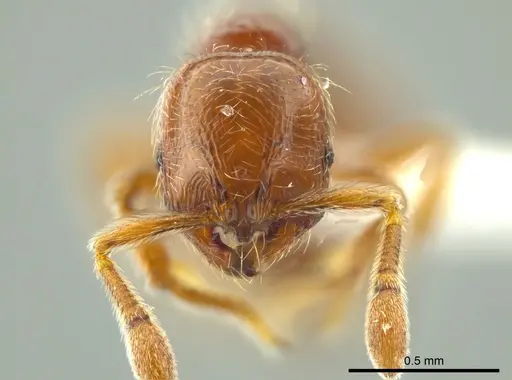
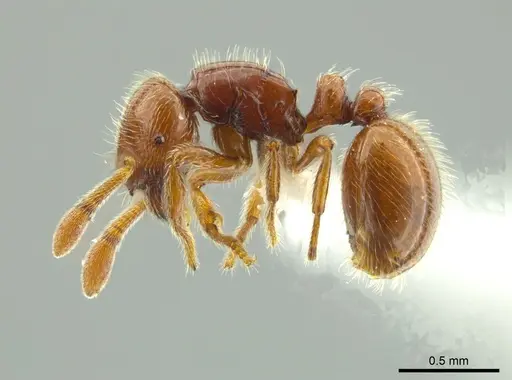
Adelomyrmex coco is an extremely rare miniature ant species endemic only to Isla del Coco (Cocos Island), an isolated oceanic island in the Pacific Ocean southwest of Costa Rica. Workers measure just 0.58-0.60mm in head width, making them among the smaller ants in the Myrmicinae subfamily [1]. They have a distinctive appearance with a completely smooth and shining mesosoma, the least amount of surface sculpture of any known Adelomyrmex species, and their face can range from having fine longitudinal striations to being largely smooth and glossy [1]. Their mandibles are unusual, having only four teeth instead of the typical five or six found in related species. These ants are light reddish-brown in color and have been collected from both near sea level and from cloud forest areas near the island's highest points [1].
This species is one of the most poorly known ants in existence, only three workers have ever been documented in scientific collections. All specimens came from forest floor litter samples in the island's evergreen wet forest, an environment known for its high levels of endemism due to the island's isolation. Nothing is known about their colony structure, queen morphology, reproductive behavior, or captive care requirements. This makes them an expert-only species suitable only for antkeepers with extensive experience studying rarely-collected tropical species.
Quick Summary
- Difficulty: Expert
- Origin & Habitat: Isla del Coco (Cocos Island), an isolated oceanic island in the Pacific Ocean southwest of Costa Rica. They inhabit evergreen wet forest and cloud forest at elevations ranging from near sea level to 490 meters [1][2].
- Colony Type: Unknown, only three worker specimens have ever been collected. Colony structure (single-queen or multi-queen) has not been documented [1].
- Size & Growth:
- Queen: Unknown, queen caste has never been described [1]
- Worker: 0.58-0.60mm head width [1]
- Colony: Unknown, only three workers have ever been collected [1]
- Growth: Unknown
- Development: Unknown, no developmental data exists for this species (No information available on any life stage from egg to adult)
- Antkeeping:
- Temperature: Unconfirmed, no captive studies exist. Based on their cloud forest habitat on a tropical oceanic island, they likely prefer warm, humid conditions in the range of 22-28°C. Start at room temperature (around 24°C) and monitor colony activity.
- Humidity: Unconfirmed, they were collected from wet forest floor litter, suggesting they need high humidity. Keep the nest substrate consistently moist but not waterlogged. Provide a gradient with a damp area and a slightly drier area for choice.
- Diapause: Unknown, Isla del Coco has a tropical climate with minimal seasonal temperature variation. They likely do not require a diapause period, but this is unconfirmed.
- Nesting: Based on collection data (forest floor litter samples), they likely nest in damp soil or rotting wood fragments on the forest floor. In captivity, a small test tube setup or Y-tong nest with moist substrate would be appropriate starting points. Their tiny size means they need very small chambers and narrow passages.
- Behavior: Behavior is unstudied in captivity. Based on their small size and litter-dwelling habits, they are likely shy, slow-moving, and non-aggressive. They probably forage individually in the leaf litter layer rather than maintaining obvious foraging trails. Their compound eyes are very simple (only 6-7 ommatidia), suggesting limited visual capability. Escape prevention is critical due to their minute size, standard barriers may be insufficient. No information exists on their sting capability, but given their size, any sting would be negligible to humans.
- Common Issues: no captive husbandry information exists, all care is speculative, extreme difficulty obtaining this species as it is endemic to a protected island, tiny size makes escape prevention challenging, standard mesh may not contain them, colony structure unknown, may be difficult to establish if queens are specialized, no known food preferences, diet in captivity is entirely unconfirmed
Rarity and Collection History
Adelomyrmex coco is one of the rarest ant species in the world to keep in captivity, if any colonies exist in private collections at all. Only three worker specimens have ever been collected, all from Isla del Coco (Cocos Island), an isolated volcanic island in the Pacific Ocean about 550km southwest of Costa Rica. The holotype was collected in February 2006 at 70m elevation, and paratypes were collected at 470m and 490m elevations in both February 2006 and July 2003 [1]. All specimens came from forest floor litter samples using Winkler extractors or pitfall traps, meaning these ants live deep within the leaf litter layer and are virtually never encountered by casual observation. This extreme rarity means there is no established husbandry knowledge within the antkeeping hobby, and any attempt to keep this species would be essentially pioneering work based on educated guesses from related species.
Natural Habitat and Environment
Isla del Coco is a small (about 24 square km) volcanic island covered in evergreen wet forest and cloud forest. It experiences a tropical climate with relatively constant temperatures year-round and high rainfall. The island is a UNESCO World Heritage Site and Costa Rica's only oceanic island, famous for its extreme endemism, many plants and animals found there exist nowhere else on Earth [1]. Adelomyrmex coco has been collected from both lowland forest near sea level and cloud forest near the island's highest peaks, suggesting they can tolerate a range of conditions within this humid tropical environment. The forest floor where they live is constantly moist, with decomposing leaf litter providing a stable humid microclimate. Any captive setup should replicate these conditions: high ambient humidity, moist substrate, and protection from direct airflow that could dry out their environment.
Morphology and Identification
Workers measure only 0.58-0.60mm in head width, making Adelomyrmex coco one of the smaller Myrmicinae ants [1]. Their most distinctive feature is the completely smooth and shining mesosoma, unlike most Adelomyrmex species which have varying degrees of surface sculpture, this species shows virtually none [1]. The face is variable: some specimens have fine longitudinal striations while others are largely smooth and glossy. Their mandibles are unusual in having only four teeth (most related species have five or six), with the apical tooth being the largest. They have very simple compound eyes with only 6-7 ommatidia, suggesting limited visual ability typical of litter-dwelling ants. The body is light reddish-brown with abundant suberect setae (short angled hairs) on the dorsal surfaces. These morphological details matter for keepers because their tiny size and smooth bodies affect how they must be housed and handled.
Related Species and Care Inference
Adelomyrmex belongs to the tribe Solenopsidini within Myrmicinae, a diverse group that includes many small, litter-dwelling ants. While no specific care information exists for A. coco, we can make educated guesses based on what is known about similar small Myrmicinae ants that live in forest floor habitats. Related genera like Solenopsis, Wasmannia, and other Adelomyrmex species typically form small colonies, prefer humid conditions, and feed on small arthropods and honeydew. However, this is speculative inference, the actual care requirements of A. coco could differ significantly. Keepers attempting this species should be prepared for experimental husbandry and should document their observations carefully. Given the complete absence of captive data, this species is not recommended for anyone except the most dedicated specialists willing to potentially lose a colony while learning its requirements.
Legal and Ethical Considerations
Isla del Coco is a protected national park and UNESCO World Heritage Site. The island has strict access regulations, and collecting any specimens, including ants, requires special permits from Costa Rican authorities. Adelomyrmex coco is not known to exist in any captive colony outside of museum collections, and obtaining wild-caught colonies would require scientific collecting permits that are rarely granted for such a rare endemic species. Any specimens in private antkeeping collections would almost certainly have originated from very limited scientific collections decades ago. Prospective keepers should consider whether keeping this species is ethical given its extreme rarity and the protected status of its only known habitat. Additionally, because this species is endemic to a single small island, any captive colony represents potentially the entire ex-situ population of this species on Earth. [1]
Frequently Asked Questions
Can I keep Adelomyrmex coco as a pet ant?
This species is essentially impossible to obtain for antkeeping. Only three workers have ever been collected, all from a protected UNESCO World Heritage site (Isla del Coco). No colonies are known to exist in captivity, and obtaining them would require scientific collecting permits that are not granted for this extremely rare endemic species.
What do Adelomyrmex coco ants eat?
Their diet is completely unconfirmed. Based on their tiny size and litter-dwelling habits, they likely consume small micro-arthropods, springtails, and mites found in forest floor debris, plus honeydew from sap-sucking insects. No captive feeding observations exist.
How big do Adelomyrmex coco colonies get?
Unknown. Only three individual workers have ever been documented. Related small Myrmicinae typically form colonies of dozens to a few hundred workers, but this is purely speculative for this species.
What temperature do Adelomyrmex coco ants need?
Unconfirmed. Based on their cloud forest habitat on a tropical island, they likely prefer warm humid conditions around 22-28°C. No captive temperature studies exist.
Do Adelomyrmex coco ants need hibernation?
Unknown but unlikely. Isla del Coco has a tropical climate with minimal seasonal temperature variation. They probably do not require a diapause period, but this is unconfirmed.
Are Adelomyrmex coco good for beginners?
Absolutely not. This is an expert-only species with zero captive husbandry information. There is no established care guide, no known colony in captivity, and obtaining specimens is essentially impossible. Even experienced antkeepers would be pioneering entirely new husbandry methods.
Where does Adelomyrmex coco live in the wild?
Only on Isla del Coco (Cocos Island), a remote oceanic island in the Pacific Ocean about 550km southwest of Costa Rica. They live in evergreen wet forest and cloud forest at elevations from near sea level to 490m, specifically in forest floor leaf litter.
How long do Adelomyrmex coco ants live?
Unknown. No life history data exists for this species. Related small Myrmicinae typically have relatively short worker lifespans (months to a couple of years) but this is entirely speculative.
Can I breed Adelomyrmex coco in captivity?
No breeding has ever been documented in captivity because no live colonies are known to exist outside museum collections. Even if a colony were obtained, there is no information on how to encourage reproduction or raise brood.
References

This caresheet is licensed under CC BY-SA 4.0 .
Literature
Loading...Loading products...