

Adelomyrmex bispeculum
- Scientific Name
- Adelomyrmex bispeculum
- Tribe
- Solenopsidini
- Subfamily
- Myrmicinae
- Author
- Longino, 2012
- Distribution
- Found in 1 countries
Adelomyrmex bispeculum Overview
Adelomyrmex bispeculum is an ant species of the genus Adelomyrmex. It is primarily documented in 1 countries , including Costa Rica. Detailed taxonomic data and occurrence records can be further explored via authoritative databases such as AntWeb or the Global Biodiversity Information Facility (GBIF).
Adelomyrmex bispeculum
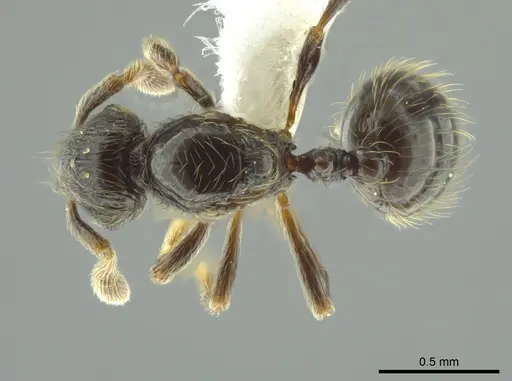
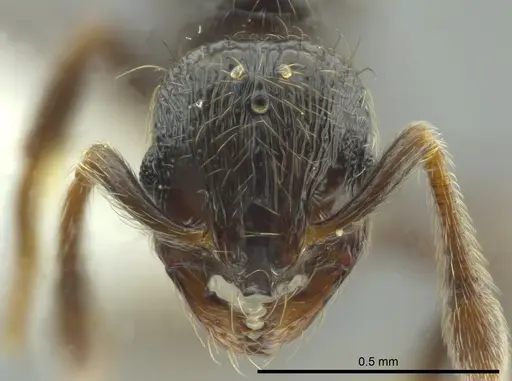
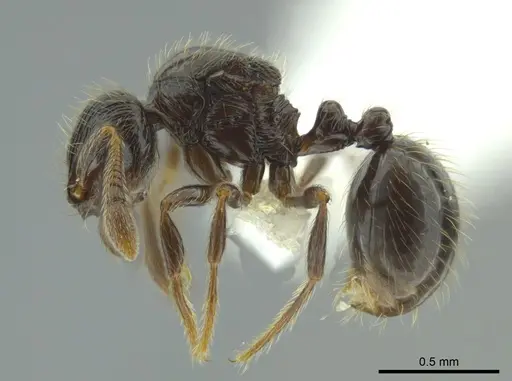
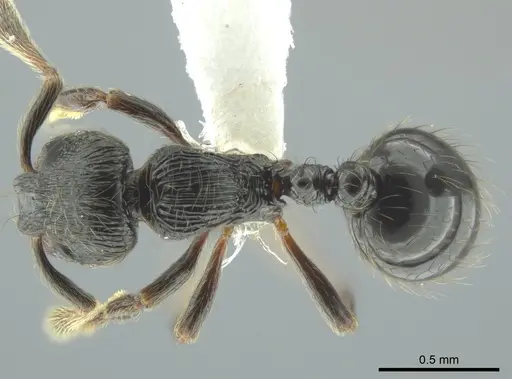
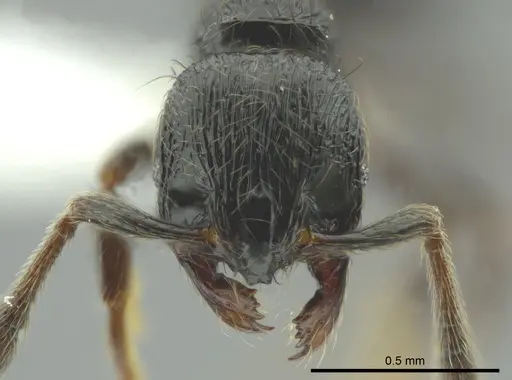
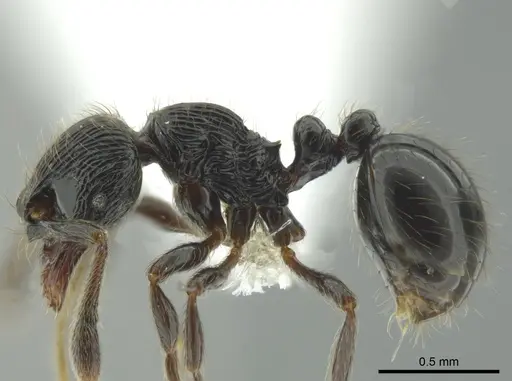
Adelomyrmex bispeculum is an exceptionally rare tiny ant species, one of the smallest ants you can keep, with workers measuring just 0.54-0.59mm [1]. They are dark brown to black with a distinctive feature, two smooth, shiny patches on their face that give them their scientific name (bispeculum means 'two mirrors') [1]. These ants are known only from the cloud forests of Monteverde, Costa Rica, living at high elevations of 1400-1675m [1]. In the wild, they nest in small chambers either under stones on the forest floor or in shaded, moss-covered clay banks along trails, sometimes building distinctive turret-like entrances [1]. This species remains one of the rarest in the ant-keeping hobby due to its extremely limited natural range.
Quick Summary
- Difficulty: Expert
- Origin & Habitat: Montane cloud forest of Monteverde, Costa Rica at 1400-1675m elevation [1]
- Colony Type: Single-queen colonies (monogyne). Nests contain one dealate queen with up to 76 workers observed in wild colonies [1].
- Colony: Monogyne
- Size & Growth:
- Queen: Similar to worker but with enlarged mesosoma, not precisely measured but estimated 2-3mm based on genus [1]
- Worker: 0.54-0.59mm (extremely small) [1]
- Colony: Up to 76 workers observed in wild nests [1]
- Growth: Unknown, likely slow based on small colony sizes in wild
- Development: 6-10 weeks (estimated based on typical Myrmicinae development) (Development timeline not directly studied, estimate based on genus patterns)
- Antkeeping:
- Temperature: Keep at 20-24°C. These are cloud forest ants from high elevation, so they prefer cool, stable conditions. Room temperature is likely appropriate for most keepers.
- Humidity: High humidity required, cloud forest environment. Keep nest substrate consistently moist but not waterlogged. Mist occasionally and provide a water tube.
- Diapause: Unknown for this species. As a tropical cloud forest ant, they may not require true hibernation but may have reduced activity during drier seasons.
- Nesting: In captivity, use small test tubes or mini formicariums with tight chambers. They prefer soil-based nests that can hold moisture, small Y-tong nests or plaster nests work. The tiny size means chambers must be appropriately scaled.
- Behavior: These ants are extremely small and docile. They are not aggressive and likely have minimal sting capability given their size. Workers are slow-moving and forage in the leaf litter layer. Escape prevention is critical, they can squeeze through the tiniest gaps. They are not known to be escape artists but their minute size makes containment challenging.
- Common Issues: extreme rarity makes obtaining a colony nearly impossible, tiny size creates significant escape risk through standard mesh, slow colony growth requires extreme patience, specific humidity requirements may be difficult to maintain consistently, wild-caught colonies may not adapt to captive conditions
Nest Preferences and Housing
In the wild, Adelomyrmex bispeculum nests in two different situations: under stones on the forest floor (small 1cm chambers) or in shaded, moss-covered clay banks along trails [1]. Some nests feature a distinctive horizontal turret entrance about 1cm long. The nest structure includes a larger lower chamber extending 2-3cm into the bank and a smaller upper chamber where most brood and workers are found [1]. For captivity, these ants need appropriately scaled housing, their tiny size means standard ant keeping equipment is often too large. Small test tubes with tight-fitting stoppers or mini formicariums with very small chambers work best. Soil-based or plaster nests that can hold moisture are ideal since they mimic their natural clay bank nesting sites. The nest should have chambers only a few millimeters in size.
Feeding and Diet
The specific diet of Adelomyrmex bispeculum has not been documented in scientific literature. As a member of the Solenopsidini tribe (which includes fire ants and thief ants), they likely have omnivorous habits similar to related genera. They probably feed on small insects, honeydew from aphids, and other sweet substances. Given their tiny size, any prey items must be extremely small, springtails, pinhead crickets, or other micro-arthropods would be appropriate. Sugar water or honey water should be offered, though acceptance is not confirmed. Feed small amounts and remove any uneaten food to prevent mold in their humid environment.
Temperature and Environmental Needs
These ants come from the cool, misty cloud forests of Monteverde, Costa Rica at 1400-1675m elevation [1]. This means they prefer cooler temperatures than most tropical ants, aim for 20-24°C. They are adapted to high humidity year-round due to the persistent mist in cloud forests. Keep their nest substrate consistently moist but not saturated. A water tube connected to their test tube or nest provides a constant moisture source. Avoid temperature extremes and sudden changes. Room temperature is probably ideal for most keepers, but monitor for overheating if using any heating equipment.
Colony Structure and Development
Wild colonies of Adelomyrmex bispeculum are small, the largest observed nest contained 76 workers plus a queen and brood [1]. This is a monogyne species with one queen per colony. The queen is dealate (has shed her wings) and was found in the nest chamber with workers and brood. Colony growth appears to be slow, with small worker numbers even in established colonies. The founding behavior (whether the queen seals herself in like claustral species or forages during founding) has not been documented. Based on typical Myrmicinae patterns, claustral founding is likely but not confirmed. Expect slow colony growth requiring significant patience.
Behavior and Temperament
Adelomyrmex bispeculum is a docile, non-aggressive species. Workers are tiny and slow-moving, likely foraging in the leaf litter layer rather than on open trails. Their small size means they are vulnerable and likely avoid confrontation. They are not known to sting and would be incapable of penetrating human skin given their minute dimensions. The most critical aspect of keeping this species is escape prevention, workers at 0.54-0.59mm can squeeze through gaps that would contain larger ants. Use fine mesh barriers and ensure all openings are sealed. Despite their small size, they are not particularly fast or erratic, making observation possible with proper lighting. [1]
Acquisition and Availability
This is one of the rarest species in the ant-keeping hobby. Adelomyrmex bispeculum is known only from three nest collections in Monteverde, Costa Rica, and has never been found in standard Winkler sampling (leaf litter sifting) [1]. They are not commercially available and would require either finding them in the wild (which would require travel to Costa Rica and significant effort) or obtaining from a very specialized breeder who somehow acquired a colony. For nearly all antkeepers, this species remains a dream rather than a realistic keeping option. Related and more accessible Adelomyrmex species may be available from time to time.
Legal and Ethical Considerations
If you ever obtain this species, never release it outside its native range (Costa Rica). Even if you live in Costa Rica, never release captive colonies as they may carry pathogens or parasites that could harm wild populations. This species is not invasive but responsible ant-keeping practices still apply. Ensure you have proper permits if collecting from the wild, and never remove more than a portion of any wild colony. Support conservation efforts in Monteverde where this species is protected.
Frequently Asked Questions
Can I keep Adelomyrmex bispeculum in a test tube?
Yes, test tubes can work for this species, but the chambers must be appropriately scaled to their tiny 0.5mm worker size. Standard test tubes are likely too large, consider mini test tubes or modify setups. Keep the cotton end moist with a water reservoir and ensure a tight seal to prevent escapes.
How long does it take for Adelomyrmex bispeculum to develop from egg to worker?
The development timeline has not been directly studied. Based on typical Myrmicinae patterns, expect 6-10 weeks from egg to first worker at optimal temperature (around 20-24°C). Growth is likely slow given the small colony sizes observed in the wild.
Are Adelomyrmex bispeculum good for beginners?
No. This species is rated Expert difficulty due to extreme rarity, tiny size requiring specialized housing, specific humidity needs, and slow growth. Even experienced antkeepers will struggle to obtain and maintain this species. Beginners should start with more accessible species like Lasius, Camponotus, or Messor.
What do Adelomyrmex bispeculum eat?
Their exact diet is unconfirmed. Based on related genera, they likely accept small live prey (springtails, micro-arthropods), sugar sources (honey water, sugar water), and possibly seed fragments. Feed small amounts of varied foods and remove uneaten items to prevent mold in their humid environment.
How big do Adelomyrmex bispeculum colonies get?
The largest wild colony observed contained 76 workers [1]. This suggests colonies remain small, likely under 100 workers even when mature. Do not expect large, impressive colonies from this species.
Can I keep multiple Adelomyrmex bispeculum queens together?
This has not been studied. Wild colonies show one queen per nest (monogyne) [1]. Combining unrelated queens is not recommended as it could lead to fighting. If you somehow obtain multiple foundresses, keep them in separate setups.
Do Adelomyrmex bispeculum need hibernation?
This is unknown. As a tropical cloud forest species from high elevation, they may not need true hibernation but could have reduced activity during drier or cooler seasons. Monitor your colony, if they become less active, reduce feeding and keep them slightly cooler (around 18-20°C) for a few months.
Why are my Adelomyrmex bispeculum escaping?
Their tiny 0.54-0.59mm size means they can squeeze through gaps that larger ants cannot. Use fine mesh (at least 0.5mm or smaller), ensure all lids fit tightly, and check for any gaps in your setup. Even standard test tube plugs may need additional sealing with cotton or foam.
Where can I buy Adelomyrmex bispeculem?
This species is essentially unavailable in the ant-keeping hobby. It is known only from three wild nest collections and has never been found in standard sampling. You are extremely unlikely to find it for sale. Consider related, more accessible Adelomyrmex species or other tiny ants like Strumigenys or small Pheidole species.
References

This caresheet is licensed under CC BY-SA 4.0 .
Literature
Loading...Loading products...