

Adelomyrmex betoi
- Scientific Name
- Adelomyrmex betoi
- Tribe
- Solenopsidini
- Subfamily
- Myrmicinae
- Author
- Fernández, 2003
- Distribution
- Found in 1 countries
Adelomyrmex betoi Overview
Adelomyrmex betoi is an ant species of the genus Adelomyrmex. It is primarily documented in 1 countries , including Mexico. Detailed taxonomic data and occurrence records can be further explored via authoritative databases such as AntWeb or the Global Biodiversity Information Facility (GBIF).
Adelomyrmex betoi
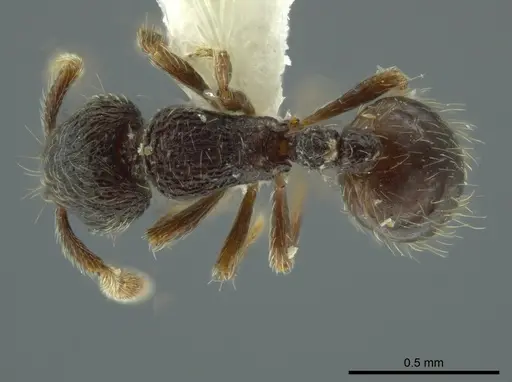
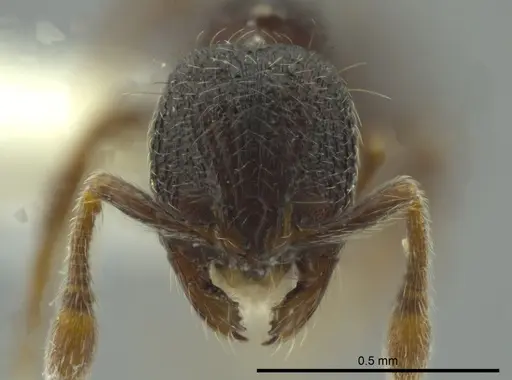
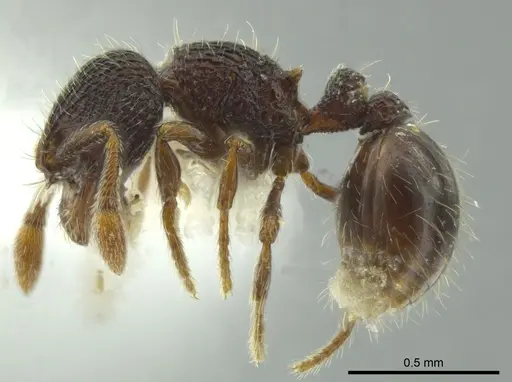
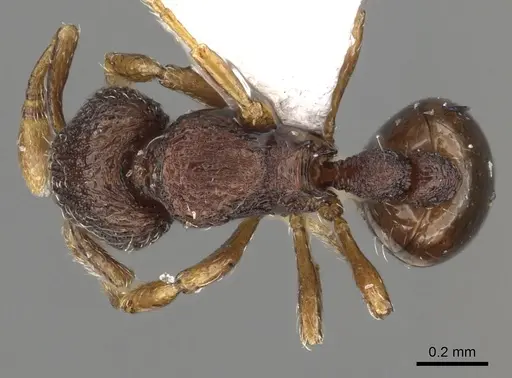
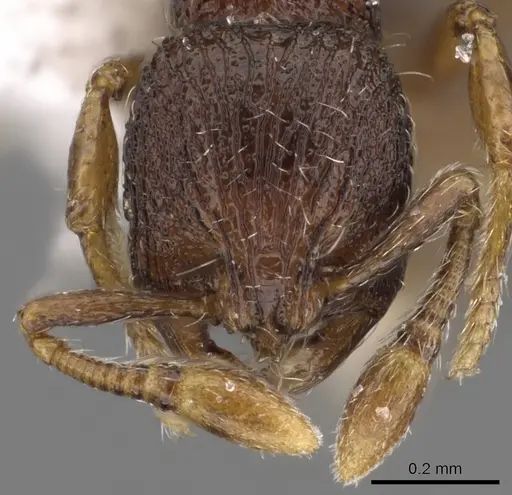
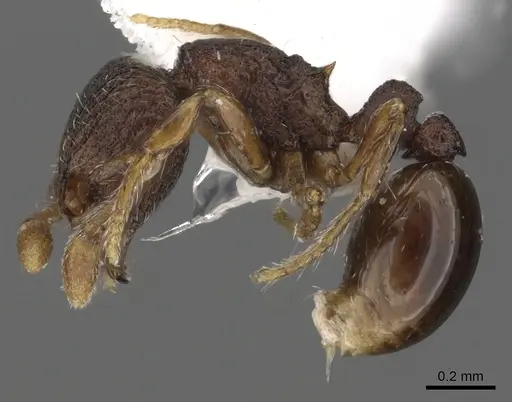
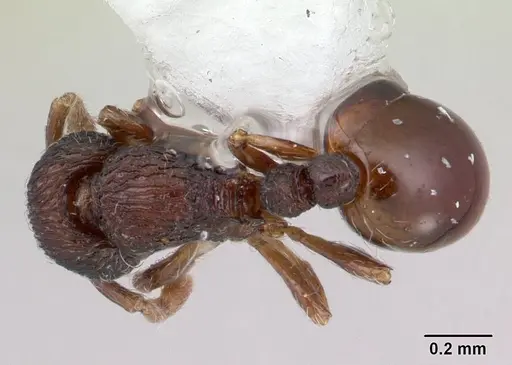
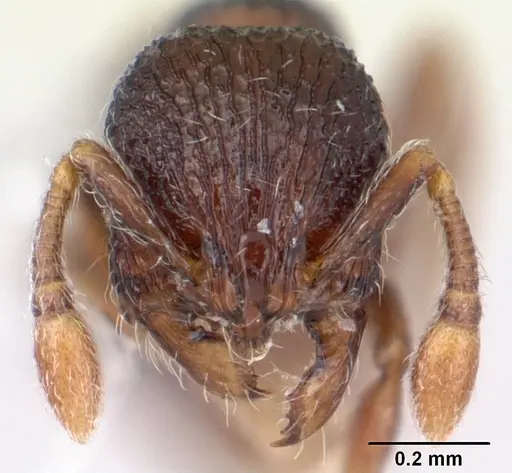
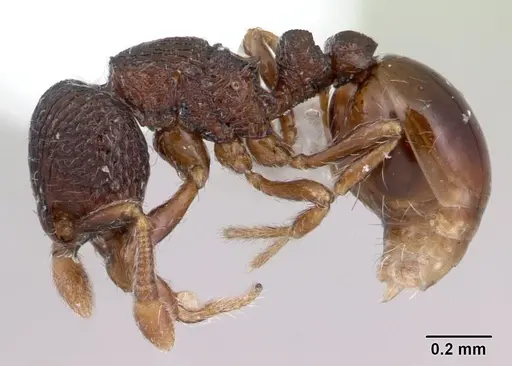
Adelomyrmex betoi are minute dark brown ants from the cloud forests of Mexico. Workers measure just 2.35mm long, smaller than a grain of rice, with dark brown bodies and lighter brown legs [1]. They live in wet mountain forests above 1000 meters elevation in the states of Oaxaca and Veracruz [2]. Unlike every other species in their genus, these ants are almost completely hairless, lacking the erect hairs that cover their relatives [1].
What makes these ants truly extraordinary is how little we know about them. Scientists have only collected them four times in history [2]. Every single specimen has been a worker, nobody has ever found a queen or male [3]. This makes them a ghost species in antkeeping: you cannot start a colony from a queen because queens have never been discovered. You would need to collect an entire wild colony, assuming you could even find one in the remote Mexican mountains where they live.
Quick Summary
- Difficulty: Expert
- Origin & Habitat: Wet evergreen forests above 1000m elevation in the mountains of Oaxaca and Veracruz, Mexico [2][4].
- Colony Type: Unknown, queens have never been observed [3].
- Size & Growth:
- Queen: Unknown, queens have never been collected [3].
- Worker: 2.35mm total length [1].
- Colony: Unknown, no colony data exists.
- Growth: Unknown.
- Development: Unknown, no developmental studies exist. Based on similar small Myrmicinae, estimate 6-10 weeks at 20-22°C, but this is speculative. (No breeding data exists for this species.)
- Antkeeping:
- Temperature: Cool highland conditions, likely 18-22°C based on 1000-1600m elevation habitat [2]. Avoid tropical heat.
- Humidity: High humidity required, wet forest habitat with damp leaf litter [2][5].
- Diapause: Unknown, possible seasonal slowdown in winter months but unconfirmed.
- Nesting: Natural nests in leaf litter, hollow logs, and fungi [5]. In captivity, use small chambers with moist substrate.
- Behavior: Behavior is poorly documented due to extreme rarity. Workers are extremely small at 2.35mm [1], so escape prevention must be exceptional, they can squeeze through the tiniest gaps.
- Common Issues: escape prevention is critical, at 2.35mm they squeeze through gaps smaller than a pinhead., impossible to found from queen, queens remain undiscovered, so standard antkeeping methods do not apply., high altitude requirements mean they likely suffer in hot rooms above 25°C., extreme rarity means no commercial availability, you must collect wild colonies yourself., unknown colony size and biology make it impossible to predict growth or space needs.
The Reality of Keeping a Ghost Species
You cannot buy Adelomyrmex betoi queens because scientists have never found one [3]. This changes everything about how you would keep them. Normal antkeeping starts with a single queen in a test tube. Here, that is impossible. Your only option is collecting an entire wild colony, workers, brood, and hopefully a queen hidden among them, from the mountains of Mexico.
This makes the species expert-only for practical reasons beyond just care difficulty. You need field experience collecting leaf litter colonies, access to remote Mexican cloud forests at 1000-1600m elevation, and the skill to maintain a colony you cannot replace. If the queen dies, you cannot get another. The colony ends.
The four known collections came from Berlese samples of leaf litter and rotting wood [5]. This tells us they live in the forest floor layer, not in soil mounds or tree canopies. You would need to search through damp leaf litter and decaying logs in the correct mountain regions to find them.
Housing and Escape Prevention
At 2.35mm long, these are among the smallest ants you could attempt to keep [1]. Standard test tube setups may actually be too spacious and hard to humidify properly for such tiny ants. Small containers with tight-fitting lids are essential.
Escape prevention must be extreme. They can walk through the mesh that stops larger ants. You need barriers like Fluon or PTFE applied to the upper walls, and even then, check for the smallest gaps in lid seals. A single worker escaping means losing a significant portion of your colony if you only have a few dozen workers.
For substrate, mimic their natural leaf litter habitat [5]. Use a mix of coconut fiber, leaf litter, and small pieces of rotting wood. Keep it damp but not waterlogged, think forest floor after rain, not swamp. They likely nest in pre-existing cavities rather than digging extensive tunnels, so provide small spaces under bark or in wood pieces.
Temperature and Highland Conditions
These ants come from mountains, not hot lowlands. They live in wet forests above 1000 meters elevation, with collections from 1500-1600m [2]. At these elevations in Mexico, temperatures stay relatively cool year-round, probably averaging 15-20°C with warmer days and cool nights.
Do not keep them at tropical room temperatures of 25-28°C. Start around 18-22°C and observe. If workers move slowly and cluster, they may need slightly more warmth. If they stay pressed against the moist substrate and avoid dry areas, the temperature is likely correct.
Heating cables are probably unnecessary and potentially harmful. If you must provide a gradient, keep it gentle, 18°C on one side and 22°C on the other. High humidity is more important than heat for this species.
Feeding Unknown Micro-Ants
Nobody has observed Adelomyrmex betoi foraging. We know they live in leaf litter [5], which suggests they eat small soil arthropods like springtails, mites, and tiny insect larvae. They may also collect honeydew from root aphids or other sap-sucking insects in the soil layer.
Offer tiny live prey: springtails, fruit flies, or very small cricket nymphs cut into pieces. Also provide sugar sources like honey water or sugar water in small drops they cannot drown in. Because they are so small, food pieces must be minute, a single fruit fly might feed several workers.
Watch to see what they accept. Since we have no observations of their natural diet, you must experiment carefully. Remove uneaten food quickly to prevent mold in the humid conditions they require.
The Hairless Mystery
Adelomyrmex betoi looks different from every other species in its genus. While all other Adelomyrmex have abundant hairs covering their bodies, these workers are essentially bald [1]. They also have unique bead-like sculpturing on their body surfaces, the ridges look plaited or beaded rather than smooth [1].
Scientists do not know if this hairlessness is an adaptation to their specific mountain habitat or just random variation. The postpetiole, the second waist segment, has a strange shape too, with a sharp ridge separating the top from the back [2]. This might help them fit into tight spaces in leaf litter.
A fourth collection from near the same location had workers with normal hair covering [2]. This might mean the hairless type is just one variant, or it could be a different species entirely. Until scientists study more specimens, we will not know if your colony should have hairy or hairless workers.
Frequently Asked Questions
Can I keep Adelomyrmex betoi in a test tube?
You can house workers in a test tube, but you cannot start a colony from a queen in one because queens have never been found [3]. You would need to collect an entire wild colony and transfer it to a setup.
How long until first workers for Adelomyrmex betoi?
Nobody knows. Queens have never been observed, so egg-to-worker timing is completely unstudied [3].
What do Adelomyrmex betoi eat?
Their diet is unstudied, but based on their leaf litter habitat, they likely eat tiny soil arthropods like springtails and mites, plus possibly honeydew from root-feeding aphids [5].
How big do Adelomyrmex betoi colonies get?
Unknown. Scientists have only found a few workers at a time, never an entire colony [2].
Can I keep multiple Adelomyrmex betoi queens together?
This has never been studied. Since queens have never been collected, we do not know if they accept multiple queens or fight [3].
Do Adelomyrmex betoi need hibernation?
Unknown. They live in mountains where temperatures stay moderate year-round, so they may slow down in winter but this is unconfirmed [2].
Are Adelomyrmex betoi good for beginners?
No. They are expert-only due to extreme rarity, unknown biology, and the fact that you cannot buy queens, you must collect wild colonies from remote Mexican mountains [2][3].
Where can I buy Adelomyrmex betoi?
You cannot buy them commercially. They are only known from four scientific collections in history, making them unavailable in the ant trade [2].
Why are my Adelomyrmex betoi workers dying?
Common causes include temperatures that are too high (they need cool mountain conditions around 18-22°C), insufficient humidity (they need wet forest conditions), or starvation from prey that is too large (they need tiny food at 2.35mm size) [1][2].
References

This caresheet is licensed under CC BY-SA 4.0 .
Literature
Loading...Loading products...