

Acropyga pallida
- Scientific Name
- Acropyga pallida
- Tribe
- Plagiolepidini
- Subfamily
- Formicinae
- Author
- Donisthorpe, 1938
- Distribution
- Found in 4 countries
Acropyga pallida Overview
Acropyga pallida is an ant species of the genus Acropyga. It is primarily documented in 4 countries , including Australia, Papua New Guinea, Philippines. Detailed taxonomic data and occurrence records can be further explored via authoritative databases such as AntWeb or the Global Biodiversity Information Facility (GBIF).
Acropyga pallida
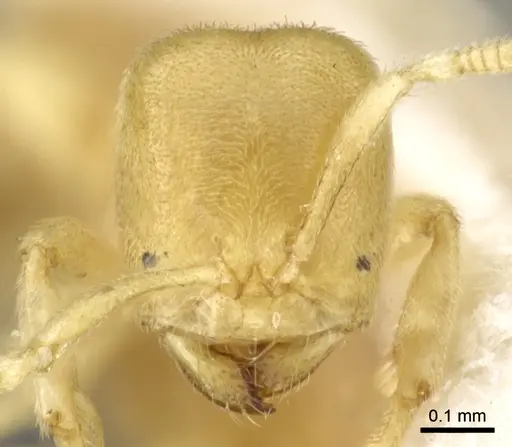
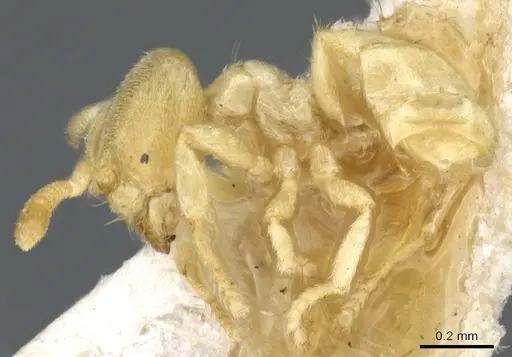
Acropyga pallida are tiny yellow ants with workers measuring just 1.4-2.1mm in length [1]. They live across a broad range from eastern Australia through New Guinea and the Solomon Islands, north to the Philippines and west to Borneo [1][2][3]. You will find them in diverse habitats from dry sclerophyll woodlands to rainforests, nesting in soil, leaf litter, under stones, or in rotten wood [1]. These ants are obligate mealybug-tenders, they cannot survive without their symbiotic mealybugs [4][2].
Quick Summary
- Difficulty: Expert
- Origin & Habitat: Eastern Australia, New Guinea, Solomon Islands, Philippines, and Borneo [1][2][3]. Found in habitats ranging from dry sclerophyll and Callitris woodlands to rainforests [1].
- Colony Type: Unconfirmed for this species.
- Size & Growth:
- Queen: 2.6-2.9 mm [1]
- Worker: 1.4-2.1 mm [1]
- Colony: Unknown, likely small to moderate based on related Acropyga species.
- Growth: Unknown, likely moderate.
- Development: Unknown, estimated 6-10 weeks at 25°C based on small body size and tropical habitat (inferred). (Development time is unconfirmed. Estimate assumes warm stable temperatures typical of their native range.)
- Antkeeping:
- Temperature: Warm and stable, roughly 24-28°C (inferred from tropical/subtropical distribution). Provide a gentle heat gradient.
- Humidity: Moderate to high humidity. Keep nest substrate damp but not waterlogged, similar to forest floor conditions [1].
- Diapause: No [1]. These ants come from tropical regions and do not require winter rest.
- Nesting: Soil-based nests, under stones, or in rotten wood [1]. In captivity, use naturalistic setups with soil or sand mixtures, or small test tubes kept dark. Avoid open spaces.
- Behavior: Cryptic and subterranean. They spend most of their time tending mealybugs underground [4]. Non-aggressive. Because workers are only 1.4-2mm long, escape prevention must be excellent, they can squeeze through the tiniest gaps [1].
- Common Issues: colony will starve without live mealybugs, they are obligate symbionts requiring specific root mealybugs (Eumyrmococcus) to survive [4][2]., extreme escape risk due to tiny worker size, use fine mesh barriers and tight-fitting lids [1]., wild-caught colonies may lack sufficient mealybug populations to sustain them in captivity., overly wet conditions can kill colonies, substrate should be damp but never soggy.
Feeding and Diet - The Mealybug Requirement
Acropyga pallida are obligate trophobionts, meaning they must tend live mealybugs to survive [4][2]. In nature, they collect honeydew from root mealybugs in the subfamily Rhizoecinae, specifically the genus Eumyrmococcus [2][4]. The ants protect these mealybugs and feed exclusively on their sugary secretions. Without access to live mealybugs, your colony will starve regardless of what other foods you offer. This makes them extremely challenging to keep. You would need to establish a culture of their specific mealybug partners (Eumyrmococcus species) and maintain both populations simultaneously. Most keepers should not attempt this species unless they have access to the specific mealybugs from the native range or established ant-meadow setups.
Nest Preferences
In nature, Acropyga pallida nests in soil, leaf litter, under stones, and in rotten wood [1]. They prefer cryptic, dark locations. In captivity, replicate these conditions with naturalistic setups using a mix of soil and sand, or small test tubes with substrate. Keep the nest dark, these ants are not display species and will stress under bright lights. Provide narrow chambers and tunnels scaled to their tiny size (under 2mm workers). Avoid tall open spaces where they cannot climb effectively.
Temperature and Care
Coming from tropical and subtropical regions across Australia and Southeast Asia, these ants need warm stable conditions [1][2]. Keep them around 24-28°C with minimal fluctuation. You can use a heating cable on one side of the nest to create a gentle gradient, but avoid overheating. Do not hibernate this species, they remain active year-round in their native habitats. If your room temperature drops below 20°C consistently, you will need supplemental heating.
Behavior and Temperament
These are cryptic, subterranean ants. Workers have 5-7 teeth on their mandibles and short erect hairs on their antennae and body [1][2]. They are not aggressive and pose no sting risk to humans, they are far too small to penetrate skin and lack a stinger (typical of Formicinae). Their entire life revolves around tending their mealybug herds underground. You will rarely see them unless you disturb the nest. Because of their minute size (workers only 1.4-2mm), they can escape through the smallest gaps in mesh or lids. Use extremely fine mesh (under 0.5mm) and ensure all connections are tight.
Colony Founding
Founding behavior is unconfirmed for Acropyga pallida specifically. Based on patterns seen in other Acropyga species, queens likely practice trophophoresy, carrying a mealybug in their mandibles during the nuptial flight to seed the new colony. If attempting to found a colony, you would need to provide live mealybugs immediately, as the queen cannot survive on her own fat reserves without her symbionts. However, founding success in captivity has not been documented for this species.
Frequently Asked Questions
Can I keep Acropyga pallida without mealybugs?
No. These ants are obligate mealybug-tenders and will starve without live mealybugs to provide honeydew [4][2]. They require specific root mealybugs in the genus Eumyrmococcus.
Are Acropyga pallida good for beginners?
No. They are expert-level ants due to their specialized dietary requirements and tiny size. You need experience maintaining mealybug cultures and securing micro-sized ants.
How do I prevent Acropyga pallida from escaping?
Use extreme escape prevention. Workers are only 1.4-2mm long and can squeeze through tiny gaps [1]. Use mesh finer than 0.5mm, tight-fitting lids, and Fluon or baby powder barriers on vertical surfaces.
What do Acropyga pallida eat?
They feed exclusively on honeydew produced by root mealybugs [4][2]. They do not accept typical ant foods like sugar water or insects without their mealybug partners.
Do Acropyga pallida need hibernation?
No. They come from tropical regions and remain active year-round [1]. Keep them warm consistently.
Can I keep multiple Acropyga pallida queens together?
Not recommended. Combining unrelated queens has not been documented for this species. While some Acropyga may tolerate multiple queens, attempting this risks fighting and colony failure.
How long until Acropyga pallida get their first workers?
The egg-to-worker timeline is unconfirmed for this species. Based on their small size and tropical nature, expect roughly 6-10 weeks at 25-28°C, but this is an estimate.
Where can I find Acropyga pallida mealybugs?
You would need to collect Eumyrmococcus mealybugs from the soil and roots near wild Acropyga pallida colonies [2]. These specific mealybugs are not commercially available. Without them, the colony cannot survive.
References

This caresheet is licensed under CC BY-SA 4.0 .
CASENT0249913
View on AntWeb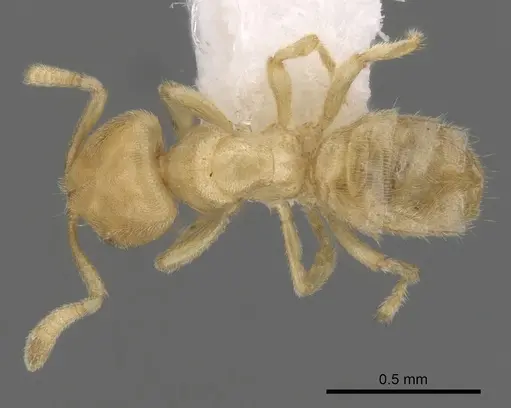
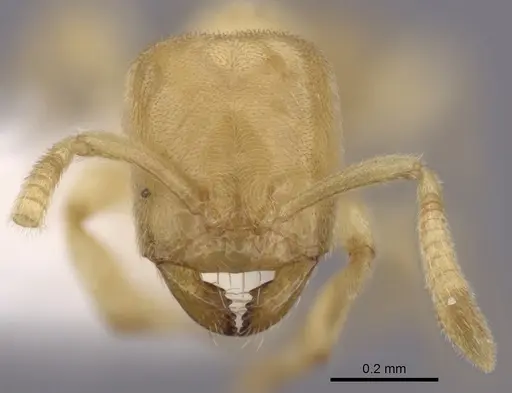
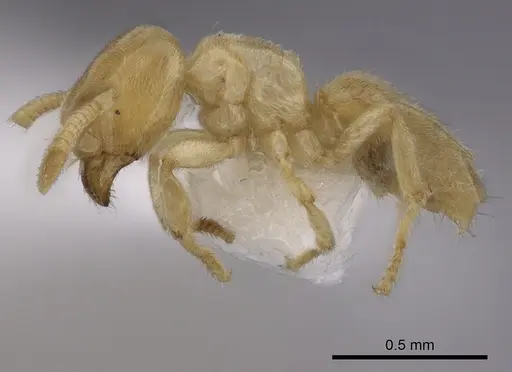
CASENT0903176
View on AntWeb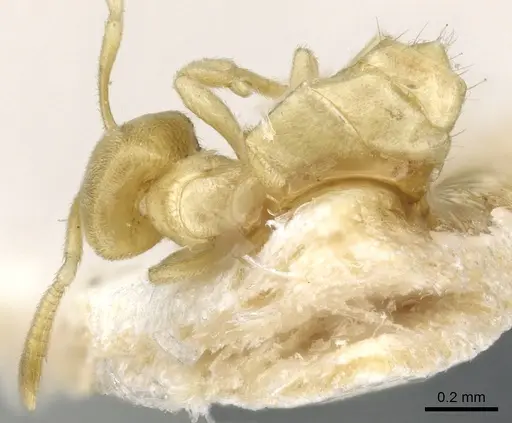
Literature
Loading...Loading products...