

Acropyga hirsutula
- Scientific Name
- Acropyga hirsutula
- Tribe
- Plagiolepidini
- Subfamily
- Formicinae
- Author
- LaPolla, 2004
- Distribution
- Found in 1 countries
Acropyga hirsutula Overview
Acropyga hirsutula is an ant species of the genus Acropyga. It is primarily documented in 1 countries , including Ecuador. Detailed taxonomic data and occurrence records can be further explored via authoritative databases such as AntWeb or the Global Biodiversity Information Facility (GBIF).
Acropyga hirsutula
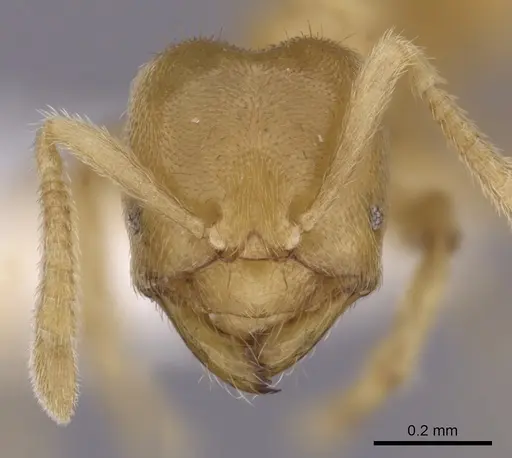
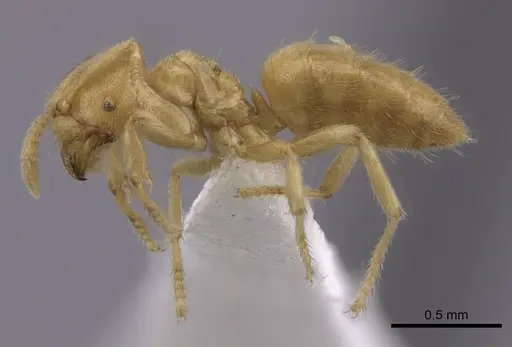
Acropyga hirsutula is a tiny Neotropical ant measuring just 2-2.1mm for workers and 2.9-3mm for queens . The species gets its name from Latin, 'hirsutula' means hairy, thanks to its distinctive dense covering of hairs on the clypeus (the area between the mouth and eyes) and gaster (abdomen) . Workers are yellow with 11-segmented antennae and mandibles bearing 4-5 teeth . This species belongs to the goeldii species-complex within the decedens species-group, making it a close relative of other Central and South American Acropyga species .
Like all Acropyga species, these ants are obligate mealybug-tenders, they farm mealybugs (scale insects) for the honeydew these pests produce [1]. This mutualistic relationship defines much of their behavior. The species has been documented in Ecuador and Peru, with a nest found under a rock along a riverbank containing multiple dealate (wingless) queens . The males have a unique feature, their penis valves have a dorsal notch, a trait shared only with one other species, Acropyga dubitata from Hispaniola .
Quick Summary
- Difficulty: Medium
- Origin & Habitat: Ecuador and Peru in the Neotropical region. Nests have been found under rocks along riverbanks at low elevations around 500m . The species is part of the goeldii species-complex in the decedens species-group .
- Colony Type: Multi-queen colonies observed, a nest in Ecuador contained multiple dealate queens . The colony structure is likely polygynous (multiple queens), though this requires further study.
- Colony: Polygyne
- Size & Growth:
- Queen: 2.89-2.96mm
- Worker: 2.04-2.07mm
- Colony: Unknown, no colony size data available
- Growth: Unknown, no development timing data available
- Development: Unknown, no direct data. Based on typical Acropyga patterns and their small size, estimate 6-8 weeks at warm temperatures. (No published development data exists for this species. Related Acropyga species are small and relatively fast-growing.)
- Antkeeping:
- Temperature: Keep at 24-28°C. These are tropical ants from Ecuador and Peru that prefer warm conditions. A gentle gradient allowing them to choose warmer/cooler areas is ideal.
- Humidity: Moderate to high, their natural habitat along riverbanks suggests they prefer damp but not waterlogged conditions. Keep substrate consistently moist.
- Diapause: No, as tropical species from Ecuador and Peru, they do not require hibernation. Keep them warm year-round.
- Nesting: Use a small test tube setup or Y-tong nest with tight chambers scaled to their tiny size. They nest under rocks in the wild, so a naturalistic setup with a damp substrate works well. Their small size means escape prevention must be excellent.
- Behavior: These are tiny, docile ants that spend much of their time tending mealybugs for honeydew. They are not aggressive and rarely sting. Their small size (just over 2mm for workers) makes escape prevention critical, they can squeeze through remarkably small gaps. As obligate mealybug-tenders, they will actively tend any mealybugs in their enclosure. They are relatively inactive compared to many ants and do not forage aggressively for prey.
- Common Issues: their tiny size makes escape prevention challenging, use fine mesh and tight-fitting lids, no published care information exists, keepers must experiment with conditions, their specialized diet (mealybug-tending) means standard feeding approaches may not work, multi-queen colonies may have different care requirements than single-queen setups, wild-caught colonies may carry parasites that affect captive survival
Housing and Nest Setup
Acropyga hirsutula is an extremely small ant, with workers measuring just over 2mm. This means your housing setup must account for their tiny size. Test tube setups work well for founding colonies, but ensure the cotton barrier is packed tightly, these ants can squeeze through surprisingly small spaces. For established colonies, a Y-tong (AAC) nest with narrow chambers or a small acrylic nest scaled to their size works best.
In the wild, these ants nest under rocks along riverbanks in Ecuador and Peru . A naturalistic setup with damp substrate and flat stones on top mimics their natural environment. Keep the substrate consistently moist but not waterlogged, think damp forest floor, not soggy swamp. The humidity should be moderate to high, reflecting their tropical origin.
Feeding and Diet
Acropyga species are obligate mealybug-tenders, meaning they farm mealybugs (scale insects) for the honeydew these pests produce [1]. This is their primary food source in the wild. In captivity, you can simulate this by providing sugar water or honey water as a constant food source.
Beyond honeydew, they will accept small insects like fruit flies, pinhead crickets, and other tiny prey. However, given their small size and the fact they primarily harvest honeydew from mealybugs, sugar sources should form the backbone of their diet. Offer a drop of honey water or sugar water every few days, supplemented with occasional small live prey. Watch to see what they accept, individual colonies may vary in their preferences.
Temperature and Seasonal Care
As tropical ants from Ecuador and Peru, Acropyga hirsutula requires warm temperatures year-round. Keep the nest area at 24-28°C (75-82°F). A heating cable on one side of the nest can create a gentle gradient, allowing the ants to move between warmer and cooler areas as they choose. Room temperature may be sufficient if your home stays in this range.
Unlike temperate ant species, these ants do not require hibernation or diapause. They should be kept warm consistently throughout the year. Sudden temperature drops or cold drafts can stress them and potentially harm the colony. If your room temperature falls below 24°C, consider adding a small heat source.
Colony Structure and Multi-Queen Care
A documented nest in Ecuador was found to contain multiple dealate (wingless) queens . This suggests polygynous (multi-queen) colony structure is natural for this species. Multiple queens living together appears to be the norm rather than the exception.
When keeping this species, you may find that colonies accept multiple queens without the aggression seen in some other ant species. This can lead to faster colony growth since more queens means more egg-laying. However, it also means the colony may be more sensitive to disturbance during the founding stage. Go slowly when introducing any elements to their setup and observe their behavior.
Understanding Their Unique Biology
Acropyga hirsutula has several distinctive features that set it apart from common ant pets. The species name 'hirsutula' literally means hairy or bristly, referring to the dense covering of hairs on the clypeus and gaster . This pilosity is so distinctive that it's used as a key identification trait.
The males of this species have a rare anatomical feature, their penis valves have a dorsal notch, something only observed in one other species, Acropyga dubitata from Hispaniola . This suggests a close evolutionary relationship between these two species.
Being in the goeldii species-complex, these ants are part of a group that has evolved specialized mealybug-tending behavior. The mutual benefit, ants get honeydew, mealybugs get protection, has shaped much of their biology and behavior.
Frequently Asked Questions
How long does it take for Acropyga hirsutula to produce first workers?
The exact egg-to-worker timeline is unconfirmed for this species. Based on their small size (2mm workers) and typical Acropyga patterns, expect approximately 6-8 weeks from egg to first worker at warm temperatures (around 26°C). Be patient, small colonies often develop slowly.
What do I feed Acropyga hirsutula?
As obligate mealybug-tenders, their primary diet is honeydew. Offer sugar water or honey water as a constant food source. They will also accept small live prey like fruit flies, but sugar sources should form the basis of their diet.
Can I keep multiple queens together?
Yes, multi-queen colonies appear natural for this species. A documented nest in Ecuador contained multiple dealate queens . Unlike many ant species where queens fight, these queens seem to coexist peacefully.
Do Acropyga hirsutula need hibernation?
No, they are tropical ants from Ecuador and Peru and do not require hibernation. Keep them warm year-round at 24-28°C.
Why are my Acropyga hirsutula escaping?
Their tiny size (just over 2mm) means they can squeeze through remarkably small gaps. Use excellent escape prevention: fine mesh barriers, tight-fitting lids, andFluon on any edges. Even tiny gaps that other ant species cannot pass will allow these small ants to escape.
Are Acropyga hirsutula good for beginners?
This species is rated Medium difficulty. While not aggressive, there is no published captive care information, so keepers must experiment with conditions. Their specialized mealybug-tending diet and tiny size present challenges not found in more common pet ant species.
What size colony do Acropyga hirsutula reach?
Colony size data is not available for this species. Given their small worker size and the fact that related species have moderate-sized colonies, expect colonies of perhaps several hundred workers at maturity.
When do Acropyga hirsutula have nuptial flights?
Nuptial flight timing is unconfirmed. Alates (reproductive males and queens) have been collected at lights in Peru, suggesting flights occur during warm months. If you keep this species long-term, watch for reproductive castes to appear.
References

This caresheet is licensed under CC BY-SA 4.0 .
CASENT0249921
View on AntWeb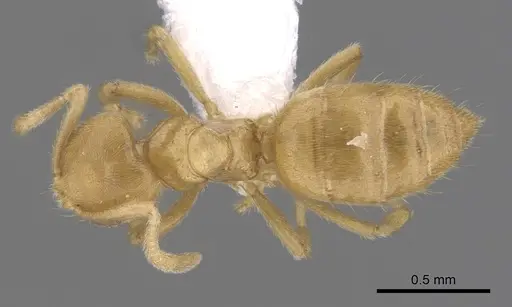
Literature
Loading...Loading products...