

Acromyrmex molestans
- Scientific Name
- Acromyrmex molestans
- Tribe
- Attini
- Subfamily
- Myrmicinae
- Author
- Santschi, 1925
- Distribution
- Found in 1 countries
Acromyrmex molestans Overview
Acromyrmex molestans is an ant species of the genus Acromyrmex. It is primarily documented in 1 countries , including Brazil. Detailed taxonomic data and occurrence records can be further explored via authoritative databases such as AntWeb or the Global Biodiversity Information Facility (GBIF).
Acromyrmex molestans
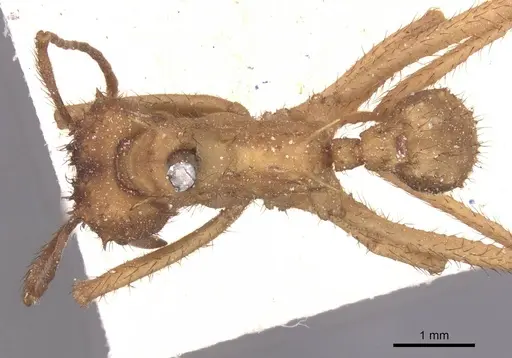
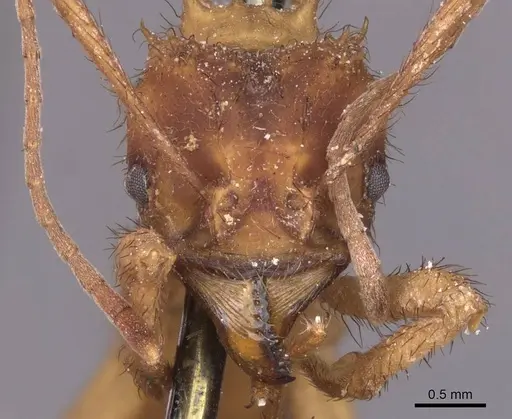
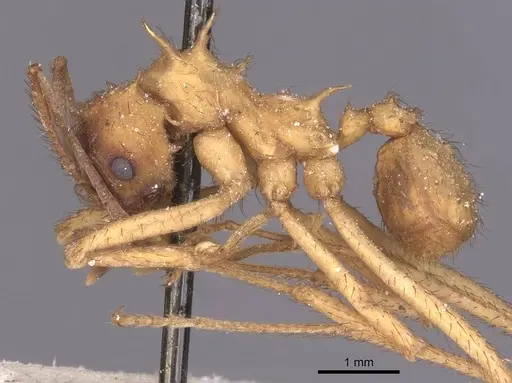
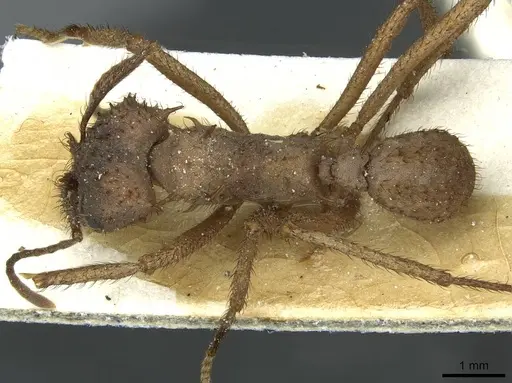
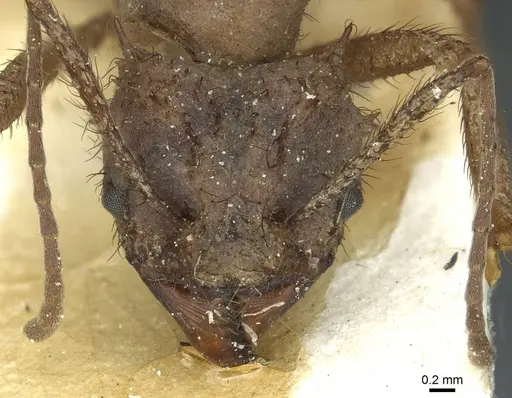
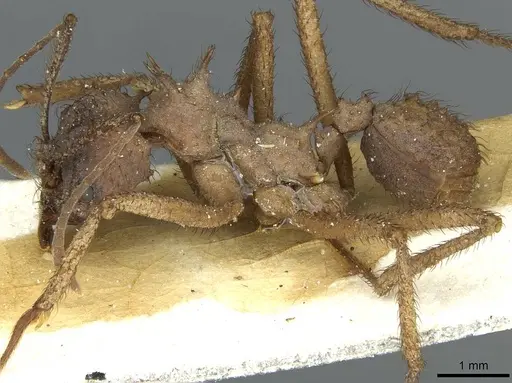
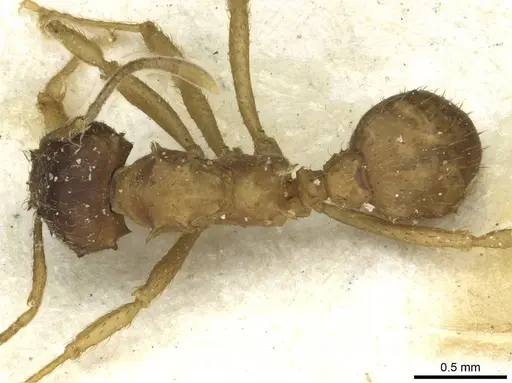
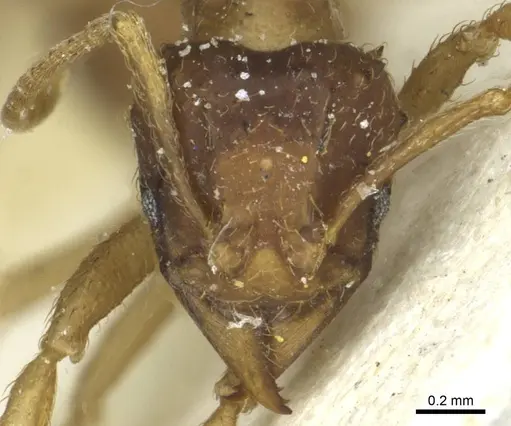
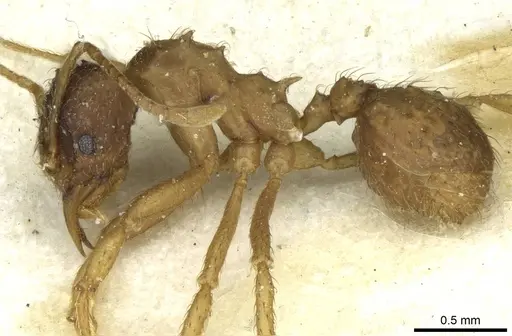
Acromyrmex molestans is a leaf-cutting ant native to Brazil, found in states including Minas Gerais, Espírito Santo, São Paulo, and others [1][2][3]. Recently elevated to full species status in 2022 after being considered a subspecies of A. subterraneus [4], these ants show the typical leaf-cutter body plan with spines on the thorax. Their inferior pronotal spines bend strongly forward, which helps distinguish them from similar species [4]. Workers vary in size, with minor workers having head capsules about 0.98mm wide and media workers around 1.4mm [5]. They build noticeably shallow nests compared to other leaf-cutting ants, usually with two entrance holes, and are quick to migrate if disturbed [6].
What makes this species particularly interesting is their flexible social structure. They are facultatively polygynous, meaning colonies can function with just one queen or with multiple queens working together, up to 14 queens have been documented in a single nest [7][8]. Even more unusual, workers will readily accept additional queens into established colonies, including queens from other colonies, though the smallest workers may later reject them if they don't fit in [6]. This queen adoption behavior is rare among ants and makes them socially flexible [6].
Quick Summary
- Difficulty: Expert
- Origin & Habitat: Brazil (Minas Gerais, Espírito Santo, São Paulo, Bahia, Rio de Janeiro, and other states) [1][2][3], found in eucalyptus plantations, urban areas, and natural habitats [9][6].
- Colony Type: Facultatively polygynous, colonies can have one queen or multiple queens working together [8][6].
- Colony: Optionally polygyne
- Size & Growth:
- Queen: Not specified in available research.
- Worker: Minor workers ~0.98mm head width, media workers ~1.4mm head width [5]. Body length not specified.
- Colony: Laboratory colonies reached approximately 13,000 workers with fungus gardens of 1.6 liters [5]. Field colonies likely larger.
- Growth: Moderate to Fast
- Development: Not directly measured, based on related Attini, estimate 6-10 weeks at 25°C. (Timeline inferred from genus patterns, temperature dependent.)
- Antkeeping:
- Temperature: 25 ± 2°C (77°F) [6][5]. Tropical species requiring stable warmth.
- Humidity: 70-80% relative humidity [6]. Keep fungus garden substrate moist but not waterlogged.
- Diapause: No. Tropical species active year-round, do not hibernate [6].
- Nesting: Very superficial nests compared to other Acromyrmex [6]. Require fungus garden chamber from the start. Two entrance holes typical in nature [6].
- Behavior: Leaf-foraging on dicotyledonous plants [10], cultivate symbiotic fungus Leucoagaricus gongylophorus [11]. Workers show no aggression toward non-nestmates of same subspecies but fight aggressively against other subspecies like A. subterraneus subterraneus [5]. Colonies migrate easily when disturbed [6].
- Common Issues: fungus garden failure from incorrect humidity or contamination., Escovopsis fungal parasite infection [12]., superficial nests dry out quickly if humidity drops., minor workers may reject introduced queens after initial acceptance [6].
Nest Preferences and Structure
In nature, Acromyrmex molestans builds remarkably shallow nests compared to other leaf-cutting ants, which makes them vulnerable to drying out and disturbances [6]. Natural nests typically have two entrance holes [6]. In captivity, you need to replicate this superficial nesting habit while maintaining high humidity. A setup with a shallow fungus garden chamber works best, avoid deep soil nests. Because they migrate readily when disturbed, avoid frequent nest checks [6]. The fungus garden requires constant humidity around 70-80% but needs good ventilation to prevent mold growth [6][12].
Fungus Garden Management
These ants are obligate fungus growers, cultivating Leucoagaricus gongylophorus as their primary food source [11]. The fungus garden is the heart of the colony, without it, the colony starves. Workers maintain the garden by bringing fresh leaf material and removing waste [13]. However, they are susceptible to the parasitic fungus Escovopsis, with three different species (E. microspora, E. moelleri, E. lentecrescens) documented infecting gardens in the same nest [12]. Workers have cleaning behaviors and produce antibiotics to protect the fungus [13], but keepers must ensure sterile conditions when starting colonies and avoid introducing contaminants.
Queen Adoption and Social Flexibility
Unlike most ants that aggressively reject foreign queens, A. molestans shows remarkable social flexibility. Workers accept queens from both their own colony and other colonies at the nest entrance [6]. In experiments,13 of 15 foreign queens were accepted, though 4 were later rejected by minor workers after entering [6]. Colonies can maintain up to 14 queens simultaneously [7], with adopted queens sometimes laying more eggs than the original queen [6]. This facultative polygyny means you can potentially introduce new queens to boost colony size, though success is not guaranteed [8][6].
Feeding Requirements
Workers forage for fresh plant material, preferring dicotyledonous plants [10]. In laboratory settings, they accept leaves from Acalypha sp., Ligustrum sp., and petals from Rosa sp. and Tecoma sp. [5][6]. You must provide fresh leaves regularly, the fungus needs fresh vegetation to thrive [13]. Remove old or moldy plant material promptly. They also require a constant water source [6]. Never feed leaves treated with pesticides, as this will kill the fungus garden.
Temperature and Environmental Control
Maintain colonies at 25 ± 2°C with 70-80% relative humidity [6][5]. Use a 10:14 light-to-dark photoperiod (10 hours light,14 hours dark) to match laboratory conditions where colonies thrived [6][5]. Because they are tropical, they do not require diapause and should be kept active year-round [6]. Temperature fluctuations outside 20-27°C may stress the fungus garden and slow brood development.
Frequently Asked Questions
Can I keep Acromyrmex molestans in a test tube setup?
No. These ants require a fungus garden from the start and cannot be kept in standard test tubes. They need a specialized setup with a fungus chamber and foraging area.
How long until first workers for Acromyrmex molestans?
Not directly measured in research, but based on related leaf-cutting ants, expect approximately 6-10 weeks at 25°C. First workers (nanitics) will be smaller than subsequent workers.
Can I keep multiple queens together in Acromyrmex molestans?
Yes. This species is facultatively polygynous, meaning colonies can have multiple queens. Up to 14 queens have been documented in one nest [7], and workers accept queens from other colonies [6]. However, minor workers may reject new queens after initial acceptance [6].
Do Acromyrmex molestans need hibernation?
No. They are a tropical species from Brazil and remain active year-round. Do not cool them for diapause [6].
What temperature do Acromyrmex molestans need?
Keep them at 25°C (77°F) with a range of 23-27°C acceptable [6][5]. Use a heating cable or mat to maintain stable tropical temperatures.
How big do Acromyrmex molestans colonies get?
Laboratory colonies reached approximately 13,000 workers [5]. Field colonies likely grow larger given time and space.
Are Acromyrmex molestans good for beginners?
No. These are expert-level ants requiring specialized fungus garden maintenance, precise humidity control, and constant fresh leaf supply. They are also significant agricultural pests in Brazil [14].
Why are my Acromyrmex molestans dying?
Common causes include fungus garden failure (too wet or dry, contaminated), Escovopsis parasite infection [12], or starvation from lack of fresh leaves. Check humidity levels (should be 70-80%) and ensure leaves are fresh and pesticide-free [6].
References

This caresheet is licensed under CC BY-SA 4.0 .
Literature
Loading...Loading products...