

Acromyrmex hispidus
- Scientific Name
- Acromyrmex hispidus
- Tribe
- Attini
- Subfamily
- Myrmicinae
- Author
- Santschi, 1925
- Distribution
- Found in 3 countries
Acromyrmex hispidus Overview
Acromyrmex hispidus is an ant species of the genus Acromyrmex. It is primarily documented in 3 countries , including Argentina, Brazil, Uruguay. Detailed taxonomic data and occurrence records can be further explored via authoritative databases such as AntWeb or the Global Biodiversity Information Facility (GBIF).
Acromyrmex hispidus
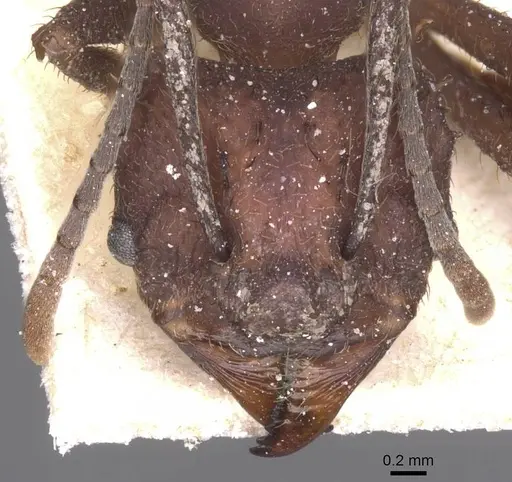
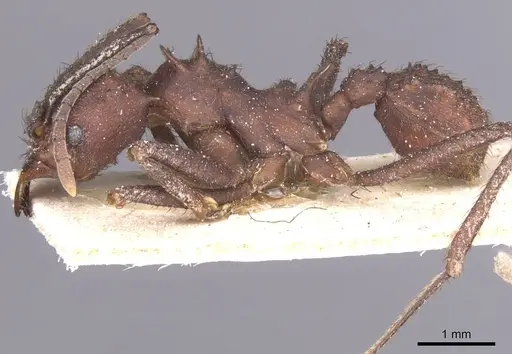
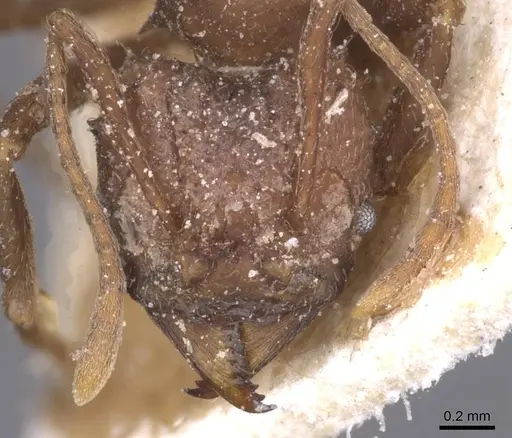
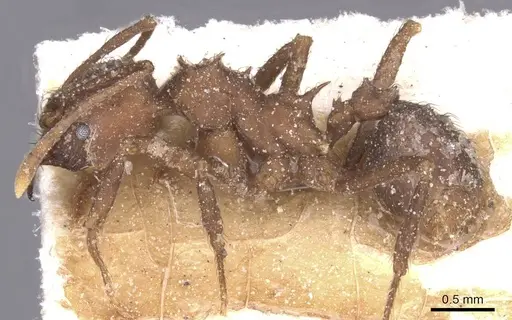
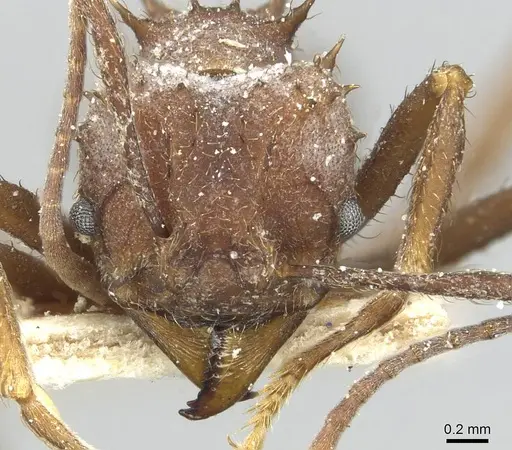
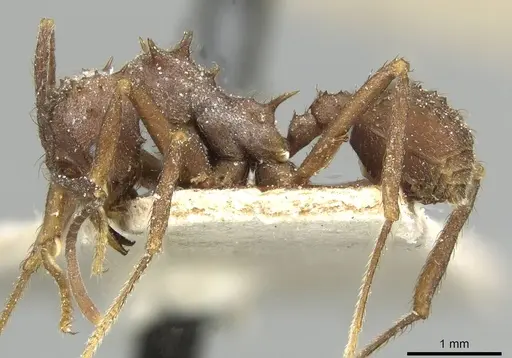
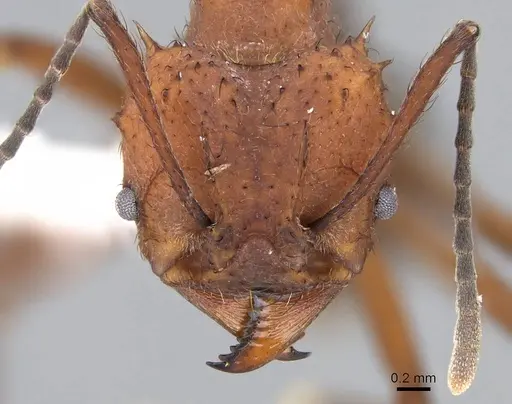
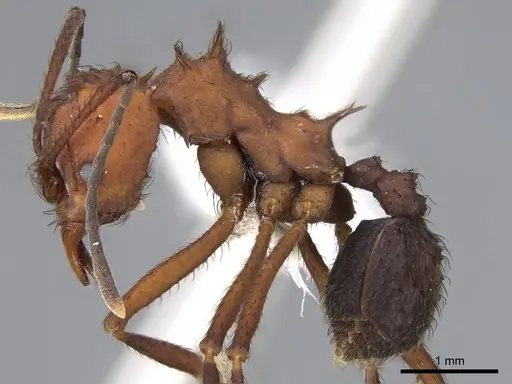
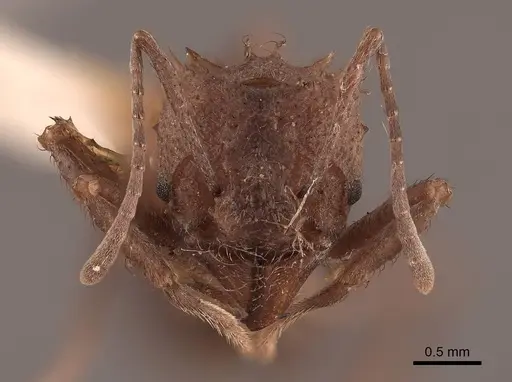
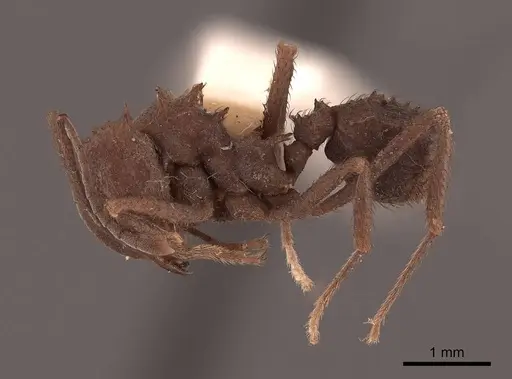
Acromyrmex hispidus is a medium-sized leaf-cutting ant with workers reaching about 6 mm in length [1]. They display a reddish-brown coloration with a typically darker gaster, and possess distinctive spines on the mesonotum and pronotum [1]. The species ranges across South America, found in Bolivia, Uruguay, Peru, and extensively across northern Argentina and southern Brazil [2][3][4]. In the wild, they construct underground nests covered with thatched plant material and straw, hiding their entrances beneath vegetation [3][5]. Like all Attini, they are obligate fungus-growers, cultivating gardens of Leucoagaricus gongylophorus to feed their larvae [6][7]. They forage along trunk trails to collect dicotyledonous leaves and are considered significant agricultural and forestry pests in their native range [6][1].
Quick Summary
- Difficulty: Expert
- Origin & Habitat: South America including Bolivia, Uruguay, Peru, and northern Argentina (Santa Fe, Tucumán, Chaco, Formosa, Jujuy, Corrientes, Misiones) and southern Brazil (Rio Grande do Sul, Santa Catarina, São Paulo) [2][3][4]. Found in forests, pastures, eucalyptus plantations, and soybean crops [8][9].
- Colony Type: Single-queen colonies (monogyne), inferred from typical Acromyrmex patterns. Queens found alone with a fungal pellet from the parent nest [10].
- Colony: Monogyne
- Founding: Claustral
- Size & Growth:
- Queen: Unknown, likely 10-14 mm based on typical Acromyrmex morphology.
- Worker: 6 mm [1].
- Colony: Unconfirmed, likely reaches thousands of workers. Nests are smaller and less complex than Atta species [6].
- Growth: Moderate, limited by fungus garden expansion rate.
- Development: 8-12 weeks at 25-28°C (estimated based on Attini patterns). (First workers (nanitics) may emerge slightly faster but will be smaller than subsequent workers.)
- Antkeeping:
- Temperature: Keep at 24-28°C year-round. Tropical species with no cold tolerance [2]. Provide a gentle gradient with a heating cable on one side of the nest.
- Humidity: Keep nest substrate consistently moist but not waterlogged. The fungus garden requires high humidity (70-80%) to prevent desiccation, with good ventilation to prevent mold.
- Diapause: No, tropical species that remains active year-round [2].
- Nesting: Underground soil nests with thatched plant material covering [5][3]. In captivity, use a deep soil or plaster nest with a dedicated fungus garden chamber. External waste deposition area required [11][12].
- Behavior: Leaf-cutting foragers that travel along trunk trails [13]. They show opportunistic foraging strategies compared to some relatives [14]. Workers are not aggressive defenders but possess spines and can bite if handled. They are soil-dwellers with hidden nest entrances [1].
- Common Issues: fungus garden collapse from Escovopsis infection or incorrect substrate preparation, the garden must be kept clean and at proper humidity., rejection of offered leaves, they prefer fresh dicotyledonous leaves and may refuse old or inappropriate plant material., fungus garden desiccation from low humidity or excessive ventilation, the mycelium dies if it dries out., overheating, tropical but sensitive to temperatures above 30°C which can kill the fungus symbiont., difficulty identifying the queen in soil nests due to hidden entrances and underground chambers [6].
Fungus Garden Care and Maintenance
Acromyrmex hispidus cultivates the basidiomycete fungus Leucoagaricus gongylophorus as their primary food source [6][7]. The queen carries a fungal pellet in her infrabuccal pocket from the parent colony to start the new garden [10]. In captivity, you must provide a suitable substrate, typically a mix of fresh leaf material and ant fecal pellets (manure) that the workers process. The garden requires constant humidity (70-80%) and temperatures around 25°C to thrive. Workers will prune the fungus and remove any contaminated sections, but you must watch for signs of the parasitic fungus Escovopsis, which appears as white or gray mold on the garden surface [15]. If detected, remove infected portions immediately. The ants also maintain mutualistic bacteria (Pseudonocardia) on their bodies that produce antibiotics to protect the garden [16].
Foraging and Leaf Selection
These ants are dicot specialists, cutting leaves from a variety of plants including citrus, cabbage, cassava, peach, rose, and grapevine [17][1]. In the wild, they forage along trunk trails to locate suitable vegetation [13]. In captivity, offer fresh, clean leaves daily, avoid plants treated with pesticides or fertilizers. They prefer dicotyledonous leaves over grasses [1]. Remove uneaten material within 24 hours to prevent mold. Unlike some more specialized relatives, A. hispidus shows opportunistic foraging behavior and may accept a wider variety of leaves [14]. They do not eat the leaves directly, they chew them into a pulp to fertilize their fungus garden.
Nest Construction and Waste Management
In nature, Acromyrmex hispidus builds underground nests with long galleries, generally showing no external sign of the entrance location [1]. The nest is covered with thatched plant material and straw, similar to their relatives A. lundi and A. ambiguus [3][5]. The entrance remains hidden under vegetation [3]. A critical aspect of their biology is external waste deposition, they create refuse piles outside the nest containing spent fungal substrate and dead ants [11][12]. In captivity, provide a deep soil chamber or plaster nest with narrow passages, plus a separate outworld area where they can deposit waste. Clean the waste area regularly to prevent mold and mite infestations.
Temperature and Environmental Control
As a tropical species distributed across warm regions of South America, Acromyrmex hispidus requires stable warm temperatures between 24-28°C [2]. They do not undergo diapause and remain active year-round. Use a heating cable or mat on one side of the nest to create a thermal gradient, allowing the ants to regulate their fungus garden temperature. Avoid temperatures exceeding 30°C as heat can kill the fungal symbiont. Humidity is equally critical, the nest substrate should feel damp but not soggy. Use a water tower or moistened plaster base to maintain humidity without flooding the fungus garden.
Disease and Parasite Management
The primary threat to captive colonies is Escovopsis, a parasitic fungus that attacks the ant's food fungus [15]. Symptoms include discolored (gray/white) patches on the garden and reduced worker activity. The ants have evolved defenses including grooming the garden and weeding out infected sections [16], but severe infections require keeper intervention to remove contaminated material. Other threats include microfungal weeds like Fusarium [15] and nematodes that may enter through contaminated soil or leaves. Always sterilize nest materials and wash leaves before feeding.
Frequently Asked Questions
Can I keep Acromyrmex hispidus without the fungus?
No. Like all leaf-cutting ants, they are obligate fungus-growers. The larvae feed exclusively on the fungal gardens, and the colony will starve without it [10].
What leaves should I feed my Acromyrmex hispidus colony?
Feed fresh dicotyledonous leaves such as oak, maple, rose, citrus, or blackberry leaves. They cut mainly dicots in nature [1]. Avoid grasses and never feed leaves treated with pesticides or fertilizers.
Do Acromyrmex hispidus need diapause or hibernation?
No. They are a tropical species from South America and remain active year-round at temperatures around 24-28°C [2].
Can I keep multiple queens together in one colony?
No. Acromyrmex hispidus forms single-queen colonies (monogyne). Queens found nests alone and will fight if combined [10].
How long until the first workers arrive?
Expect 8-12 weeks from egg to first worker at 25-28°C. The queen must first establish the fungus garden, which grows slowly. This timeline is estimated from related Attini species.
Why is my fungus garden dying?
Fungus gardens usually die from desiccation (too dry), contamination with Escovopsis mold [15], or incorrect leaf types. Maintain 70-80% humidity, remove moldy leaves immediately, and ensure the garden has fresh substrate daily.
Are Acromyrmex hispidus good for beginners?
No. They are an expert-level species due to the complex requirements of maintaining the fungal symbiont, specific dietary needs, and high humidity/temperature requirements.
References

This caresheet is licensed under CC BY-SA 4.0 .
CASENT0912454
View on AntWeb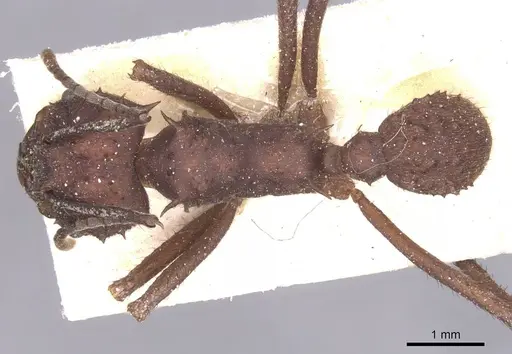
CASENT0912455
View on AntWeb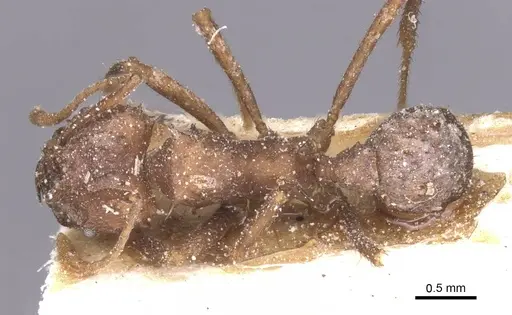
CASENT0913867
View on AntWeb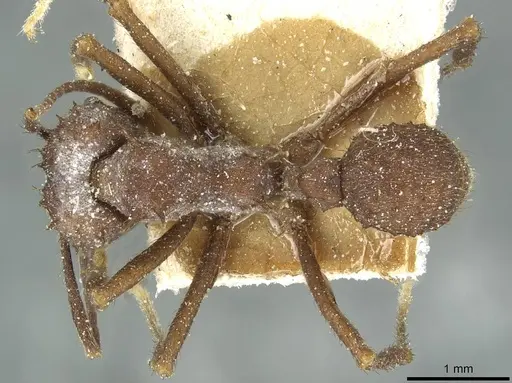
CASENT0922024
View on AntWeb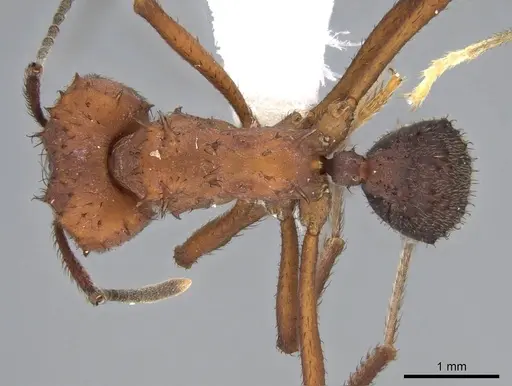
FMNHINS0000046888
View on AntWeb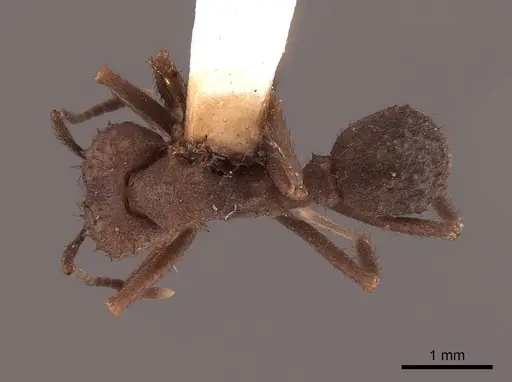
Literature
Loading...Loading products...