

Acromyrmex fracticornis
- Scientific Name
- Acromyrmex fracticornis
- Tribe
- Attini
- Subfamily
- Myrmicinae
- Author
- Forel, 1909
- Distribution
- Found in 3 countries
Acromyrmex fracticornis Overview
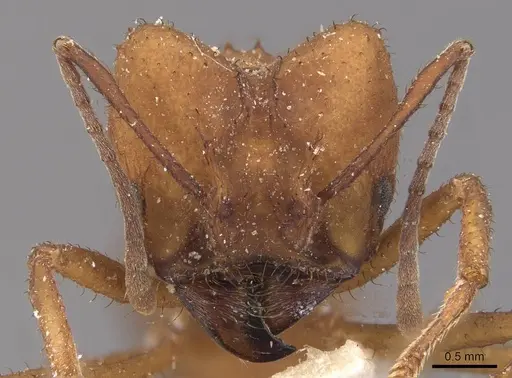
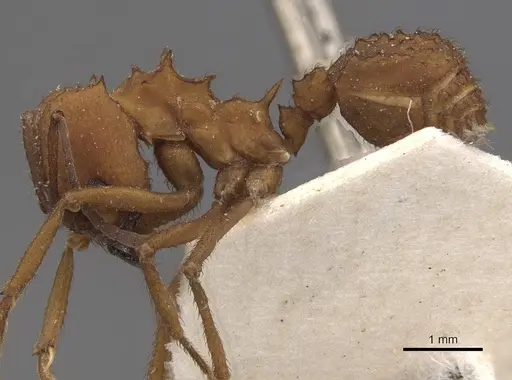
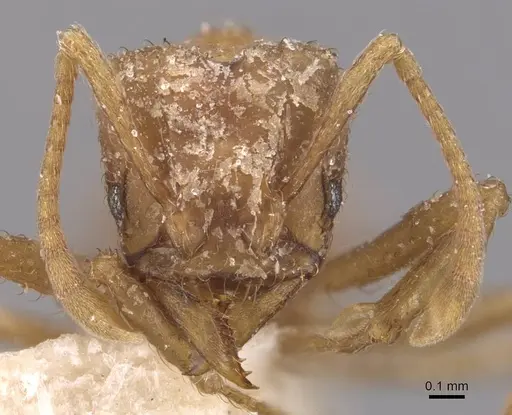
Acromyrmex fracticornis is an ant species of the genus Acromyrmex. It is primarily documented in 3 countries , including Argentina, Brazil, Paraguay. Detailed taxonomic data and occurrence records can be further explored via authoritative databases such as AntWeb or the Global Biodiversity Information Facility (GBIF).
Acromyrmex fracticornis
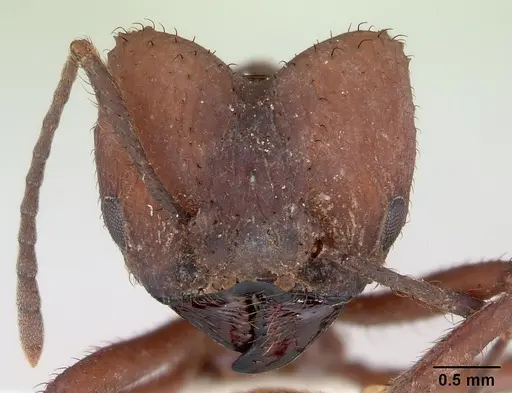
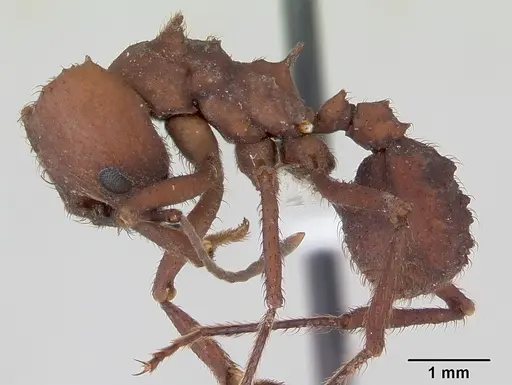
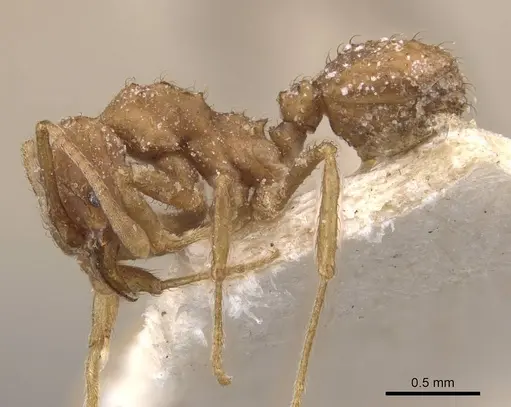
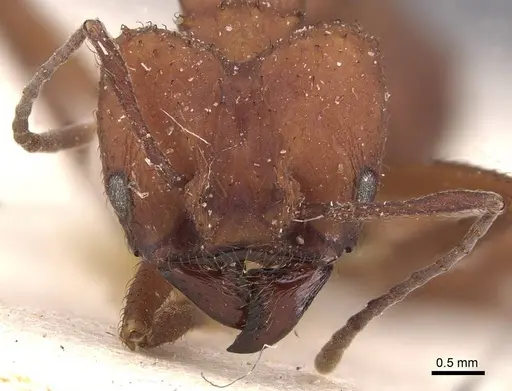
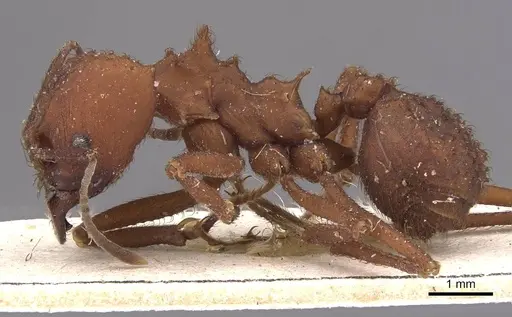
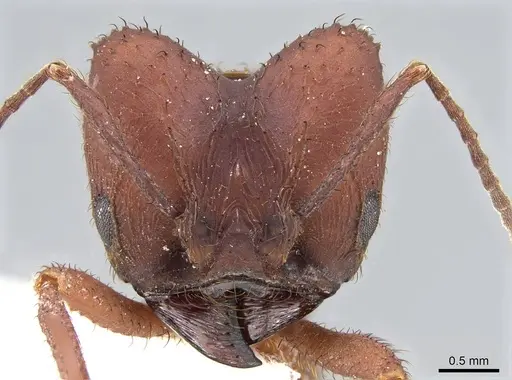
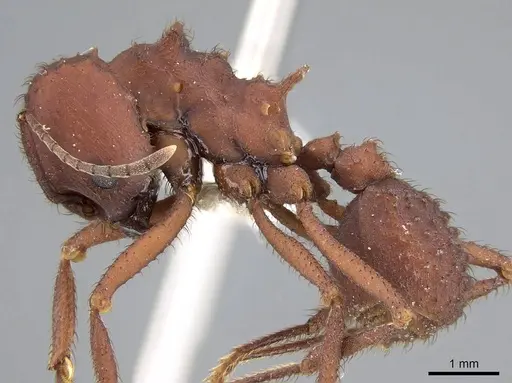
Acromyrmex fracticornis is a small grass-cutting ant native to the grasslands and pastures of Argentina, Brazil, Paraguay, and Uruguay [1][2]. Workers have head widths around 2 to 2.4 millimeters and occur in different sizes, with smaller workers lacking the specialized brain structures found in their larger nestmates [3][4]. These ants construct distinctive chimney-shaped nest turrets that rise up to 7 centimeters above ground level, built from interlaced dry grass fragments cemented with soil pellets [5][6].
Unlike leaf-cutting ants that harvest tree foliage, Acromyrmex fracticornis specializes in cutting grasses and serves as a significant pest in Paraguayan pastures, feeding on cultivated forage grasses including buffel grass and Rhodes grass [1][7]. Their nest turrets function as ventilation shafts for underground fungus gardens, with construction activity peaking during the rainy season and stopping entirely during dry winter months [5]. Workers forage alone rather than in trails, cutting grass blades to carry back to the nest [8].
Quick Summary
- Difficulty: Expert
- Origin & Habitat: Grasslands and pastures in Argentina, Brazil, Paraguay, and Uruguay [1][2][9]. Classified as Tropical Climate Specialists [9].
- Colony Type: Unconfirmed, colony structure has not been directly documented for this species.
- Size & Growth:
- Queen: Unknown, not documented in available research.
- Worker: Head width 1.99-2.4 mm [3][4].
- Colony: Unknown, colony size estimates are not available.
- Growth: Unknown, estimated slow to moderate based on fungus-growing requirements.
- Development: Estimated 8-12 weeks at 25°C, inferred from typical Acromyrmex development patterns, not directly measured. (Fungus-growing ants require stable conditions for brood development. Nanitic workers (first generation) may develop slightly faster than subsequent workers.)
- Antkeeping:
- Temperature: Warm and stable, roughly 24-28°C, inferred from tropical distribution and seasonal building patterns [9][5]. Provide a gentle gradient.
- Humidity: High humidity required for fungus garden health. Keep nest substrate moist but not waterlogged, with adequate ventilation to prevent mold.
- Diapause: Yes, turret building activity stops during dry winter months, suggesting colonies slow down or enter diapause during cooler, drier periods [5].
- Nesting: Deep nesting required, first chambers are located 5-10 cm below the surface [6]. Needs space for fungus garden construction and turret building materials.
- Behavior: Solitary foraging grass-cutters that harvest plant material individually rather than in trails [8]. Workers are small and require excellent escape prevention. Non-aggressive toward humans but capable of cutting through plant material efficiently.
- Common Issues: fungus garden contamination or failure, the fungus is sensitive to mold, pesticides, and improper humidity., small worker size means escapes are likely without fine mesh barriers and Fluon-coated surfaces., seasonal activity changes mean colonies may appear inactive or stop growing during winter months., grass material must be fresh and clean, wilted or contaminated plants can poison the fungus garden., ventilation must be carefully balanced, stagnant air causes mold, but excessive airflow dries the fungus.
Nest Construction and Turret Building
Acromyrmex fracticornis builds conspicuous chimney-shaped turrets above their nest entrances that serve as ventilation shafts for their underground fungus gardens [5][6]. These turrets average about 3 centimeters in height but can reach up to 7 centimeters, with a base diameter around 3.2 centimeters tapering to a top diameter of roughly 2 centimeters [5]. The opening at the top measures approximately 0.9 centimeters across [5].
Workers construct these turrets using roughly 36% plant material and 64% soil by mass [5]. They intermesh dry grass fragments, plant fibers, and twigs into a net-like structure, then cement this mesh with soil pellets [5][6]. Construction follows a specific pattern: workers first place thick sticks in a disorderly pile covering the nest opening, then gradually switch to thinner materials as the turret rises, arranging them tangentially like a log cabin [6]. The inner gallery gets lined with fine soil coatings 200-500 micrometers thick [5].
Complete turret construction takes about three days, with most external size reached after the first day [5][6]. Workers add reinforcing beams, large plant fragments over 1 millimeter wide, primarily at the base of the turret [5]. In captivity, you should provide fresh grass clippings and small twigs for turret construction, along with moist soil for cementing.
Feeding and Fungus Cultivation
As a member of the fungus-growing ant tribe Attini, Acromyrmex fracticornis cultivates a symbiotic fungus garden that serves as their primary food source [10]. Unlike their leaf-cutting relatives, these ants specialize in cutting grasses, feeding on species such as Cenchrus ciliaris, Chloris gayana, Cynodon nlemfuensis, and various Urochloa species [1].
Workers forage solitarily rather than in organized trails, cutting grass blades and carrying them back to the nest individually [8]. You must provide fresh, pesticide-free grasses and plant material regularly. The ants process this material into a substrate for their fungus, which produces specialized nutrient-rich structures called gongylidia that the ants consume.
Maintaining the fungus garden requires careful humidity management, the substrate must stay moist enough to support fungal growth but not so wet that it molds. The colony deposits waste materials externally, so you will need to provide an outworld or waste chamber that can be cleaned regularly [11]. Never allow the fungus garden to dry out completely, as this will kill the colony.
Seasonal Activity and Winter Care
Acromyrmex fracticornis shows distinct seasonal patterns in their activity. Turret building occurs primarily during the rainy season, with no apparent construction activity during dry winter months [5]. This suggests colonies naturally slow down or enter a resting state during cooler, drier periods.
For captive colonies, you should simulate these seasonal changes to maintain natural rhythms. During winter months, reduce feeding slightly and lower temperatures by a few degrees to encourage the colony to slow brood production. Do not let the nest dry out completely, the fungus garden requires consistent moisture year-round even if the ants are less active.
Watch for signs of reduced foraging and slower worker movement as indicators that the colony has entered its resting phase. Resume normal temperatures and feeding levels as spring approaches to stimulate renewed activity and turret building.
Foraging and Grass-Cutting Behavior
Workers employ a solitary foraging strategy, leaving the nest individually to search for suitable grass material rather than following scent trails to rich food sources [8]. This makes them efficient at harvesting scattered grass blades across pasture environments but means they may appear less organized than trail-forming leafcutter species.
Workers use their powerful mandibles to cut grass blades into manageable pieces. You should offer fresh grass blades, oats, or other cereal grasses, ensuring they are free from pesticides and herbicides that could harm the fungus garden. Cut the material into small pieces if the colony is small, though mature colonies will process whole blades efficiently.
Because they forage alone, you may see individual workers wandering the outworld rather than concentrated traffic at food sources. This is normal behavior for this species. Provide a large foraging area with various grass types to allow natural foraging patterns.
Frequently Asked Questions
Can I keep Acromyrmex fracticornis in a test tube?
No. As a fungus-growing ant, Acromyrmex fracticornis requires a fungus garden to survive. Test tubes provide insufficient space for the fungus substrate and proper ventilation. You need a setup with a deep nest area (5-10 cm deep) for the fungus garden and an outworld for foraging [6].
What do Acromyrmex fracticornis eat?
They cultivate a symbiotic fungus garden that produces their food. You must provide fresh grasses such as buffel grass, Rhodes grass, or oat grass as substrate for the fungus [1][8]. They do not eat the grass directly, they process it to feed the fungus, then eat specialized structures produced by the fungus.
How long until Acromyrmex fracticornis gets their first workers?
The egg-to-worker timeline is unconfirmed for this specific species. Based on typical Acromyrmex development patterns, expect roughly 8-12 weeks at 25°C, though this varies with temperature and fungus garden health.
Do Acromyrmex fracticornis need hibernation?
Yes, they likely need a resting period during winter months. In nature, turret building stops completely during the dry winter season [5]. In captivity, reduce temperatures slightly and decrease feeding during winter to simulate this natural cycle, though keep the fungus garden moist.
Can I keep multiple Acromyrmex fracticornis queens together?
Not recommended. The colony structure of this species is unconfirmed, and combining unrelated queens of fungus-growing ants typically results in fighting and colony failure. Single-queen founding is the standard for most Acromyrmex species.
What is the best nest type for Acromyrmex fracticornis?
Use a deep formicarium with chambers 5-10 cm below the surface to accommodate their fungus garden [6]. The nest needs excellent humidity control and ventilation. Provide an outworld with materials for turret building, dry grass fragments and soil, as they naturally construct chimney-shaped ventilation shafts [5].
Are Acromyrmex fracticornis good for beginners?
No. This is an expert-level species due to their fungus-growing requirements. You must maintain a living fungus culture under precise humidity and temperature conditions while preventing mold and contamination. They are also small enough to escape easily through tiny gaps.
Why are my Acromyrmex fracticornis dying?
Common causes include fungus garden failure from mold, contamination from pesticides on plant material, improper humidity (too dry kills fungus, too wet causes mold), or escape of small workers leading to dehydration. Ensure all grass is organic and pesticide-free, maintain stable humidity, and use excellent escape prevention.
References

This caresheet is licensed under CC BY-SA 4.0 .
CASENT0173798
View on AntWeb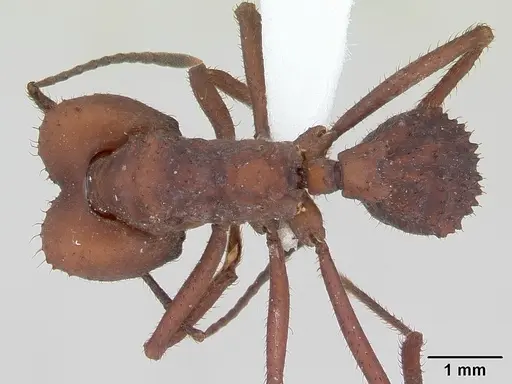
CASENT0909429
View on AntWeb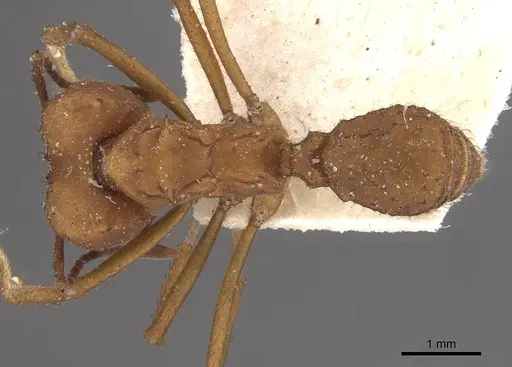
CASENT0909430
View on AntWeb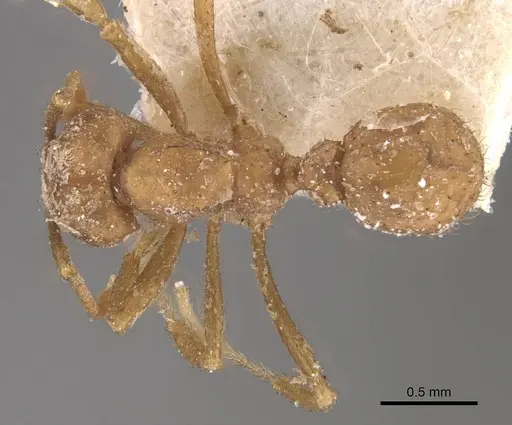
CASENT0909431
View on AntWeb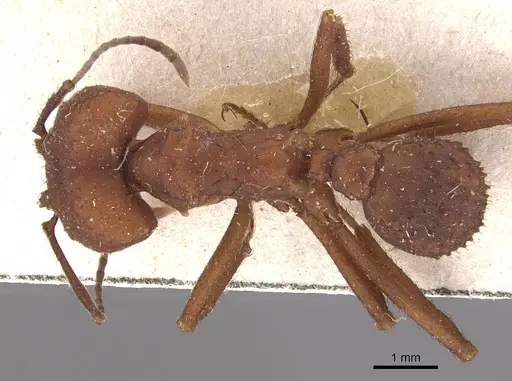
CASENT0922023
View on AntWeb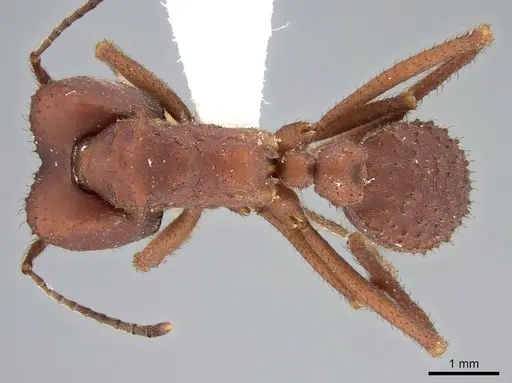
Literature
Loading...Loading products...