

Acanthostichus femoralis
- Scientific Name
- Acanthostichus femoralis
- Subfamily
- Dorylinae
- Author
- Kusnezov, 1962
- Distribution
- Found in 1 countries
Acanthostichus femoralis Overview
Acanthostichus femoralis is an ant species of the genus Acanthostichus. It is primarily documented in 1 countries , including Brazil. Detailed taxonomic data and occurrence records can be further explored via authoritative databases such as AntWeb or the Global Biodiversity Information Facility (GBIF).
Acanthostichus femoralis
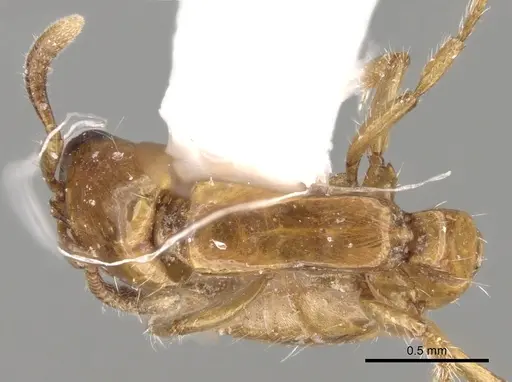
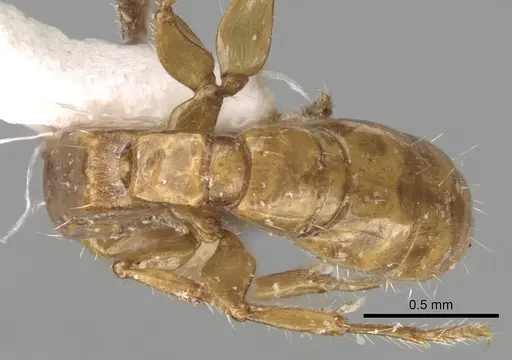
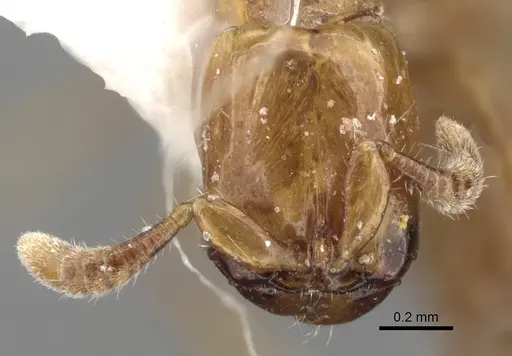
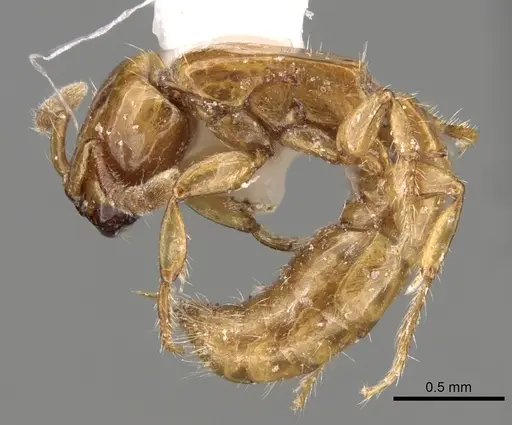
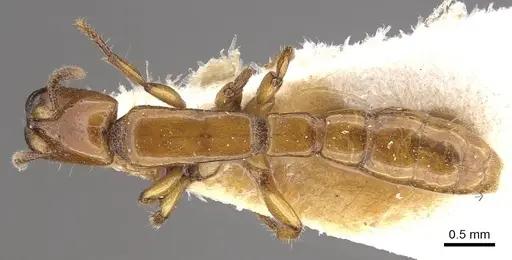
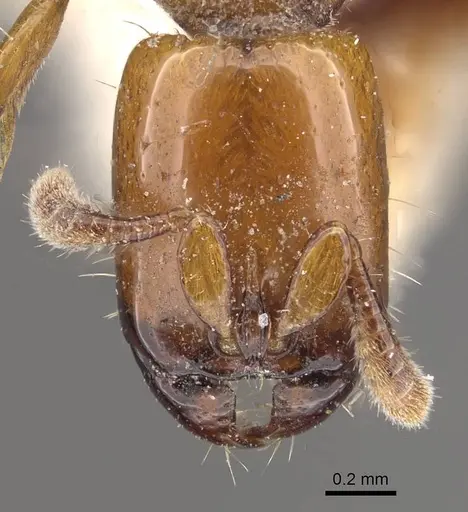
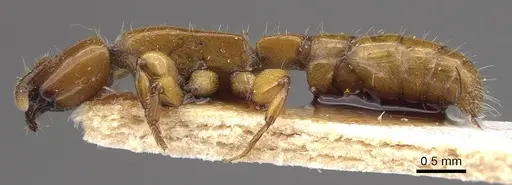
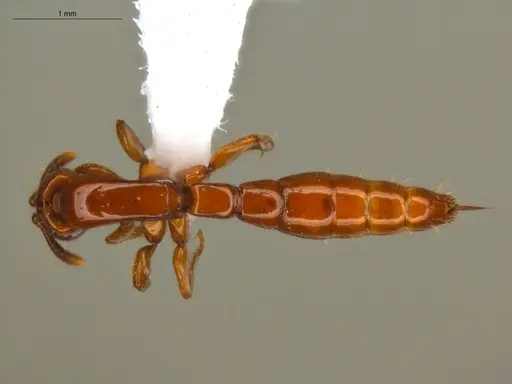
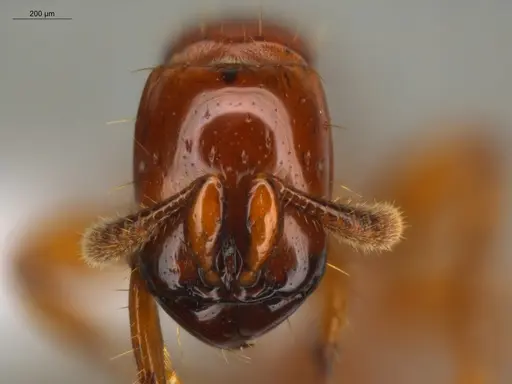
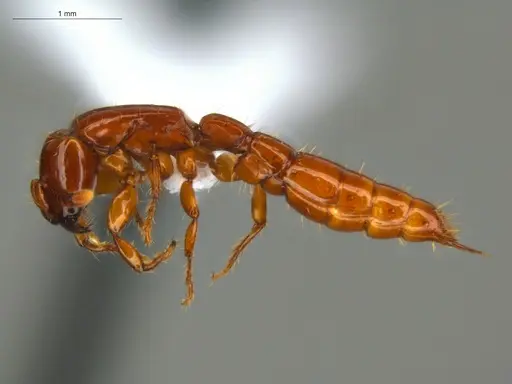
Acanthostichus femoralis is a small, shiny light brown ant from Argentina and Brazil. Workers measure roughly 3-4mm with noticeably thickened hind femora (thighs) that give them their name [1]. These cryptic ants live in soil, often found under cattle manure or near termite nests, which they hunt exclusively [1]. Unusually for ants, they fly during the winter months in Argentina, with nuptial flights recorded in every month except February, August, and October [1].
This species represents one of the few ants known to fly during winter in Argentina, suggesting unique seasonal biology compared to temperate species [1]. Their specialized termite diet and soil-dwelling habits make them challenging captives requiring expert care.
Quick Summary
- Difficulty: Expert
- Origin & Habitat: Argentina and Brazil, nesting in soil under cattle manure and near termite nests [1]
- Colony Type: Unknown, likely single queen but unconfirmed
- Size & Growth:
- Queen: Unknown [1]
- Worker: Approximately 3-4mm (head length 0.69-0.91mm) [1]
- Colony: Unknown, likely small based on cryptic soil-dwelling habits [1]
- Growth: Unknown
- Development: Unknown, likely 6-10 weeks based on similar small ants (Estimate based on worker size, actual development time unconfirmed)
- Antkeeping:
- Temperature: Warm and stable, approximately 24-28°C
- Humidity: Moderate to high, keep nest substrate moist but not waterlogged
- Diapause: Likely not required, wild colonies fly during winter in Argentina, suggesting year-round activity [1]
- Nesting: Soil-based nests with tight chambers, naturalistic setups or formicarium with narrow passages
- Behavior: Specialized termite predators that forage in soil. Cryptic and secretive. Small size requires excellent escape prevention [1].
- Common Issues: specialized termite diet makes captive feeding extremely difficult, they may not accept substitute prey, tiny size means they can escape through minute gaps in lids or mesh, poorly documented biology leaves many care requirements unknown, wild-caught colonies may carry soil-borne pathogens or mites
Termite Predation and Diet
Acanthostichus femoralis is a specialized termite predator. In the wild, they have been found nesting in soil near termite nests, including one colony found near Acromyrmex sp. and another series collected with Pheidole sp. [1]. They are also frequently found under cattle manure, likely using these sites to access termite prey [1].
This specialized diet makes them extremely difficult to keep in captivity. You would need a constant supply of live termites. It is unknown whether they will accept other prey items like fruit flies, springtails, or small crickets. Attempting to keep this species without access to termites will likely result in colony failure. If you must attempt captive care, offer small live termites regularly and observe whether the ants hunt them.
Housing and Escape Prevention
These ants nest in soil in nature, often under stones or within cattle manure piles [1]. In captivity, provide a naturalistic soil nest or a formicarium with very small, tight chambers.
Workers are only about 3-4mm long and can squeeze through incredibly small gaps [1]. You must use excellent escape prevention. Apply Fluon or baby powder barriers to all container walls, and ensure any ventilation mesh is fine enough to stop 1mm insects. Even small gaps in lid seals will allow escape. They prefer dark, humid conditions with minimal disturbance.
Temperature and Seasonal Patterns
Native to subtropical Argentina and Brazil, these ants likely prefer warm temperatures between 24-28°C [1]. Unlike most temperate ants, Acanthostichus femoralis shows unique seasonal activity. Nuptial flights have been recorded during all months except February, August, and October, including winter months (June, July, September) [1].
This suggests they remain active year-round and do not enter a true hibernation or diapause period. Keep them warm consistently throughout the year. A heating cable on one side of the nest can provide a gentle gradient, but avoid overheating as they are soil-dwelling and likely prefer stable, moderate warmth.
Colony Structure and Founding
The colony structure of Acanthostichus femoralis is unknown. They may be monogyne (single queen) or have multiple queens, but this has not been documented [1]. Founding behavior is also unconfirmed. Queens may be claustral (sealing themselves in) or semi-claustral (requiring food during founding), but given their predatory nature, semi-claustral founding is possible.
If you acquire a founding queen, offer her small termite prey regularly until workers hatch. The development timeline from egg to worker is unknown, but based on their small size, expect roughly 6-10 weeks at 25°C. First workers (nanitics) will likely be smaller than subsequent workers and will require immediate access to termite prey.
Frequently Asked Questions
Can I keep Acanthostichus femoralis in a test tube?
A test tube can work temporarily for a founding queen, but these ants need soil to nest properly. Plan to move them to a naturalistic soil setup once workers arrive.
What do Acanthostichus femoralis eat?
They are specialized termite predators in the wild. Captive colonies would need live termites. Whether they accept other insects is unknown.
Do Acanthostichus femoralis need hibernation?
No, likely not. They fly during winter in Argentina, suggesting year-round activity. Keep them at 24-28°C year-round.
How big do Acanthostichus femoralis colonies get?
Wild colony size is unknown, but likely small (under 100 workers) based on their cryptic, soil-dwelling nature.
Are Acanthostichus femoralis good for beginners?
No. They are expert-level ants due to their specialized termite diet, small size, and poorly documented care requirements.
How long until first workers for Acanthostichus femoralis?
Unknown. Based on their small size, estimate 6-10 weeks at 25°C, but this is speculative.
Can I keep multiple Acanthostichus femoralis queens together?
Not recommended. Combining unrelated queens has not been documented and likely leads to fighting.
References

This caresheet is licensed under CC BY-SA 4.0 .
Literature
Loading...Loading products...