

Acanthostichus arizonensis
- Scientific Name
- Acanthostichus arizonensis
- Subfamily
- Dorylinae
- Author
- MacKay, 1996
- Distribution
- Found in 1 countries
Acanthostichus arizonensis Overview
Acanthostichus arizonensis is an ant species of the genus Acanthostichus. It is primarily documented in 1 countries , including United States of America. Detailed taxonomic data and occurrence records can be further explored via authoritative databases such as AntWeb or the Global Biodiversity Information Facility (GBIF).
Acanthostichus arizonensis
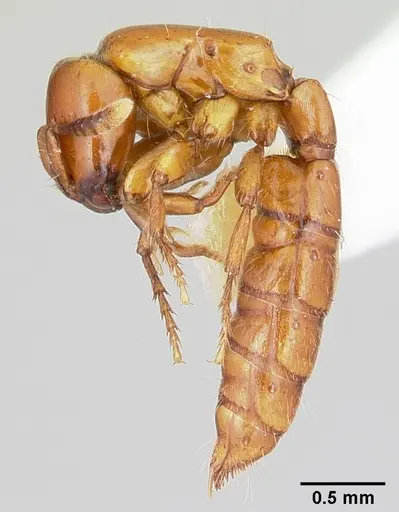
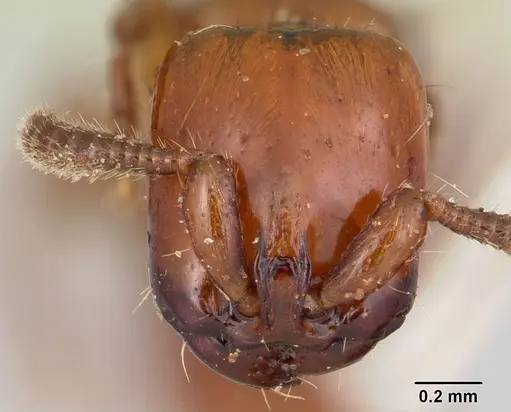
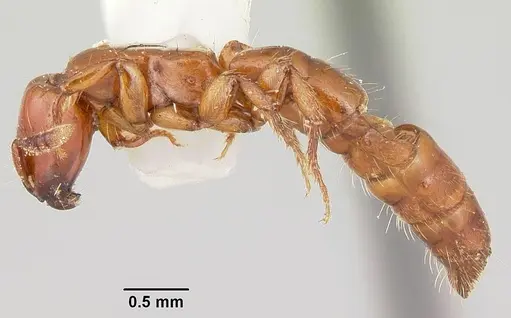
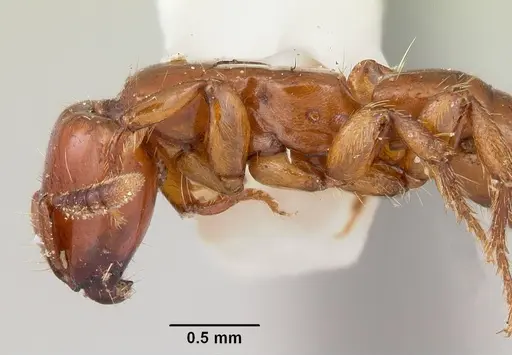
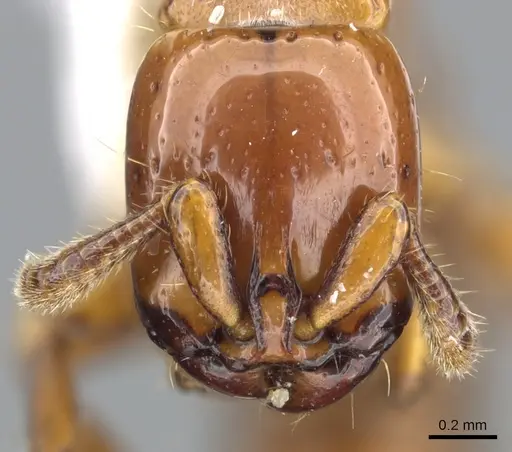
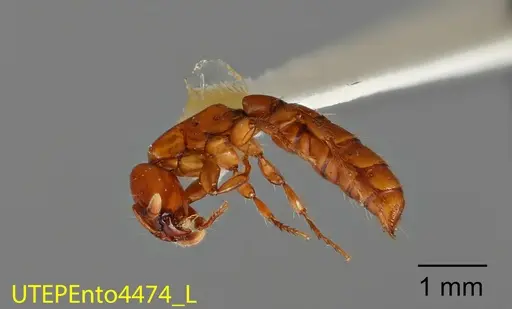
Acanthostichus arizonensis is a tiny ant from the deserts and grasslands of Arizona and northwestern Mexico. Workers have heads measuring just 0.94-0.95mm long, suggesting total body lengths around 3-4mm, with a distinctive rough, pitted texture on their waist segment [1]. They live under stones in grasslands and oak-juniper woodlands at elevations between 1070 and 1780 meters [1].
The most challenging aspect of keeping this species is that science has only ever documented workers. No queens have ever been found, meaning you cannot start a colony from a single queen like most ant species [1]. These ants are also specialized termite predators, having been collected exclusively from chambers under stones where they live alongside their termite prey [1][2].
Quick Summary
- Difficulty: Expert
- Origin & Habitat: Southwestern USA (Arizona) and northwestern Mexico (Chihuahua and Sonora states), found in grasslands and oak-juniper woodlands at 1070-1780m elevation [1][3].
- Colony Type: Unknown, only the worker caste has been described. No queens have ever been collected [1].
- Size & Growth:
- Queen: Unknown, queens undiscovered [1].
- Worker: Approximately 3-4mm total length (head length 0.94-0.95mm) [1].
- Colony: Unknown, likely small based on termite-specialist lifestyle.
- Growth: Unknown
- Development: Unknown, founding behavior undocumented. (Development timeline cannot be estimated as queen founding behavior has never been observed.)
- Antkeeping:
- Temperature: Unknown, based on Arizona grassland habitat at moderate elevations, start around 22-25°C and adjust based on activity levels.
- Humidity: Unknown, natural under-stone habitat suggests moderate humidity with good drainage, avoid overly dry conditions.
- Diapause: Unknown, possible given elevation and latitude, but unconfirmed.
- Nesting: Under flat stones in small chambers, typically in direct association with termite nests [1].
- Behavior: Cryptic and highly specialized. Workers are termite predators that spend most of their time in hidden chambers under stones. They are not aggressive toward humans but will be difficult to observe due to their hidden lifestyle and small size [1]. Their tiny size makes escape prevention critical.
- Common Issues: only workers are known to science, making it impossible to start a colony from a queen., specialized termite diet makes feeding extremely difficult and likely unsustainable in captivity., small size requires excellent escape prevention with fine mesh barriers., virtually no captive care information exists due to extreme rarity in collections.
The Missing Queen: Why Colonies Cannot Be Started
Science has never found a queen of Acanthostichus arizonensis. Every collection, including the original type series collected in 1982 from Pima County, Arizona, has yielded only workers [2][1]. This means the reproductive caste remains completely undescribed, we do not know if queens are winged, wingless, or even if they exist as a distinct caste.
For antkeepers, this presents an insurmountable barrier. You cannot purchase or collect a queen to start a colony. Wild colonies might be collected with workers, but without knowing how queens reproduce or how colonies are founded, maintaining a breeding population is impossible. Any workers you acquire would represent a terminal collection, they will eventually die without replacement.
Natural History and Termite Specialization
These ants are termite specialists. Workers have been collected exclusively from chambers under stones where they live alongside termites [1][2]. The original paratype specimens were collected specifically from a colony associated with termites in an experimental plot [2].
This tight association suggests Acanthostichus arizonensis may be an obligate termite predator, meaning they cannot survive on other food sources. They inhabit grasslands and oak-juniper woodlands at moderate elevations (1070-1780m) in Arizona and Mexico [1][3]. Workers likely hunt termites in their underground galleries or raid termite chambers under stones.
Housing and Environmental Setup
Based on their under-stone habitat, Acanthostichus arizonensis needs flat, tight spaces rather than tall formicarium chambers. A naturalistic setup with flat stones over a thin soil layer would best replicate their natural chambers. The nest area should offer small, tight spaces where workers can feel secure against the substrate.
Temperature requirements are unstudied, but their habitat in Arizona grasslands at moderate elevation suggests they tolerate warm days and cooler nights. Start with a gradient around 22-25°C. Humidity should be moderate, damp but not wet, similar to conditions under a stone on the forest floor. Avoid stagnant air to prevent mold, but do not allow the setup to dry out completely. [1]
The Feeding Problem
The biggest practical barrier to keeping Acanthostichus arizonensis is diet. If they are obligate termite predators, as their collection data suggests, they will not accept standard ant foods like sugar water, honey, or mealworms [1].
Providing live termites in captivity requires maintaining a separate termite colony as food stock, which is itself a complex undertaking. Even then, these ants may require specific termite species or hunting conditions we cannot replicate. This dietary specialization makes long-term captive care of any wild-caught workers extremely challenging and likely unsuccessful.
Frequently Asked Questions
Can I keep Acanthostichus arizonensis in a test tube?
Test tubes are not suitable. These ants nest under flat stones in tight chambers connected to termite colonies. They need a naturalistic setup with flat stones and soil, not a standard test tube environment.
How long until Acanthostichus arizonensis gets first workers?
Unknown. No queens have ever been found, so founding behavior and development timelines are completely undocumented. You cannot start a colony from a queen.
What do Acanthostichus arizonensis eat?
They appear to be specialized termite predators. All known collections come from chambers under stones where they live alongside termites. They likely require termites as food and may not accept other prey.
Why can't I find a queen Acanthostichus arizonensis?
Science has never discovered the queen caste of this species. Only workers have been collected since the species was described in 1996. The queens remain undescribed and possibly wingless or cryptic.
Are Acanthostichus arizonensis good for beginners?
No. They are unsuitable for beginners due to unknown biology, undiscovered queen caste, specialized termite diet, and extreme rarity. Even expert antkeepers would struggle to maintain them.
How big do Acanthostichus arizonensis colonies get?
Unknown. Based on their lifestyle as termite predators under stones, they likely maintain small colonies, possibly fewer than 100 workers, but this is speculation.
Do Acanthostichus arizonensis need hibernation?
Unknown. They live at moderate elevations (1070-1780m) in Arizona and Mexico where winters are mild. They may slow down in cooler months, but specific diapause requirements are unstudied.
References

This caresheet is licensed under CC BY-SA 4.0 .
CASENT0103128
View on AntWeb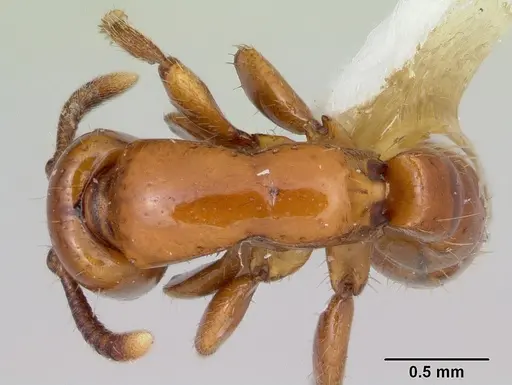
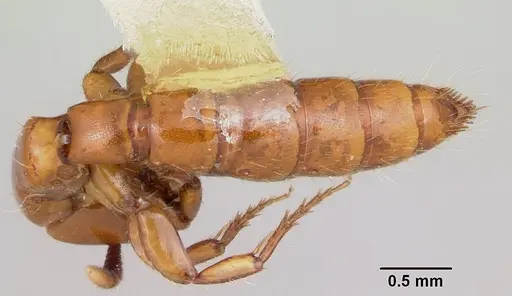
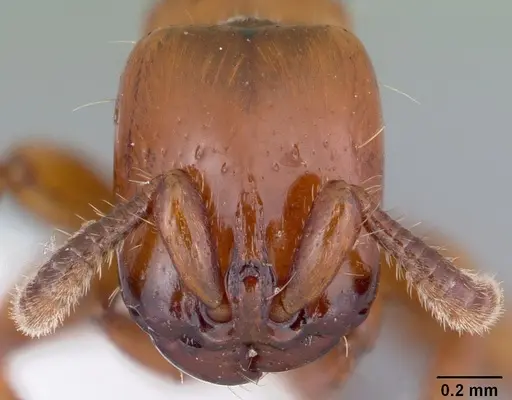
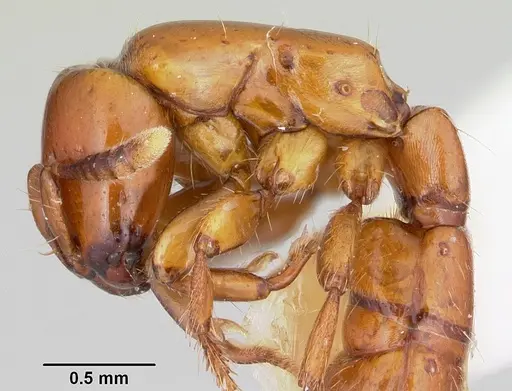
CASENT0103129
View on AntWeb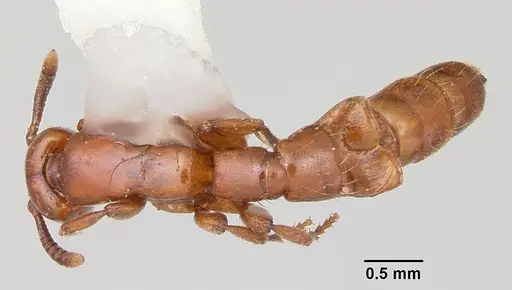
CASENT0903668
View on AntWeb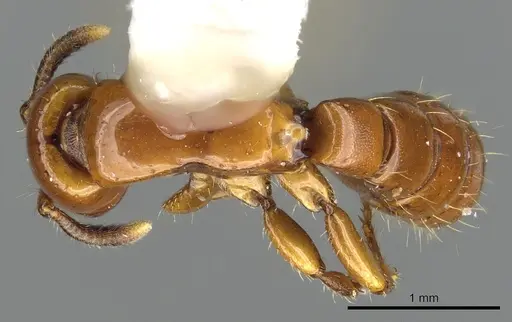
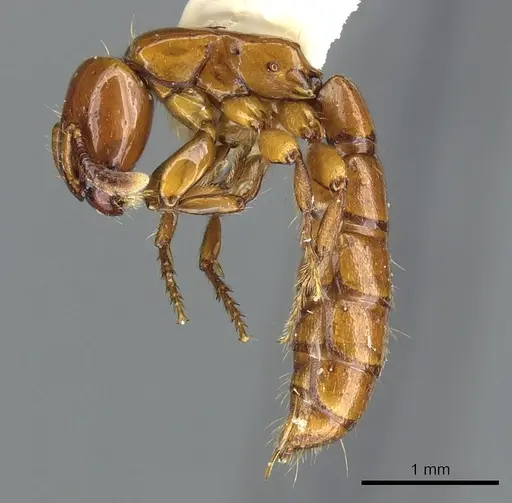
UTEPENTO4474
View on AntWeb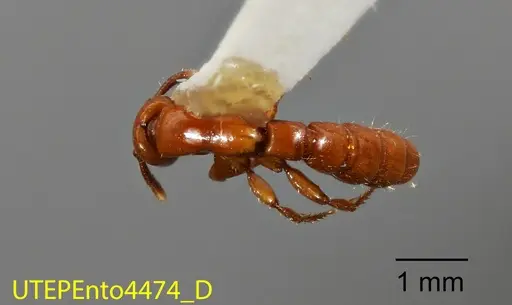
Literature
Loading...Loading products...