

Acanthomyrmex notabilis
- Scientific Name
- Acanthomyrmex notabilis
- Tribe
- Crematogastrini
- Subfamily
- Myrmicinae
- Author
- Smith, 1860
- Distribution
- Found in 1 countries
Acanthomyrmex notabilis Overview
Acanthomyrmex notabilis is an ant species of the genus Acanthomyrmex. It is primarily documented in 1 countries , including Indonesia. Detailed taxonomic data and occurrence records can be further explored via authoritative databases such as AntWeb or the Global Biodiversity Information Facility (GBIF).
Acanthomyrmex notabilis
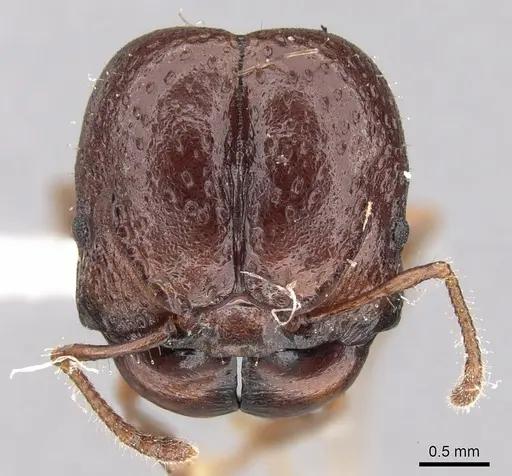
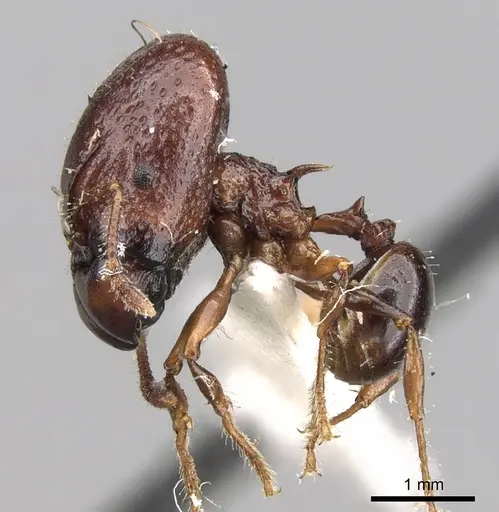
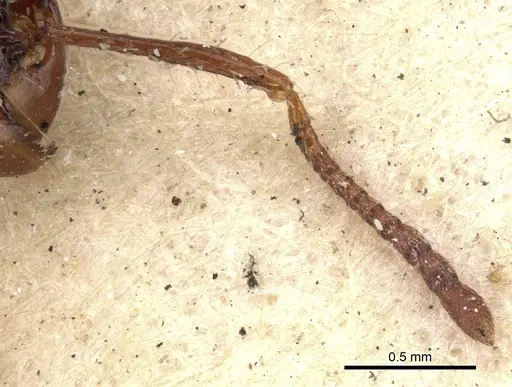
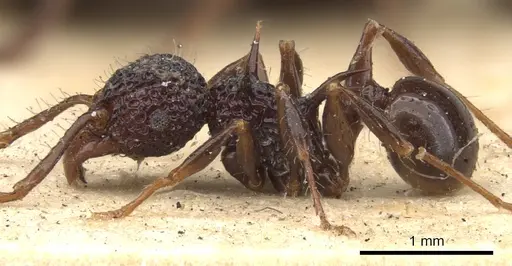
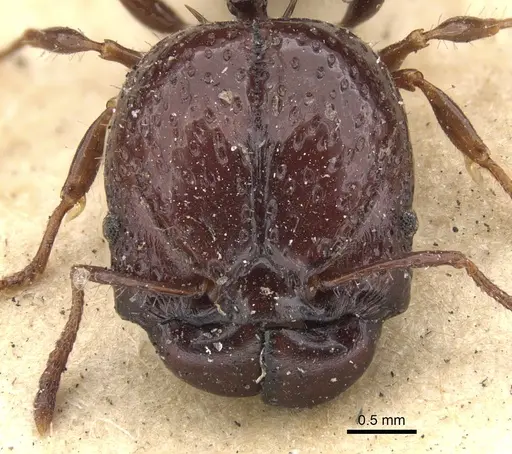
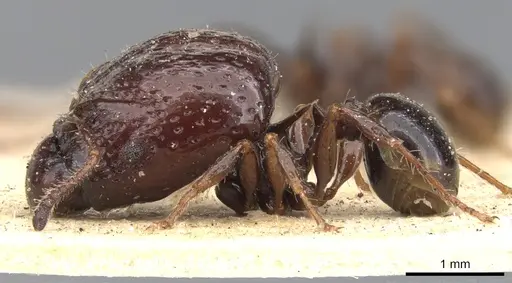
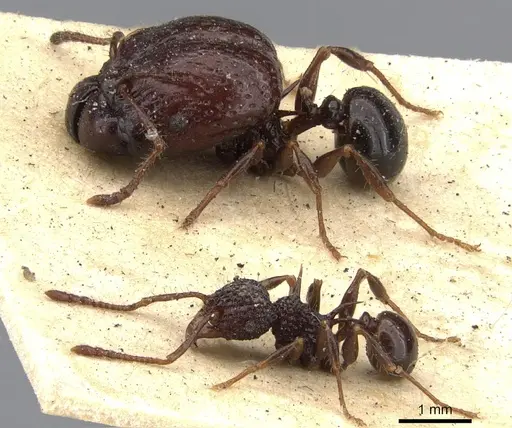
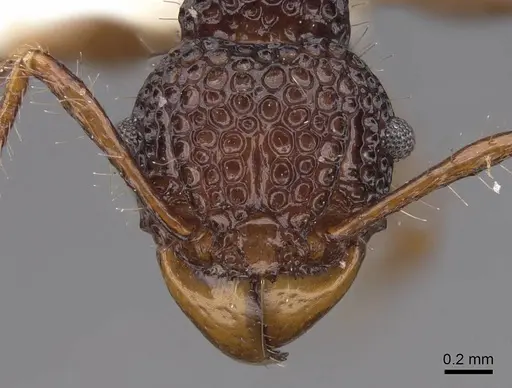
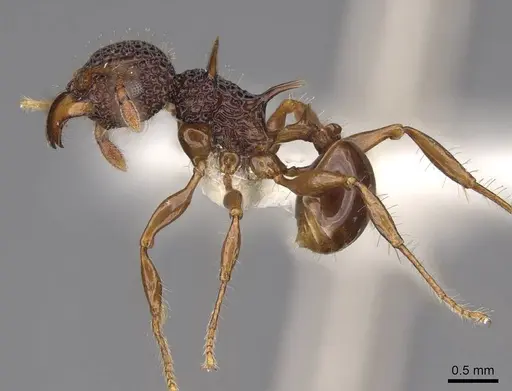
Acanthomyrmex notabilis is a tiny seed-harvesting ant from the rainforests of Indonesia. Workers come in two distinct sizes: minors measuring barely 2-3mm with heads only 1mm wide, and majors reaching 4-5mm with massive heads over 2mm wide [1][2]. Both castes sport long, curved spines on their thorax and range from reddish-orange to yellow in color [2]. In the wild, they nest inside cavities within rotting logs in primary rainforest, where they store caches of fig seeds and other tiny seeds [2]. Their colonies are remarkably small, rarely exceeding 50 workers [3], making them one of the more delicate and challenging species to maintain in captivity.
Quick Summary
- Difficulty: Expert
- Origin & Habitat: Indonesia (Bacan, Seram, Sulawesi), nesting in cavities within logs in primary rainforests [2][1][4]
- Colony Type: Likely single-queen given tiny colony size, though colony structure remains unconfirmed in research
- Colony: Monogyne
- Size & Growth:
- Queen: Unknown (not documented in available research)
- Worker: Minors 2-3mm (head width 1.0-1.1mm), majors 4-5mm (head width 2.25mm) [1][2]
- Colony: Up to approximately 50 workers [3]
- Growth: Slow
- Development: Unknown, estimated 6-10 weeks based on typical tropical Myrmicinae patterns (Timeline inferred from related tropical ants, actual development unconfirmed. Small colonies grow slowly.)
- Antkeeping:
- Temperature: 24-28°C (inferred from tropical Indonesian habitat). Keep stable year-round.
- Humidity: High humidity required, nest substrate should remain consistently moist, mimicking rainforest floor conditions
- Diapause: No, tropical species that remains active year-round
- Nesting: Small cavities in wood or tight chambers in Y-tong/plaster. They need enclosed, secure spaces similar to log cavities [2].
- Behavior: Specialized seed harvesters with distinct major and minor worker castes. Majors use their large heads to process seeds while minors forage and transport tiny seeds [2]. Minors are extremely small and pose significant escape risks. They possess long defensive spines but are not particularly aggressive [2].
- Common Issues: minors are only 2-3mm long and can escape through the tiniest gaps in mesh or lids., require specialized seed diet (fig seeds and tiny seeds) and may refuse standard ant foods like sugar water or insects., small colony size (around 50 workers maximum) makes colonies fragile and slow to recover from disturbance or environmental fluctuations., tropical species require consistent warmth, temperatures below 20°C may stress or kill the colony.
Nest Preferences
In nature, Acanthomyrmex notabilis nests inside cavities within rotting logs in primary rainforest [2]. They do not excavate soil but instead occupy pre-existing hollows and chambers in wood. For captive care, replicate these conditions using small wooden cavities, drilled holes in wood, or Y-tong nests with narrow chambers and tight passages. The nest should feel secure and enclosed, not open and exposed. Given their tiny size, ensure all nest entrances are secured with fine mesh (under 1mm) to prevent escapes while maintaining ventilation. Keep the nest substrate moderately moist but not waterlogged, think damp rotting wood, not soggy mud.
Feeding and Diet
This is a specialized seed-harvesting ant. Wild colonies store caches of fig seeds and other tiny seeds in their nests [2]. This dietary specialization makes them challenging to keep in captivity. They may not accept standard ant foods like sugar water, honey, or insects alone. You will need to source tiny seeds, fig seeds, grass seeds, or other small seeds, and offer them regularly. Observe whether the colony collects and stores the seeds in chambers (a good sign they are accepting them). You can experiment with small amounts of protein like crushed insects or springtails, but seeds should form the bulk of their diet. Without appropriate seeds, colonies will likely fail.
Temperature and Care
Coming from the Indonesian rainforest, these ants need warm, stable conditions. Aim for 24-28°C year-round with minimal fluctuation [2]. They do not require hibernation (diapause) and should remain active throughout the year. Use a heating cable or mat on one side of the nest to create a gentle gradient, allowing the ants to choose their preferred temperature. Monitor the colony closely, with only around 50 workers maximum [3], any temperature stress can quickly wipe out the entire colony. Avoid placing them in drafty locations or where temperatures drop below 20°C.
Behavior and Temperament
Acanthomyrmex notabilis shows clear division of labor between their two worker castes [3]. Major workers have massive heads used for processing seeds and defense, while smaller minor workers handle foraging and transporting tiny seeds into the nest [2]. Both castes possess long, curved spines on their thorax that likely serve as defense against predators [2]. They are not particularly aggressive ants, but majors can deliver a pinch with their mandibles. The minors are extremely small (2-3mm) and can squeeze through incredibly tiny gaps, making escape prevention your biggest challenge. They are not known to sting humans effectively given their small size.
Colony Founding
Founding behavior for Acanthomyrmex notabilis has not been directly documented in research. Based on patterns seen in related Myrmicinae ants, founding is likely claustral (the queen seals herself in and raises first workers on stored fat reserves), but this remains unconfirmed. Given their specialized seed diet, it is possible queens need access to seeds during founding, which would make them semi-claustral. If attempting to found a colony, provide a small, secure chamber with high humidity and offer tiny seeds in case the queen needs to forage. Handle with extreme care given the tiny colony size, any disturbance can be fatal to a young colony.
Growth and Development
These ants grow slowly and never reach large colony sizes. Research indicates maximum colony size reaches only about 50 workers (log10 1.7) [3]. With such small numbers, colonies take time to establish and cannot afford to lose many workers. Development time from egg to worker is unknown for this species, but based on tropical Myrmicinae patterns, expect roughly 6-10 weeks at optimal temperatures. The first workers (nanitics) will be particularly small given the minor caste already measures only 2-3mm. Be patient, colonies may take months to grow from a founding queen to a mature colony of 30-50 workers.
Frequently Asked Questions
Can I keep Acanthomyrmex notabilis in a test tube setup?
Yes, but ensure the cotton plug is extremely secure and the tube opening is covered with fine mesh (under 1mm) to prevent escapes. Minors are only 2-3mm long and can squeeze through standard gaps. Provide tiny seeds in the tube as they may not accept sugar water.
How long until Acanthomyrmex notabilis gets its first workers?
The exact timeline is unconfirmed. Based on related tropical Myrmicinae ants, expect approximately 6-10 weeks at 24-28°C, but this is an estimate. Development may be slower given their small colony size and specialized diet.
Can I keep multiple Acanthomyrmex notabilis queens together?
Not recommended. Colonies rarely exceed 50 workers [3], suggesting they are single-queen species. Combining multiple queens would likely result in fighting or rejection.
Do Acanthomyrmex notabilis ants sting?
Like most Myrmicinae, they likely possess a sting, but given their tiny size (minors only 2-3mm), they cannot penetrate human skin. Majors may pinch with their mandibles if threatened.
What do Acanthomyrmex notabilis eat?
They are specialized seed harvesters. Wild colonies store fig seeds and other tiny seeds in their nests [2]. In captivity, you must provide tiny seeds (fig, grass seeds, etc.). They may not accept sugar water or standard insect prey alone.
Are Acanthomyrmex notabilis good for beginners?
No, these are expert-level ants. Their tiny size creates escape risks, they require specialized seed diets that are hard to source, and their small colony size (around 50 workers maximum) makes them fragile and unforgiving of mistakes [3].
Do Acanthomyrmex notabilis need hibernation?
No. They are tropical ants from Indonesia and remain active year-round. Keep them at stable warm temperatures (24-28°C) throughout the year without any cooling period [2].
Why are my Acanthomyrmex notabilis dying?
Common causes include: incorrect diet (they need tiny seeds, not just sugar and insects), escapes of the tiny minor workers, temperature drops below 20°C, or over-disturbance of their small fragile colonies. Ensure you are providing appropriate fig or grass seeds and maintaining tropical humidity and warmth.
How big do Acanthomyrmex notabilis colonies get?
Very small, research indicates maximum colony size is approximately 50 workers [3]. They will never become large colonies like Lasius or Camponotus.
What is the difference between major and minor workers in Acanthomyrmex notabilis?
Majors have massive heads (2.25mm wide) used for processing seeds and defense, while minors are tiny (2-3mm total length,1mm head width) and handle foraging [1][2]. Both have long spines, but majors are much more robust.
References

This caresheet is licensed under CC BY-SA 4.0 .
CASENT0281789
View on AntWeb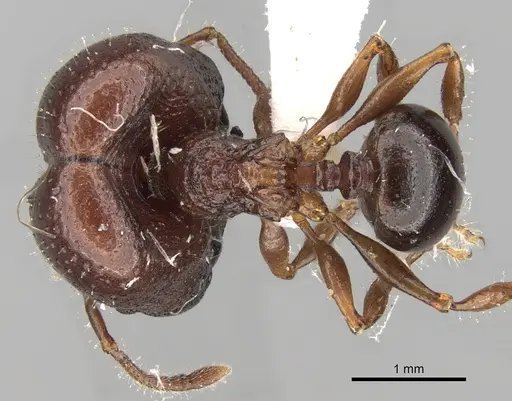
CASENT0281790
View on AntWeb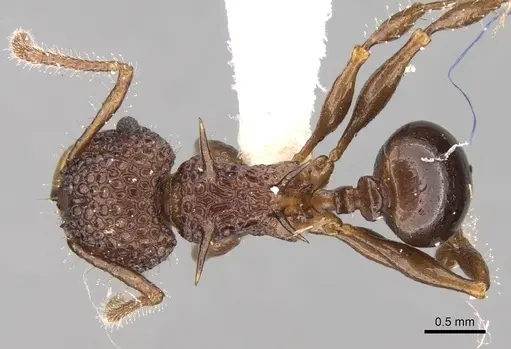
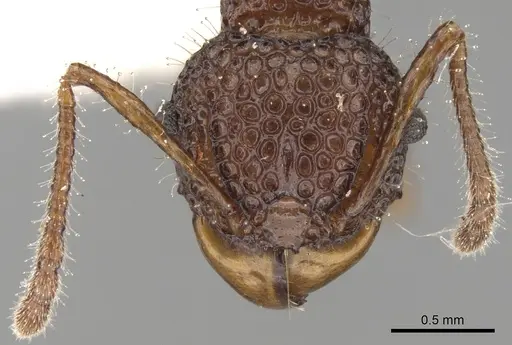
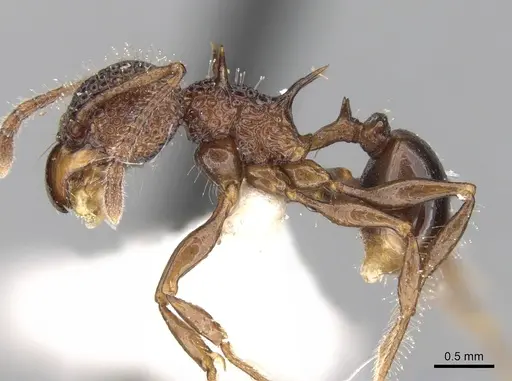
CASENT0901376
View on AntWeb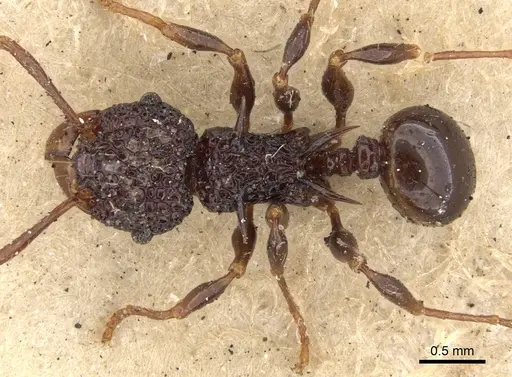
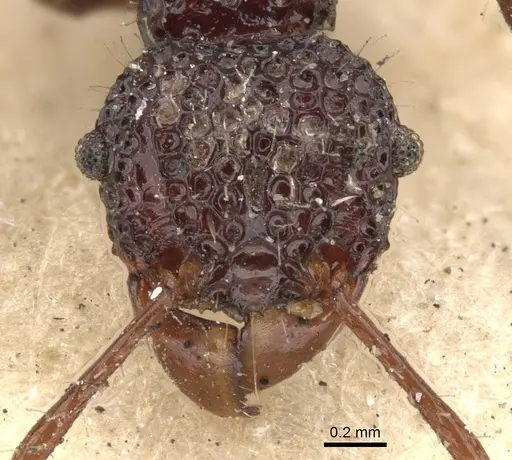
CASENT0901377
View on AntWeb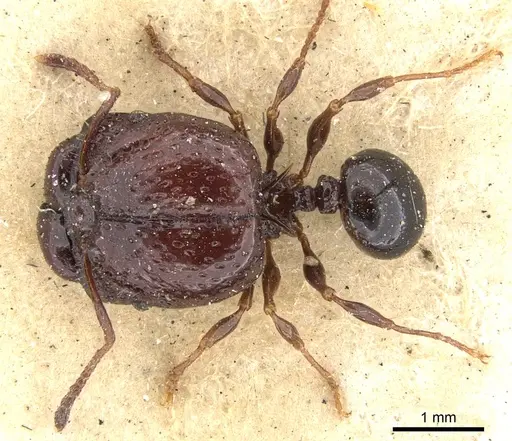
CASENT0922955
View on AntWeb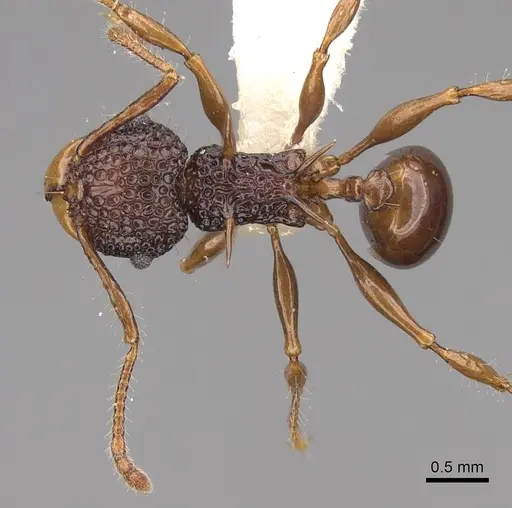
Literature
Loading...Loading products...